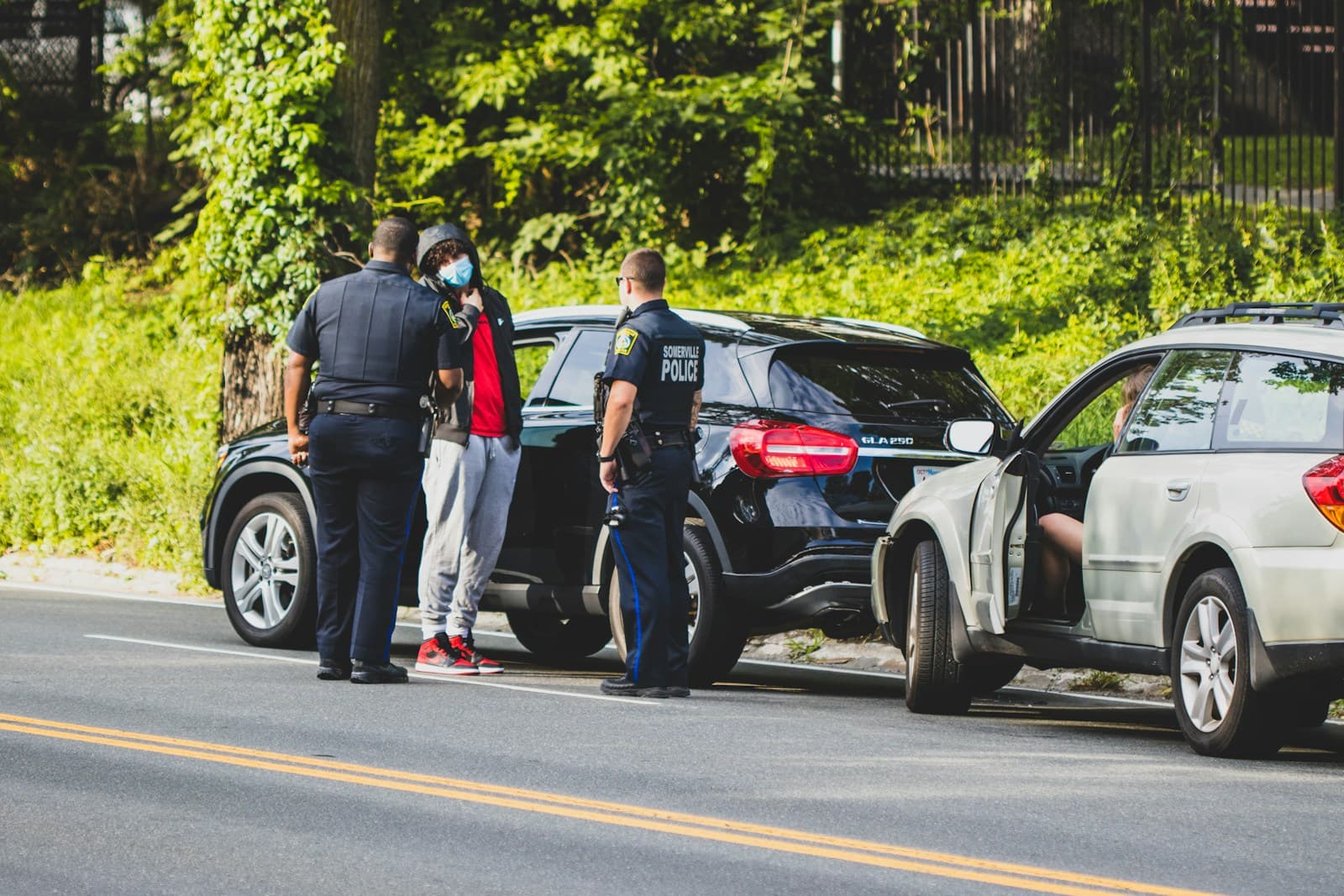
Michigan's occupational license program allows rideshare driving, but approved destination requirements create enforcement traps most Lyft and Uber drivers don't anticipate until their first violation notice arrives.
Why Michigan's Occupational License Destination Rules Create Rideshare-Specific Violations
Michigan's occupational license (also called a restricted license) approves driving for specific destinations during specific hours, not general employment categories. Most rideshare drivers petition for "work-related driving" and list their home address to their city's primary rideshare pickup zone—typically the airport, downtown core, or entertainment district. The Secretary of State approves this petition as written.
The violation trap opens when a ride request comes from outside that approved zone. A driver picks up a passenger in a suburb 12 miles from their approved destination during their approved 6 AM–6 PM window. They assume the time window alone governs compliance. Michigan State Police and local enforcement treat the geographic deviation as driving on a suspended license—a 93-day misdemeanor that revokes the occupational license immediately and extends the underlying suspension by 90–180 days.
Michigan statute MCL 257.904 requires the occupational license petition to list "the places to which travel is required." Courts and the Secretary of State interpret this as specific street addresses or defined geographic boundaries, not open-ended service areas. Rideshare's demand-responsive model conflicts directly with Michigan's destination-approval structure, creating a compliance gap the petition process does not resolve.
How Michigan Evaluates Rideshare Driving as Employment Under Points-Suspension Occupational Petitions
Michigan grants occupational licenses after points-suspension if the driver proves loss of license creates "undue hardship" under MCL 257.625f. Rideshare income qualifies as employment for hardship purposes—Secretary of State hearing officers accept Lyft and Uber driver statements, 1099 forms, and trip logs as employment documentation. The approval rate for rideshare petitions runs approximately 72% statewide when applicants document consistent weekly driving income and prove no alternative transportation to maintain that income.
The complication appears in the destination-approval requirement. Traditional employment petitions list one employer address: home to factory, home to office, home to jobsite. Rideshare drivers list multiple high-density pickup zones to maximize trip volume. Hearing officers approve multi-destination petitions, but each destination must be explicitly named in the court order. A driver approved for "home address to Detroit Metro Airport and home address to Greektown Casino" can legally drive only those two round-trip routes during approved hours.
Most drivers assume listing their city name or county covers all driving within that area. It does not. The petition must specify every destination address the driver intends to serve, and most drivers underestimate the geographic specificity Michigan enforces until their first stop outside approved boundaries.
Compare car insurance rates in your state
Get quotes from licensed carriers — no obligation, no spam, results in minutes.
Get Your Free Quote✓ No Obligation Required✓ Licensed Carriers Only✓ Available Nationwide✓ Free to Compare
What Approved Hours Mean for Rideshare Scheduling and Peak-Demand Windows
Michigan occupational licenses restrict driving to court-approved hours, typically 6 AM–8 PM or 5 AM–10 PM depending on petition justification. Rideshare drivers petition for extended hours to capture morning airport runs, evening entertainment district demand, and late-night bar closings. Hearing officers approve wider windows when the driver's trip history proves consistent income during those hours.
The enforcement risk appears during surge pricing windows outside approved hours. A driver approved for 6 AM–10 PM accepts a 10:15 PM pickup during Friday-night surge. The 15-minute deviation triggers the same unlicensed-driving charge as a geographic violation. Michigan does not recognize "slight" or "incidental" overruns—approved hours are hard boundaries enforced by timestamp on the ride platform's trip log.
State Police and local departments obtain rideshare trip logs through subpoena after traffic stops. A driver stopped for a tail light violation at 10:30 PM faces occupational-license revocation when the officer cross-references the stop time against the driver's approved hours, even if the driver wasn't actively transporting a passenger at the moment of the stop. Being logged into the app outside approved hours while driving counts as occupational-license violation in most Michigan jurisdictions.
How Michigan Secretary of State Processes Rideshare-Specific Occupational Petitions
Michigan's occupational license petition process requires a $45 filing fee, proof of SR-22 insurance, employer documentation, and a hardship hearing before a Secretary of State hearing officer. Rideshare drivers submit 1099 forms, a driver platform account screenshot showing active status, and a signed affidavit explaining how loss of driving privilege eliminates their income source.
Hearing officers schedule petitions 14–21 days after filing in most counties. Wayne, Oakland, and Macomb counties run 25–30 days due to volume. The driver must attend the hearing in person—phone appearances are not permitted for occupational petitions. The hearing officer reviews the petition, verifies SR-22 coverage, and questions the driver about approved destinations and hours. Approval or denial issues the same day in 90% of cases.
Rideshare-specific petitions face higher scrutiny on destination justification. Hearing officers ask how many destinations the driver intends to list, why those locations were selected, and whether the driver understands geographic deviation consequences. Drivers who list fewer than three specific addresses and demonstrate understanding of the restriction rules face approval rates near 80%. Drivers who request "citywide" or "countywide" approval without specific addresses face denial rates above 60%, with the hearing officer requiring petition amendment and refiling.
What SR-22 Filing Costs for Michigan Rideshare Drivers on Occupational Licenses
Michigan requires SR-22 filing for occupational license approval after points-suspension. The SR-22 certificate proves continuous liability coverage at state minimums: $50,000 per injured person, $100,000 per accident, $10,000 property damage. Rideshare driving complicates SR-22 compliance because personal-use SR-22 policies exclude commercial activity—most standard carriers void coverage the moment the driver logs into the rideshare app.
Rideshare-compatible SR-22 coverage requires either a rideshare endorsement on the personal policy or a commercial policy that covers app-on periods. Progressive, State Farm, and Allstate offer rideshare endorsements in Michigan, but SR-22 filing on an endorsed policy runs $180–$275 per month for drivers with points suspensions. Non-standard carriers like Dairyland, The General, and GAINSCO write rideshare-compatible SR-22 policies at $160–$240 per month, often with lower liability limits that require gap coverage through the rideshare platform's contingent policy.
Michigan's SR-22 filing period lasts the full duration of the occupational license restriction plus two years from the original suspension end date. A driver suspended for 90 days who holds an occupational license for 60 of those days still carries SR-22 for 24 months after the suspension lifts. Total SR-22 cost over the filing period runs $3,840–$6,600 depending on carrier and driving record.
How Violation of Michigan Occupational License Terms Affects Rideshare Income
Michigan revokes occupational licenses immediately upon any violation of approved hours, approved destinations, or insurance lapse. Revocation is automatic—no hearing, no grace period, no warning letter. The underlying suspension extends by 90 days for the first violation, 180 days for the second. Drivers convicted of operating while license suspended (OWLS) under MCL 257.904 face 93 days in jail and a $500 fine, and Lyft and Uber deactivate driver accounts permanently after an OWLS conviction.
The income disruption is total. A driver earning $1,200–$1,800 per week through rideshare loses that income the day the occupational license revokes. Reinstatement requires completing the extended suspension period, paying a new $125 reinstatement fee, refiling for a new occupational license ($45), and attending a new hardship hearing. The gap between revocation and new approval runs 120–180 days in most cases.
Most rideshare drivers underestimate how aggressively Michigan enforces destination and hour restrictions. Local police departments in Ann Arbor, Grand Rapids, Lansing, and Dearborn coordinate with rideshare platforms to cross-reference trip logs against occupational license terms after traffic stops. A driver stopped for speeding at 9 PM in a zone outside their approved destinations faces both the traffic citation and an automatic OWLS charge when the officer runs their license status and finds the occupational restriction.
What Rideshare Drivers Should Petition for in Michigan Occupational License Applications
Michigan rideshare drivers should petition for the smallest viable destination set that covers 80% of their typical trip volume. List three to five high-density pickup zones by street address: the airport, the downtown core, one entertainment district, one hospital or medical center, and one suburban commercial corridor. Avoid listing neighborhoods or area names—use intersection addresses or landmark street addresses the hearing officer can locate on a map.
Include a written explanation in the petition stating: "I understand approved destinations are limited to the addresses listed above, and I will decline ride requests outside these areas during my occupational license period." This statement demonstrates compliance understanding and reduces hearing officer skepticism about rideshare driving under restriction.
Petition for the widest defensible hour window supported by your trip history. If your 1099 shows consistent income between 5 AM and 11 PM, petition for 5 AM–11 PM and provide trip logs proving regular driving during early-morning and late-evening hours. Hearing officers approve wider windows when documentation supports them, but they deny requests that appear speculative or unsupported by income history.