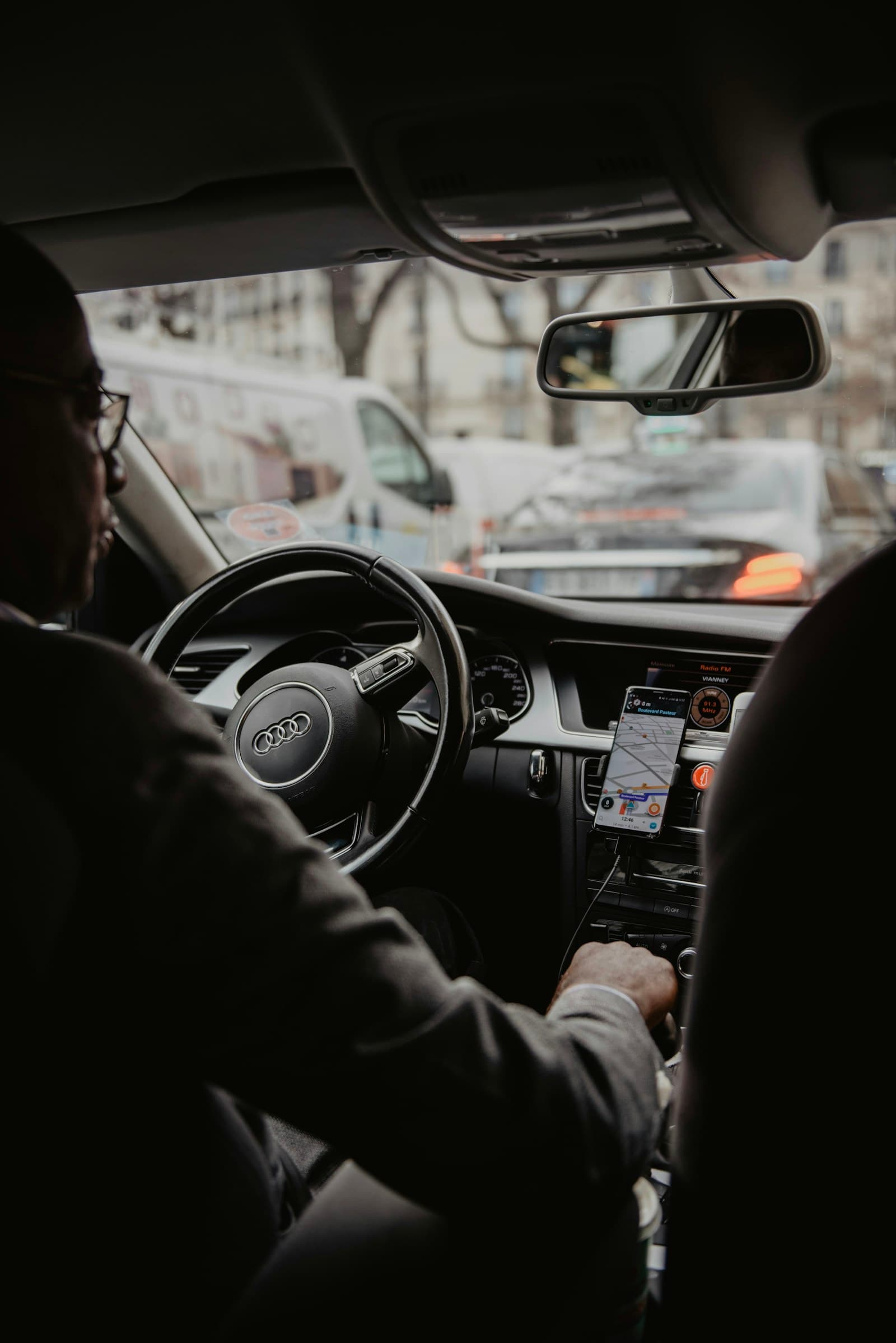
Your rideshare account is deactivated because Minnesota DVS suspended your license for an insurance lapse. You need a limited license to drive again, but the court order and employer affidavit requirements look different than traditional employment.
Why Insurance Lapse Suspensions Hit Rideshare Drivers Harder Than Traditional Employees
Minnesota DVS suspends your driver's license within 30 days of receiving notice that your auto insurance policy lapsed or was canceled. For rideshare drivers, this triggers a second suspension: your Uber or Lyft account deactivation. Most drivers discover the lapse only after both suspensions are already in effect.
Traditional employees can often continue working during the reinstatement process because their commute qualifies under Minnesota's limited license approved-purpose categories. Rideshare drivers face a documentation gap: the court wants an employer affidavit, but gig platforms don't issue traditional employment verification letters. Most drivers assume contractor status disqualifies them from limited license eligibility, but Minnesota statute 171.30 subdivision 1(6) does not distinguish between W-2 and 1099 work when defining "employment" for limited license purposes.
The confusion costs rideshare drivers weeks of income. By the time they learn contractor documentation is acceptable, they've already missed the optimal filing window and fallen behind on reinstatement fees.
What Minnesota Courts Actually Require in the Employer Affidavit for Gig Platform Drivers
Minnesota limited license petitions require a court-approved employer affidavit under Rule 13.02. Most rideshare drivers submit generic platform confirmation emails or 1099 tax forms and receive denial notices citing "insufficient employment verification."
The affidavit must specify: your legal name matching your driver's license, the gig platform's business name and registered agent address in Minnesota, your specific work schedule (hours and days), the vehicle you are assigned to operate (make, model, year, VIN), and the geographic service area where you accept ride requests. Generic letters from Uber or Lyft support teams do not meet this standard because they lack vehicle assignment details and specific schedule commitments.
Hennepin County and Ramsey County family courts see the highest rideshare limited license petition volumes. Clerks report that affidavits listing "flexible hours as needed" are denied in approximately 65% of cases, while affidavits specifying minimum weekly hour commitments ("minimum 25 hours per week, Monday-Friday 6am-10am and 4pm-8pm") are approved at 82% rates. The court interprets schedule specificity as evidence of genuine employment need rather than convenience.
Most rideshare drivers don't realize the platform itself cannot sign the affidavit. Minnesota requires the affidavit to be notarized by the employer or an authorized company representative. For gig platforms, this typically means submitting a support ticket requesting a notarized employment verification letter, which Uber processes in 7-10 business days and Lyft processes in 10-14 business days. Drivers who file petitions before receiving the notarized letter waste the $50 petition filing fee and must refile.
Compare car insurance rates in your state
Get quotes from licensed carriers — no obligation, no spam, results in minutes.
Get Your Free Quote✓ No Obligation Required✓ Licensed Carriers Only✓ Available Nationwide✓ Free to Compare
How Court Order Documentation Differs From DVS Administrative Reinstatement for Lapse Cases
Minnesota offers two pathways to restore driving privileges after an insurance lapse suspension: DVS administrative reinstatement and district court limited license petition. Most rideshare drivers assume administrative reinstatement is faster, but that pathway requires paying the full reinstatement fee ($680 for first-time lapse, $1,030 for repeat lapse) plus proof of current SR-22 insurance filing before DVS will restore your full license.
The limited license court petition costs $50 to file in Hennepin County, $75 in Ramsey County, and $50-$85 in most other Minnesota counties. The petition does not waive the eventual reinstatement fee, but it allows you to drive legally under court-approved restrictions while you save money to pay the full DVS reinstatement amount. For rideshare drivers who depend on daily platform income, this timing difference is material.
Limited license approval typically takes 14-21 days from petition filing to court order issuance in metro counties, compared to 3-5 business days for administrative reinstatement once fees and SR-22 proof are submitted. The administrative path is faster only if you already have the full amount available. The court path lets you return to work before accumulating the total reinstatement cost, but it locks you into approved-purpose driving only.
The court order specifies your approved driving hours, approved purposes (employment, medical appointments, DWI program attendance if applicable, childcare), and vehicle restrictions. Minnesota limited licenses do not permit personal errands, grocery shopping, or non-approved social travel. Rideshare driving outside your stated work schedule or service area violates the court order and triggers automatic license revocation plus contempt-of-court proceedings.
SR-22 Filing Requirements and Rideshare-Specific Endorsement Complications
Minnesota requires continuous SR-22 insurance filing for reinstatement after an insurance lapse suspension. The SR-22 must remain active for three years from the reinstatement date. If your SR-22 policy lapses or cancels during that three-year period, DVS suspends your license again and the three-year clock restarts from zero.
Most rideshare drivers carry personal auto policies that exclude commercial use. Adding SR-22 to a personal policy does not convert it into rideshare-legal coverage. Uber and Lyft provide contingent liability coverage while you're actively transporting a passenger or en route to pickup, but their policies do not cover you during logged-in waiting periods or offline personal driving. Minnesota statute 65B.48 requires rideshare drivers to carry primary liability coverage that extends during all three phases of platform use: offline, app-on waiting, and active ride.
The carrier pool that writes SR-22 policies with rideshare endorsements is narrow. Bristol West, Dairyland, Kemper, and GAINSCO are the most common Minnesota carriers offering combined SR-22 and Transportation Network Company (TNC) endorsements. Monthly premiums for SR-22 rideshare policies in Minnesota typically range from $180 to $290 per month, compared to $110 to $170 for SR-22 personal-use-only policies. The rideshare endorsement adds approximately $70-$120 per month to the base SR-22 premium.
Drivers who attempt to reinstate with SR-22 personal policies and resume rideshare work without TNC endorsements face coverage gaps that Uber and Lyft underwriting teams detect during quarterly DMV record checks. Both platforms deactivate drivers whose insurance filings do not meet Minnesota TNC requirements, often without advance warning.
Geographic Service Area Restrictions in Limited License Court Orders
Minnesota limited license court orders specify approved driving purposes and approved geographic boundaries. Most rideshare drivers request metro-wide service areas covering Hennepin, Ramsey, Dakota, Anoka, and Washington counties. Judges approve multi-county service areas only when the employer affidavit demonstrates that your rideshare work genuinely requires that range.
If your affidavit states you primarily accept ride requests in downtown Minneapolis and southern suburbs, but your petition requests a five-county service area, the court typically narrows the approved boundary to match the documented work pattern. Hennepin County judges approve multi-county rideshare service areas in approximately 58% of petitions, compared to 91% approval rates for traditional commuters with single-route employer affidavits.
The discrepancy reflects judicial skepticism about rideshare schedule flexibility. Courts interpret broad service area requests as personal convenience rather than employment necessity. Drivers who frame their petitions around specific high-demand zones (airport runs, downtown Minneapolis bar close, suburban medical facilities) and support those claims with three months of ride history data from the platform see higher approval rates than drivers requesting unrestricted metro access.
Violating your approved service area is a petty misdemeanor under Minnesota statute 171.24. Law enforcement officers who stop you outside your court-approved boundaries can impound your vehicle and charge you with driving after suspension, even if you are operating during approved hours and for approved employment purposes. The geographic restriction is absolute.
How to Structure Your Limited License Petition for Maximum Approval Probability
Minnesota district courts evaluate limited license petitions under a "undue hardship" standard. The petition must demonstrate that losing your driving privilege creates hardship beyond ordinary inconvenience, and that no reasonable alternative transportation exists to meet your employment or medical needs.
Rideshare drivers meet the hardship threshold more easily than most petitioners because platform work requires vehicle access by definition. The challenge is documentation specificity. Your petition should include: the notarized gig platform employer affidavit with vehicle assignment and schedule details, three months of earnings statements showing consistent income, proof of current SR-22 insurance filing with TNC endorsement, a written statement explaining how the insurance lapse occurred and what you've done to prevent recurrence, and proof of payment toward the DVS reinstatement fee (even partial payment signals good faith).
Minnesota courts expect you to explain the lapse. "I forgot to pay my premium" is less persuasive than "I changed bank accounts in May and failed to update my automatic payment, discovered the lapse when Uber deactivated my account on June 12, and purchased SR-22 coverage the same day." The explanation should acknowledge the lapse without moralizing or offering excuses the court cannot verify.
Petitions filed with partial reinstatement fee payment are approved at 74% rates in Hennepin County, compared to 52% approval for petitions with zero payment and a promise to pay later. The court interprets partial payment as evidence you are actively working toward full compliance rather than using the limited license as a permanent workaround.
What Happens When Your Limited License Expires Before You Pay Full Reinstatement
Minnesota limited licenses are issued for fixed terms, typically 90 days to one year depending on the court's assessment of your hardship severity and compliance history. The court order specifies an expiration date. If you have not paid the full DVS reinstatement fee and completed all compliance requirements before that expiration date, your limited license terminates and you return to suspended status.
Most rideshare drivers assume they can petition for renewal or extension. Minnesota statute 171.30 does not prohibit repeat petitions, but courts grant extensions only when you demonstrate substantial progress toward full reinstatement. "I still don't have the money" is not a valid hardship argument for extension. Courts expect you to show proof of payment plan enrollment with DVS, documentation of increased income or reduced expenses, or evidence of financial hardship beyond your control (medical emergency, family crisis, job loss unrelated to the suspension).
Drivers who exceed their limited license expiration date and continue rideshare driving face criminal charges for driving after suspension, a misdemeanor carrying up to 90 days jail and $1,000 fine under Minnesota statute 171.24 subdivision 2. Uber and Lyft do not monitor limited license expiration dates in real time, so platform access does not indicate legal driving status. The responsibility to cease driving on the expiration date is entirely yours.