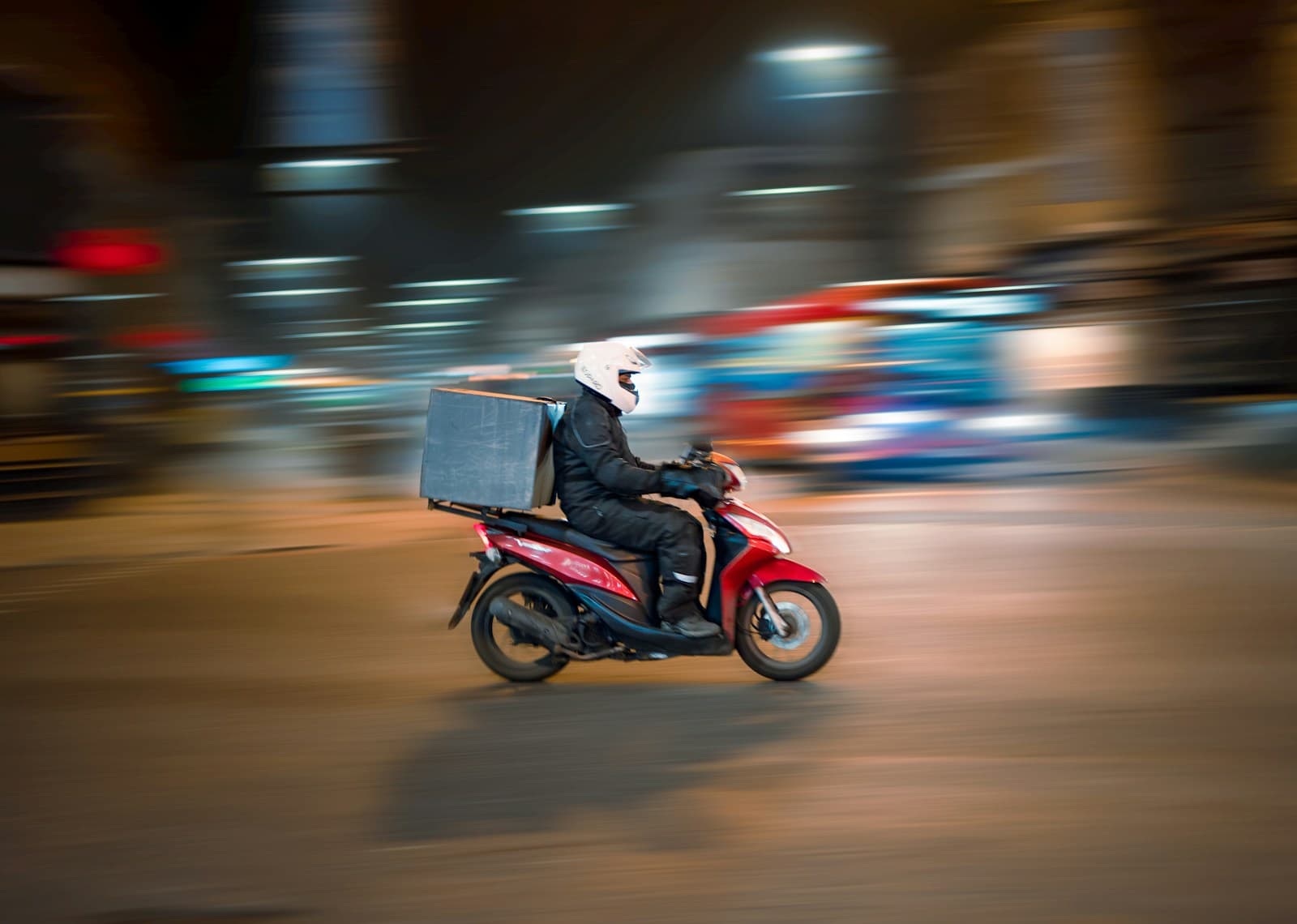
Minnesota's limited license approves specific work destinations by address, not by general route corridors. Most rideshare drivers lose approval when they deviate to accept a nearby pickup during their legal work hours.
Why Minnesota's Address-Based Limited License Conflicts With Rideshare Work
Minnesota's limited license authorizes travel to and from specific addresses listed on your court-approved petition. The license does not grant corridor-based driving privileges or allow discretionary routing within approved hours. If your petition lists your rideshare company's local office as your work destination, you are authorized to drive to that address and back home. You are not authorized to accept passenger pickups throughout the metro area, even during the exact hours your petition approves for work travel.
Most rideshare drivers assume approved work hours cover all on-shift driving. Minnesota DPS and law enforcement interpret the limited license statute differently. Minnesota Statutes Section 171.30 requires the petition to specify "the addresses of the applicant's place of employment" and "the locations where necessary services are provided." Courts approve the specific addresses you list. Deviation from those addresses during approved hours is unlicensed operation, a misdemeanor that extends your suspension and often triggers license revocation.
This structure creates a compliance trap for rideshare drivers. Your employer has no single fixed address you drive to daily. Your work occurs at varying pickup and dropoff locations across the service area. The limited license framework was written for commuters who drive from home to a warehouse or office and back. It does not align with app-based dispatch logistics, and Minnesota courts have not adapted the petition format to accommodate gig-economy driving.
What Routes Minnesota Actually Approves for Rideshare Drivers
Minnesota courts approve limited licenses for rideshare work in two scenarios, both narrow. The first is travel to and from the rideshare company's local hub or office location if you are required to report there for vehicle inspections, onboarding, or equipment pickup. The second is travel to and from a specific approved pickup zone if your employer designates a fixed staging area and you can document that requirement in your petition.
Both scenarios require employer documentation on company letterhead confirming the specific address, your scheduled reporting times, and the frequency of required travel. Most rideshare platforms do not issue this documentation because they do not require drivers to report to a fixed location. Uber and Lyft drivers activate the app from home and accept dispatches anywhere in the service area. Without a documentable fixed destination, your petition cannot satisfy the statutory address requirement.
If you operate from home without a fixed reporting location, Minnesota courts typically deny the limited license petition or approve it only for non-rideshare employment listed on the same petition. Some counties allow a hybrid petition: work travel to a documented W-2 employer address plus medical, education, or childcare destinations. Rideshare work is excluded from the approved activities unless you can produce employer documentation of a specific recurring address.
Compare car insurance rates in your state
Get quotes from licensed carriers — no obligation, no spam, results in minutes.
Get Your Free Quote✓ No Obligation Required✓ Licensed Carriers Only✓ Available Nationwide✓ Free to Compare
How Reckless Driving Affects Your Petition Approval Timeline
Minnesota law allows limited license petitions 30 days after the effective date of suspension for most violations. Reckless driving under Minnesota Statutes Section 169.13 triggers a mandatory suspension, but the waiting period before you can petition depends on your prior record. First-time reckless driving with no other moving violations in the past year qualifies for the 30-day pathway. Second or subsequent reckless convictions, or reckless driving combined with DWI-related offenses, face longer waiting periods and stricter petition review.
The 30-day clock starts from the suspension effective date on your DPS notice, not the court conviction date or the ticket date. If your suspension began March 1, you are eligible to file a limited license petition on or after March 31. Filing earlier results in automatic denial and you must refile after the waiting period ends, paying the $50 petition fee again.
Reckless driving convictions require SR-22 filing for three years from the conviction date if your suspension exceeded 30 days or if you were uninsured at the time of the violation. The limited license cannot be issued until you file SR-22 with Minnesota DPS and pay the $680 reinstatement fee. Most drivers assume the petition hearing resolves both the license and the insurance filing. They do not. You must secure SR-22 coverage, submit proof to DPS, pay reinstatement, and then attend the hearing with all documentation in hand.
What Happens When You Violate Your Limited License Route Restrictions
Driving outside your approved addresses during your approved hours is unlicensed operation under Minnesota Statutes Section 171.24. Law enforcement does not distinguish between unlicensed driving during restricted hours and unlicensed driving to unapproved destinations during approved hours. Both are misdemeanor violations carrying up to 90 days in jail and a $1,000 fine, though jail time is rare for first offenses.
The more immediate consequence is automatic revocation of your limited license. Minnesota DPS revokes the limited license upon notification of any moving violation or unlicensed operation charge during the restriction period. Revocation is administrative, not discretionary. You do not receive a hearing before revocation. Once revoked, you must serve the remainder of your original suspension without limited privileges and reapply for reinstatement after the full suspension period ends.
Violation also extends your underlying suspension. Unlicensed operation adds a minimum 30-day extension to your current suspension period, and the judge may impose consecutive suspensions if you were cited multiple times. If your original suspension was six months and you are cited for unlicensed operation in month three, you face revocation of the limited license, loss of approved work privileges immediately, and a new suspension period beginning after the original six months expires. Total driving prohibition often exceeds one year from the original violation date.
How to Structure Your Petition If You Have Secondary Employment
If rideshare driving is your only income source and you cannot document a fixed reporting address, your petition will not satisfy Minnesota's limited license statute. The alternative is to secure secondary employment with a documentable fixed work address before filing your petition. Many drivers take part-time warehouse, delivery hub, or retail roles specifically to qualify for a limited license, then use the approved work-hours window to cover rideshare shifts informally.
This workaround violates the terms of your limited license and exposes you to the risks described above. Some drivers accept that risk because loss of rideshare income means loss of housing or vehicle repossession. The calculation is individual and the consequences are unforgiving. If you are cited during an unapproved rideshare trip, the fact that you were technically within your approved time window is not a defense. The destination address is what the statute governs, and deviation is unlicensed operation.
A more compliant alternative is to petition for work travel to a documented employer address plus medical appointments, childcare, and education destinations. Minnesota courts allow multiple approved destination categories on a single petition if each is supported by documentation. You list your part-time employer's address for work hours, your medical provider's address for recurring appointments, and your child's daycare address for dropoff and pickup. This expands your legal driving window without listing rideshare work explicitly. The petition still prohibits general rideshare operation, but it provides more flexibility than a work-only petition.
Why Most Rideshare Drivers Switch to Food Delivery During Suspension
Food delivery platforms operate under the same app-based dispatch model as rideshare, but the compliance risk during a limited license period is lower for one reason: most delivery drivers can document a fixed restaurant or hub address where they report to pick up orders. DoorDash, Uber Eats, and Grubhub drivers who work a consistent zone often pick up from the same 5-10 restaurants repeatedly. Some drivers structure their petition around the single highest-volume restaurant address and accept only orders dispatched from that location during their approved work hours.
This is still a narrow workaround. Your petition must list the restaurant address as a work destination, not as a general delivery hub. You must document that you are employed by or contracted through that specific restaurant, which most delivery platforms do not structure formally. The restaurant itself is not your employer; the app platform is. Without employer documentation from the platform confirming that you report to a specific address, the court may deny the petition or approve it only for the platform's corporate office address, which does not help you earn.
Some drivers shift entirely to W-2 delivery roles during the suspension period. Amazon Flex, UPS seasonal package delivery, and local courier companies hire drivers for fixed shifts with documented start-location addresses. These roles provide the employer letterhead and address specificity Minnesota courts require. The hourly pay is typically lower than rideshare peak-hour earnings, but the positions qualify for limited license approval and carry no compliance risk during the restriction period.
What Your SR-22 Coverage Needs to Include for Limited License Approval
Minnesota requires SR-22 filing at state minimum liability limits: 30/60/10 ($30,000 bodily injury per person, $60,000 per accident, $10,000 property damage). If you drive for rideshare or delivery platforms during your limited license period, your personal SR-22 policy does not cover commercial activity. You need a commercial or rideshare endorsement on your SR-22 policy, or a separate commercial policy with SR-22 attached.
Most non-standard carriers that write SR-22 policies (The General, Direct Auto, Acceptance, Safe Auto, Bristol West) do not offer rideshare or commercial endorsements. You will need to work with a specialty commercial carrier or a rideshare-specific insurer. GEICO, Progressive, State Farm, and Allstate offer rideshare coverage in Minnesota, but their willingness to write new policies for drivers with active reckless driving convictions and limited licenses varies by underwriting tier and county. Expect higher premiums: $180–$280 per month for SR-22 liability alone, plus an additional $60–$120 per month for rideshare endorsement.
If your petition does not list rideshare work and you are approved only for travel to a W-2 employer address, your personal SR-22 policy is sufficient. The moment you accept a rideshare dispatch during your approved hours, you are driving uninsured for that trip. A collision or citation during an active rideshare trip will reveal the coverage gap when you file a claim or the officer requests proof of insurance. The result is a new unlicensed operation charge, immediate revocation of your limited license, and potential SR-22 filing cancellation if your carrier discovers the commercial use.