Alabama hardship licenses stack four mandatory costs that hit at different intervals — SR-22 filing, ignition interlock rental, restricted license fees, and non-standard premiums. Most drivers budget for the initial application but miss the 6-month cost spike when IID and SR-22 renewal overlap.
What Does an Alabama Hardship License Actually Cost Per Month?
Alabama hardship license holders pay $185–$310 per month on average during the restriction period, broken into four mandatory line items: SR-22 non-standard auto insurance ($110–$190/mo), ignition interlock device rental and monitoring ($75–$85/mo when required), hardship license application and annual renewal ($100 application + $36.25/year pro-rated to roughly $3/mo), and administrative costs for employer documentation and court compliance ($5–$30/mo depending on hearing requirements and employer letter updates). The total varies by county, violation type, and whether you own a vehicle or need non-owner SR-22 coverage.
The $185–$310 range assumes a single DUI with no prior suspensions and a clean record before the incident. Drivers with multiple DUIs, habitual offender status, or commercial driving violations typically see premiums 40–60% higher. Alabama does not cap SR-22 surcharges, so carriers price based on perceived risk with minimal regulatory constraint.
Most hardship license applicants focus on the upfront costs — the $100 application fee, attorney consultation ($500–$1,200 for DUI hardship hearings), and SR-22 filing fee (typically $25–$50 depending on carrier) — but the monthly carrying cost runs 12–36 months depending on the underlying suspension period. A standard first-offense DUI hardship license with 6-month IID requirement costs $1,110–$1,860 over six months, then drops to $110–$225/mo once the interlock is removed.
When Do Hardship License Costs Spike During the Restriction Period?
Month 6 triggers the highest cost overlap for most Alabama DUI hardship cases. Ignition interlock monitoring continues at $75–$85/mo, and the initial 6-month SR-22 policy term expires, forcing renewal at rates that typically increase 15–30% after the first term. Carriers treat the first 6 months as probationary pricing — if you've maintained continuous coverage and avoided violations, some hold rates steady, but most adjust upward to reflect the full non-standard risk profile. Budget for $140–$180 in added monthly cost during month 6.
The second spike hits at 12 months when the hardship license itself renews. Alabama hardship licenses issued through administrative hearing are valid for one year and require annual reapplication with updated employer documentation, proof of continued SR-22 coverage, and payment of the $36.25 renewal fee. Some counties require a brief compliance hearing; others process renewals administratively through the Driver License Division. If your employer has changed or your work hours have shifted outside the originally approved restrictions, expect delays and possible denial until amended documentation is filed.
Court-ordered IID removal at 6 months eliminates the $75–$85/mo device cost, but some SR-22 carriers increase premiums when the interlock is removed, treating it as loss of a risk mitigation control. Not all carriers do this, but it's common enough that you should confirm your carrier's IID removal policy before the 6-month mark.
Compare car insurance rates in your state
Get quotes from licensed carriers — no obligation, no spam, results in minutes.
Get Your Free Quote✓ No Obligation Required✓ Licensed Carriers Only✓ Available Nationwide✓ Free to Compare
What Drives SR-22 Premium Variation for Alabama Hardship Licenses?
Alabama SR-22 premiums for hardship license holders range from $110–$190/mo for minimum liability coverage (25/50/25 state minimums) based on three primary factors: violation type and count, vehicle ownership status, and county of residence. A first-offense DUI in Jefferson County with a financed vehicle typically costs $140–$170/mo. The same profile in Baldwin or Mobile counties runs $120–$150/mo due to lower uninsured motorist rates and reduced theft risk. Drivers without a vehicle who need non-owner SR-22 coverage pay $65–$110/mo, but cannot drive any vehicle they own or have regular access to under non-owner policy terms.
Carriers writing Alabama hardship SR-22 policies include Bristol West, Dairyland, GAINSCO, The General, Direct Auto, and Safe Auto. Standard carriers like State Farm and GEICO either decline hardship license applicants outright or non-renew at the first SR-22 filing. Alabama does not require carriers to offer SR-22 endorsements, so the non-standard market is the only accessible option for most drivers during the restriction period.
Multiple DUI convictions, habitual offender designation, or a combination of DUI and serious moving violations push monthly premiums to $220–$310/mo even for state minimum coverage. Alabama defines habitual offenders as drivers with three major violations within 5 years or 15 non-major violations within 2 years, triggering a minimum 5-year license revocation. Hardship licenses for habitual offenders require separate court petition and are granted only for employment purposes with zero tolerance for additional violations.
How Does Ignition Interlock Add to Monthly Hardship License Costs?
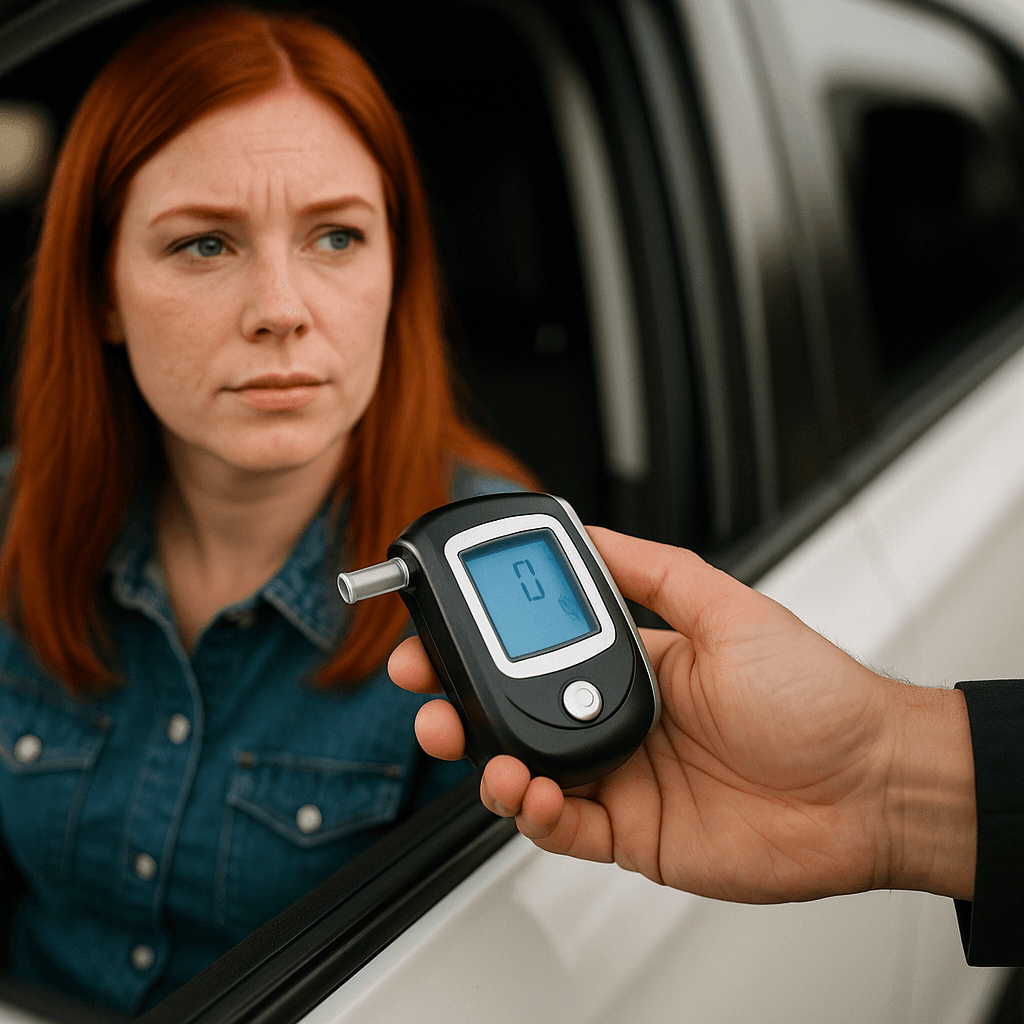
Alabama requires ignition interlock installation for all DUI-related hardship licenses, with device rental and monitoring costing $75–$85/mo through state-certified providers like Smart Start, Intoxalock, or LifeSafer. The monthly fee covers device rental, calibration every 30 days, and data download submission to the Alabama Ignition Interlock Division. Installation costs $75–$125 upfront and removal costs $50–$75, but these are one-time charges, not monthly carrying costs.
IID duration depends on the DUI offense count and court order specifics. First-offense DUI hardship licenses require 6 months of interlock monitoring. Second-offense DUI requires 12 months minimum. Third or subsequent DUI offenses require 36 months. Some circuit courts impose longer IID periods than the statutory minimum, particularly in cases involving accidents, injury, or refusal to submit to chemical testing.
Violating interlock restrictions — failed startup tests, missed calibration appointments, or attempts to tamper with the device — extends the monitoring period and can result in immediate hardship license revocation. Most providers report violations to the Alabama Law Enforcement Agency within 48 hours. Budget for the full IID term without assuming early removal, even if you pass every test and meet every calibration window. Courts rarely reduce IID requirements once imposed.
What Administrative Costs Continue Throughout the Hardship Period?
Employer documentation updates cost $10–$30/mo for most hardship license holders, covering notarized letter updates when work hours shift, new employer onboarding letters when you change jobs, and route amendment filings when your commute path changes. Alabama hardship licenses restrict driving to employer-verified routes during employer-verified hours. Any deviation requires advance written amendment filed with the Driver License Division and approved before the new route or hours take effect.
Hardship license annual renewal costs $36.25 and requires submission of updated employer verification, proof of continuous SR-22 coverage, IID compliance report (if still required), and completion of any court-ordered DUI education or substance abuse programs. Renewals submitted late trigger a $50 administrative penalty and possible suspension of the hardship privilege until compliance is restored.
Some counties require biannual compliance hearings for DUI hardship license holders, adding $100–$150 in court costs and potential attorney fees if representation is needed. These hearings review IID reports, verify employment continuity, and confirm adherence to approved driving restrictions. Missing a scheduled compliance hearing results in automatic hardship license revocation and reinstatement of the full suspension period.
How Do You Budget for the Full Alabama Hardship License Period?
A 12-month Alabama hardship license with 6-month IID requirement costs $2,330–$3,750 total, broken into upfront costs ($100 application + $75–$125 IID installation + $25–$50 SR-22 filing = $200–$275) and monthly carrying costs (months 1–6: $185–$275/mo with IID, months 7–12: $110–$190/mo without IID). Most drivers finance the upfront costs and budget monthly expenses from income, but missing even one month of SR-22 premium resets the filing clock to zero and revokes the hardship license immediately.
Build a $300 cushion into your monthly budget for the first 6 months to absorb the SR-22 renewal spike, unexpected IID calibration charges, or employer documentation updates. After month 6, the cushion can drop to $150/mo once IID costs end. Alabama does not offer hardship license payment plans — all fees are due at application, renewal, or compliance hearing with no deferred payment option.
If you lose your job during the hardship period, notify the Driver License Division within 10 days. Alabama hardship licenses are conditioned on verified employment. Loss of employment does not automatically revoke the license, but you cannot legally drive under hardship privilege without an approved employer on file. Some counties allow temporary hardship amendments for job search purposes, limited to interviews and employment agency visits, but approval is discretionary and not guaranteed.