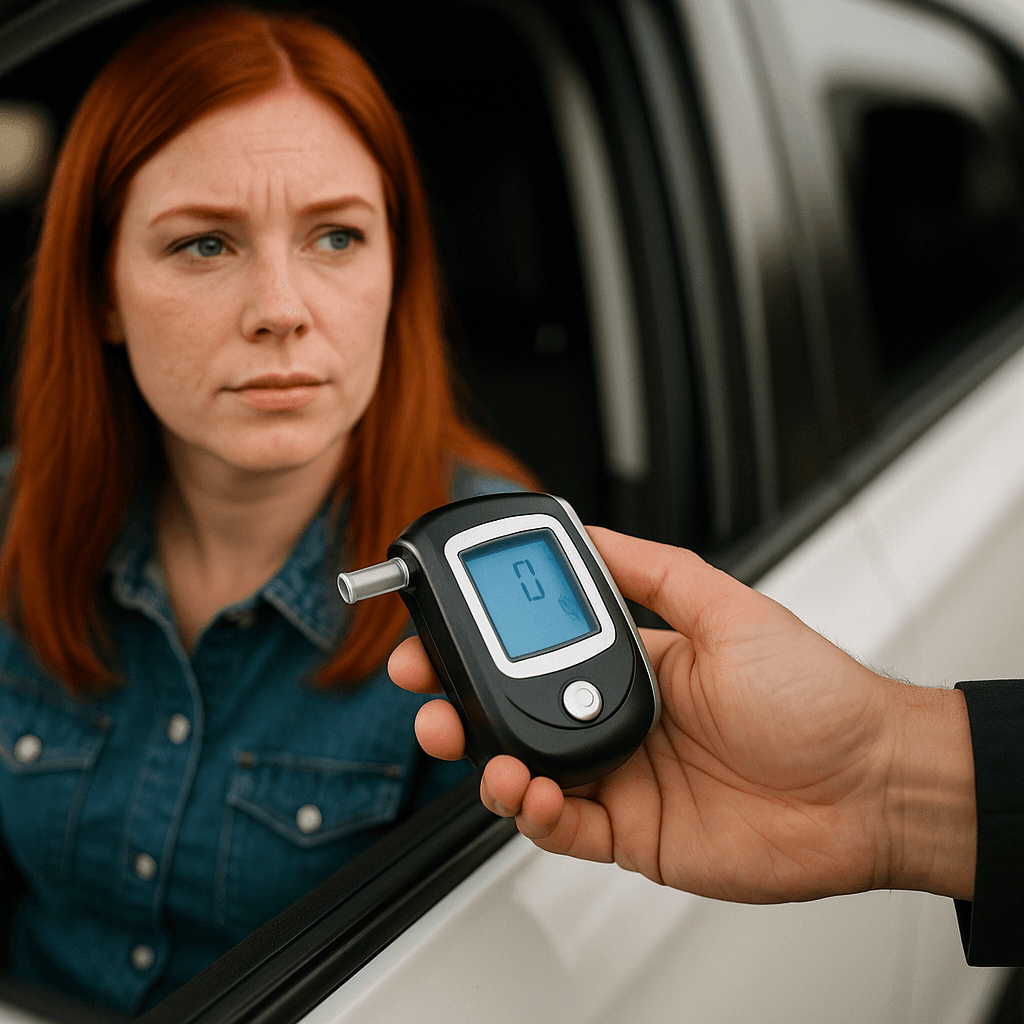
Alabama hardship licenses require ignition interlock devices (IID) in most DUI cases. Installation runs $75-$150, monitoring averages $75-$100/month, and removal costs $50-$100 — on top of SR-22 filing and restricted license fees.
Alabama Hardship License IID Requirement: When It Applies
Alabama requires ignition interlock devices (IID) on hardship licenses for all DUI convictions with BAC at or above 0.15%, refusal to submit to chemical testing, or second and subsequent DUI offenses regardless of BAC. The device is court-ordered as a condition of the hardship license, not optional. Alabama Code §32-5A-191.3 mandates minimum IID periods: 6 months for first-offense high-BAC, 12 months for refusal cases, and 18-24 months for repeat offenders.
The Alabama Law Enforcement Agency (ALEA) issues the hardship license only after you provide proof of IID installation from a state-approved vendor. If you apply for a hardship license within 90 days of your DUI conviction and the court orders IID, you cannot drive legally until the device is installed and certified to ALEA. Missing this timing window means you wait the full suspension period without any driving privilege.
First-offense DUI with BAC under 0.15% typically does not require IID for a hardship license unless the court orders it as a sentencing condition. The distinction matters: if your court order includes IID as a probation term, ALEA will not issue the hardship license without installation proof, even if the statutory minimum does not apply to your BAC level.
IID Installation Cost: $75-$150 Upfront
Alabama-approved IID vendors charge $75-$150 for initial installation, depending on vehicle type and vendor. The installation appointment typically takes 60-90 minutes at the vendor's service location. You cannot use a mobile mechanic or install the device yourself. Alabama requires certified vendors only: Intoxalock, Smart Start, LifeSafer, and Guardian Interlock are the primary approved providers statewide.
Installation includes device calibration, initial breath sample training, and the first data download setup. Some vendors waive installation fees if you prepay 6-12 months of monitoring upfront, but this requires $450-$1,200 in cash at signing. Most hardship license applicants pay installation separately and finance monthly monitoring.
Vehicle complexity affects cost. Diesel engines, push-button start systems, and vehicles with aftermarket electrical modifications may incur $25-$50 surcharges. The vendor inspects your vehicle before quoting final installation cost. If your vehicle cannot accommodate the IID without electrical system modification, you may need to secure a different vehicle before ALEA will process your hardship license application.
Compare car insurance rates in your state
Get quotes from licensed carriers — no obligation, no spam, results in minutes.
Get Your Free Quote✓ No Obligation Required✓ Licensed Carriers Only✓ Available Nationwide✓ Free to Compare
Monthly Monitoring Fee: $75-$100 for the Full IID Period
Alabama IID monitoring runs $75-$100 per month for the duration of your court-ordered period. This fee covers device calibration every 30-60 days, data downloads transmitted to ALEA and the court, and 24/7 customer support for lockouts or failed starts. The monthly cost does not decrease over time. A 12-month IID requirement costs $900-$1,200 in monitoring fees alone, separate from installation and removal.
Calibration appointments are mandatory. Alabama requires in-person recalibration every 30-60 days depending on vendor and your violation history. Missing a scheduled calibration triggers a device lockout within 5-7 days, meaning your vehicle will not start. The vendor reports the missed appointment to ALEA, which can result in hardship license suspension. You pay the monthly monitoring fee whether you drive daily or once per week. The fee is not prorated for low usage.
Failed breath tests or tampering detection increases monitoring cost. If the IID records a failed start (BAC above 0.02%), the vendor may require biweekly calibration at $15-$25 per additional visit. Repeated violations extend your IID period by court order, adding months of monitoring fees. Alabama courts typically extend IID requirements by 3-6 months per failed test incident.
IID Removal Cost: $50-$100 After Court Clearance
Removal costs $50-$100 and requires written court or ALEA authorization. You cannot remove the IID when your hardship license period ends. You can only remove it when your court-ordered IID period completes and the court or ALEA issues a removal authorization letter. Most vendors require you to bring this letter to the removal appointment. Removing the device without authorization violates probation and triggers immediate hardship license revocation.
Removal takes 30-45 minutes at the vendor's service location. The vendor uninstalls the device, restores your vehicle's electrical system, and submits final compliance data to ALEA. Some vendors charge $25-$50 for electrical system inspection post-removal to confirm no damage occurred during the IID period. If you financed the device, final removal may require settlement of any outstanding monitoring balance.
Your hardship license does not automatically convert to a full license when the IID period ends. Alabama requires you to apply for license reinstatement separately, pay the $125 reinstatement fee, and maintain SR-22 filing for the full duration ordered by the court or DMV — often 3 years from the DUI conviction date. The IID removal date and the SR-22 termination date are rarely the same.
Total IID Cost for Alabama Hardship License Holders
Total IID cost for a 12-month hardship license period runs $1,050-$1,450: $75-$150 installation, $900-$1,200 monitoring (12 months × $75-$100), and $50-$100 removal. This assumes zero failed tests, no missed calibrations, and no court-ordered extensions. A 24-month IID requirement doubles monitoring cost to $1,800-$2,400, pushing total IID expense to $1,925-$2,650.
Add SR-22 filing and hardship license fees to the IID total. Alabama SR-22 insurance typically costs $900-$1,800/year for DUI hardship applicants, with $25-$50 annual SR-22 filing fees. The hardship license application fee is $100, and the eventual reinstatement fee is $125. First-year total: $2,100-$3,525 (IID + SR-22 + fees) for a 12-month hardship period, $3,900-$5,200 for 24 months.
Most hardship license holders budget $175-$200/month during the IID period: $75-$100 IID monitoring, $75-$150 SR-22 insurance (monthly premium), and $25-$50 for calibration visits or compliance appointment travel. This cost runs parallel to your regular vehicle expenses and court-ordered DUI program fees, which Alabama requires for hardship license eligibility.
Alabama IID Vendor Comparison: What to Ask
Alabama approves four primary IID vendors statewide: Intoxalock, Smart Start, LifeSafer, and Guardian Interlock. Pricing varies by region and service location density. Jefferson County and Mobile County have multiple vendor locations, allowing price comparison. Rural counties may have one vendor within 50 miles, eliminating negotiation leverage. Ask each vendor for total cost breakdown: installation, monthly monitoring, calibration frequency, removal, and any hidden fees for failed tests or late calibration.
Calibration location matters for hardship license holders. Your hardship license restricts you to approved routes and hours — typically work, DUI program, medical appointments, and direct travel between. If the nearest vendor calibration site is 60 miles from your approved work route, you may need court approval to add the calibration location to your permitted travel. Missing calibration because it falls outside your approved hours or routes does not excuse the violation. Plan calibration appointments during your approved driving windows.
Some vendors offer payment plans for monitoring fees, spreading monthly cost into biweekly installments. This does not reduce total cost but aligns payment with paycheck schedules. Alabama does not subsidize IID cost for indigent hardship applicants. If you cannot afford installation and first month monitoring upfront, you cannot satisfy the hardship license IID requirement, which delays your return to legal driving.
What Happens If You Cannot Afford IID on Your Hardship License
Alabama does not waive IID requirements for financial hardship. If the court orders IID as a condition of your hardship license and you cannot pay installation and monthly monitoring, you do not receive the hardship license. ALEA will not issue restricted driving privileges without proof of IID installation when it is court-mandated. You remain under full suspension until you can afford the device or your suspension period expires.
Some counties allow you to request IID cost reduction at sentencing or hardship hearing. The court may reduce the IID period from 12 months to 6 months if you demonstrate financial hardship and complete DUI program requirements early. This cuts monitoring cost in half but does not eliminate it. The court cannot substitute IID with increased probation or community service under Alabama Code §32-5A-191.3 for high-BAC or refusal cases.
Employer-sponsored vehicle programs are rare but possible. If your employer requires you to drive a company vehicle for work and your hardship license mandates IID, some employers will install the device on the company vehicle and deduct cost from your paycheck over 12-24 months. This requires employer agreement, proof that no personal vehicle is available, and court approval to drive the employer's vehicle under your hardship license. Most Alabama employers do not offer this accommodation.