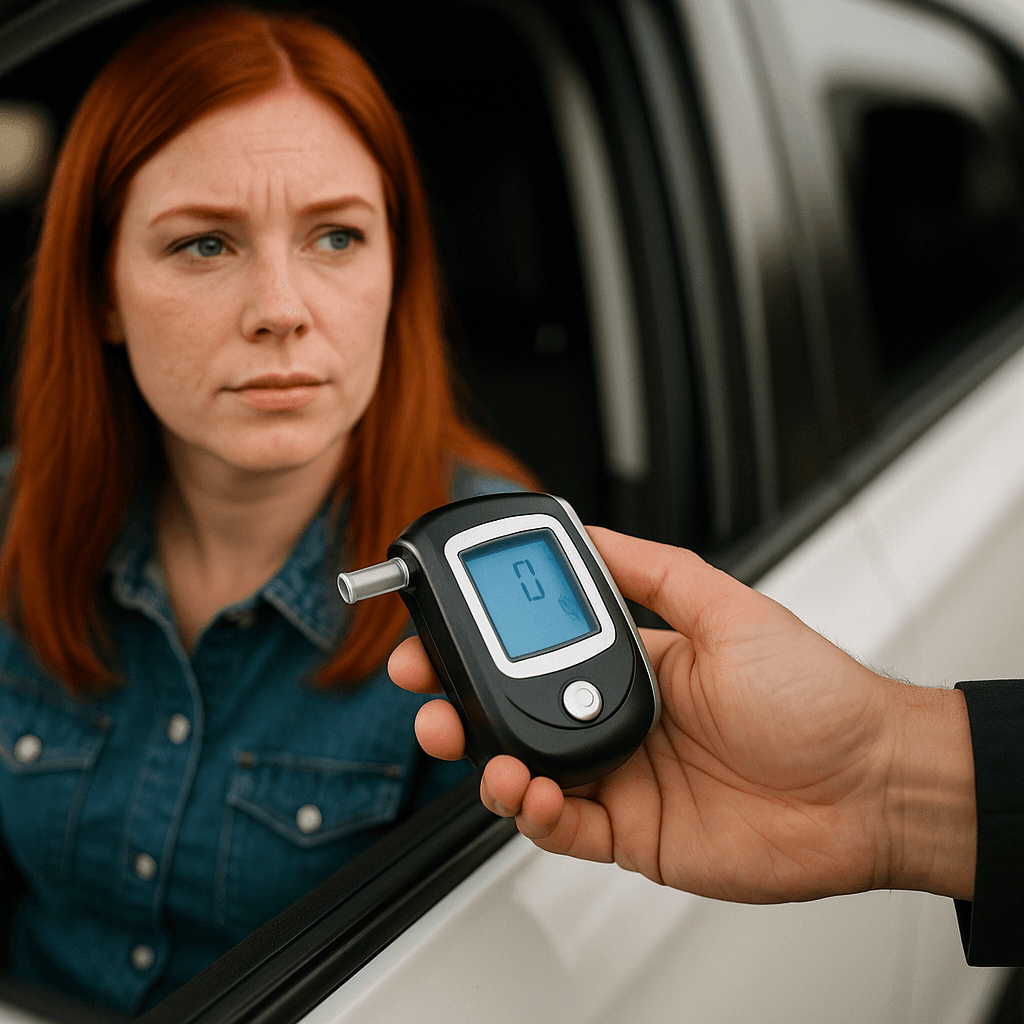
Alabama's IID requirement runs separately from your hardship license application timeline. Installing early doesn't shorten your total compliance period, but it can get you driving sooner.
Alabama's IID Requirement Starts When the Court Orders It, Not When You Apply for a Hardship License
Your IID compliance period in Alabama begins on the date specified in your court order, not the date you install the device or apply for a hardship license. Most DUI sentences include a mandatory IID installation period ranging from 6 months to 3 years depending on offense count and BAC level. That clock does not start until the device is installed and reporting to the Alabama Law Enforcement Agency (ALEA) monitoring system.
If your court order requires 12 months of IID and you delay installation for 90 days, you've added 90 days to your total restricted driving period. The hardship license application requires proof of IID installation, but the IID obligation exists independently of the hardship license. Installing the device early satisfies the court requirement and clears the path for DMV approval.
Most first-offense DUI cases in Alabama carry a 6-month IID requirement. Second offenses trigger 12 to 24 months. Third and subsequent offenses mandate 36 months minimum. These durations are set by statute and court order, not by the hardship license process.
The Hardship License Application Can't Move Forward Without Proof of IID Installation
Alabama's hardship license application requires documentation that an approved IID provider has installed a certified device in your vehicle and enrolled you in ALEA's monitoring program. The DMV will not schedule a hardship hearing or process your application until this proof is submitted. Installing the IID early removes this bottleneck.
The typical hardship license approval timeline in Alabama runs 30 to 60 days from application submission to approved driving privilege. That window includes the administrative review, the hardship hearing if required, and the issuance of the restricted license. None of that begins until IID proof is in the file. If you're racing a job deadline, every week matters.
Approved IID providers in Alabama include Intoxalock, Smart Start, LifeSafer, and Guardian Interlock. Installation appointments typically run 7 to 14 days out. Monthly monitoring fees range from $70 to $100 plus the initial installation fee of $100 to $150. Budget $1,000 to $1,500 for the first year of IID compliance including calibration visits.
Compare car insurance rates in your state
Get quotes from licensed carriers — no obligation, no spam, results in minutes.
Get Your Free Quote✓ No Obligation Required✓ Licensed Carriers Only✓ Available Nationwide✓ Free to Compare
Early Installation Lets You Demonstrate Compliance Before the Hardship Hearing
Alabama hardship hearings evaluate whether granting limited driving privileges serves a genuine employment or family necessity and whether the applicant can comply with restrictions. A clean IID record spanning 30 to 60 days before the hearing demonstrates compliance in a way that same-day installation cannot. Hearing officers review monitoring reports as part of the approval decision.
Violations recorded by the IID during the pre-hearing period — failed startup tests, missed rolling retests, skipped calibration appointments — appear in the monitoring data and reduce approval likelihood. Installing early gives you time to learn the device protocol, resolve calibration issues, and build a clean compliance record before the hearing.
First-time hardship applicants with a clean IID record at the hearing date see approval rates above 80% in Alabama. Applicants with recent IID violations or delayed installation see approval rates closer to 50%. The hearing officer has discretion. Demonstrated compliance reduces that discretion in your favor.
The Cost Stack for Early Installation Runs Higher, But Job Loss Costs More
Installing an IID 60 days before your hardship license approval means paying two months of monitoring fees while you're still not legally driving. That's $140 to $200 in sunk costs. Add the installation fee, first calibration, and SR-22 insurance premium, and you're spending $500 to $700 before you have driving privileges.
The alternative is delaying installation until the hardship license application is filed, which saves upfront cost but extends the total timeline by 30 to 45 days. If your employer has given you a deadline to restore driving privileges or risk termination, those 30 days cost more than the $200 in early monitoring fees.
Most Alabama employers in industries requiring driving — construction, home health, delivery, sales — will accommodate a 60-day hardship license timeline if communicated early. Stretching that to 90 or 120 days because you delayed IID installation often exceeds their flexibility. Calculate the cost against your employment risk, not just the dollar amount.
Alabama's Hardship License Restricts You to Approved Routes and Hours Even With IID Installed
The hardship license in Alabama is not general driving with an IID condition. It's a court-approved list of specific routes, specific hours, and specific purposes — work, medical appointments, DUI education classes, and in some cases childcare or grocery shopping. The IID monitors every startup and every trip, but the hardship license itself restricts where and when those trips are legal.
Violating your approved route or driving outside approved hours is a separate offense that revokes the hardship license and often extends the underlying suspension. The IID will record the violation even if law enforcement doesn't stop you. ALEA monitoring reports flag trips outside approved windows. Hearing officers review these reports at any subsequent violation hearing.
Your hardship license application must include employer documentation specifying work address, work hours, and required route. If your job requires client visits or multi-site work, you'll need employer letterhead detailing each location. The more complex your work driving pattern, the harder the approval and the higher the compliance risk.
SR-22 Insurance Must Be Active Before the Hardship License Is Issued
Alabama requires SR-22 certificate filing for the full duration of your license suspension and hardship license period. The SR-22 must be active and on file with ALEA before the hardship license is issued. Most non-standard carriers — Bristol West, Dairyland, The General, GAINSCO, National General — can file SR-22 same-day once the policy is bound.
SR-22 premiums for DUI cases in Alabama typically run $150 to $250 per month for liability-only coverage at state minimums: $25,000 bodily injury per person, $50,000 per accident, $25,000 property damage. If you're financing a vehicle, full coverage with SR-22 often exceeds $350 per month. Shop the non-standard market early — not all carriers write IID-equipped vehicle policies, and availability varies by county.
If your SR-22 lapses for any reason during the hardship license period, the license is immediately suspended and your compliance clock resets. Most carriers that write high-risk auto policies offer payment plans, but a missed payment triggers an SR-22 cancellation notice to the state within 10 days. Budget for the full premium or set up autopay.