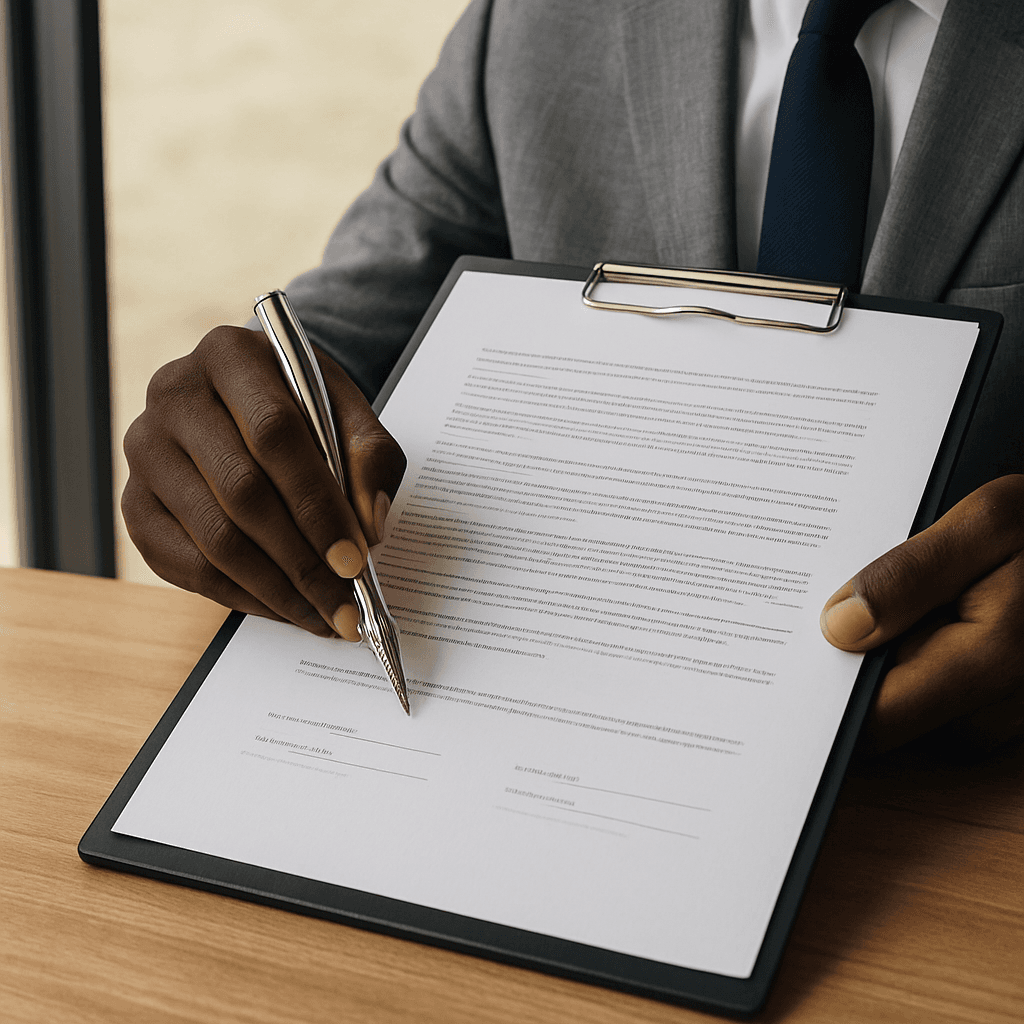
You've been approved for a work permit but your employer's HR department won't sign the affidavit without court documentation you don't have yet. Nebraska divides permit authority between county courts and DMV, creating a circular documentation trap most college students navigate backward.
Why Nebraska's Two-Stage Permit Process Creates Documentation Conflicts
Nebraska Employment Driving Permits require approval from two separate agencies: the county court that granted your order and the Nebraska DMV that issues the physical credential. The court order authorizes restricted driving immediately upon signature, but most employers won't accept a photocopied court document as proof of legal driving status. They expect a state-issued card with your photo and an expiration date.
College students hit this gap hardest because campus HR departments and third-party staffing agencies follow standardized onboarding checklists built for unrestricted licenses. When you present a court order instead of a DMV-issued permit card, HR flags it as incomplete documentation and pauses your hire. By the time you receive the physical permit from DMV 10-14 business days later, the position may be filled or the conditional offer rescinded.
The timing mismatch stems from Nebraska Revised Statute 60-4,115, which grants courts authority to issue employment permits but assigns DMV responsibility for credential production. Court clerks provide a certified copy of the signed order within 1-2 business days. DMV requires that certified court order plus proof of SR-22 filing before processing your application, then mails the physical permit to your address of record. Most applicants assume the court document is sufficient and learn otherwise only when HR rejects it.
What College Students Miss About Employer Affidavit Requirements
Nebraska courts require an employer affidavit as part of your initial petition, but the affidavit serves a different purpose than most students realize. The affidavit proves to the judge that you have legitimate employment justifying restricted driving privileges. It does not authorize your employer to verify your permit status post-approval.
HR departments operate under a separate compliance framework. They must verify that every driver operating a vehicle for work purposes holds valid legal authorization to drive. When you present a court order, HR sees a legal document they cannot independently verify through Nebraska DMV's online license verification system. The system shows your regular license as suspended or revoked. Your employment permit doesn't appear in that database until DMV processes your application and updates your record.
Most college students bring the employer affidavit and court order to their first day expecting immediate clearance. Instead, HR requests the physical permit card or asks them to provide a DMV verification code proving the permit is active. Neither exists yet because DMV hasn't finished processing. The student then calls the court clerk asking for additional documentation the clerk cannot provide.
Compare car insurance rates in your state
Get quotes from licensed carriers — no obligation, no spam, results in minutes.
Get Your Free Quote✓ No Obligation Required✓ Licensed Carriers Only✓ Available Nationwide✓ Free to Compare
The Correct Documentation Sequence From Petition to First Shift
File your Employment Driving Permit petition with the county court where your DUI case was adjudicated or where you currently reside. Include the employer affidavit signed by your direct supervisor or HR representative, a proposed driving schedule matching your work shifts, and proof of SR-22 insurance filing. Nebraska courts typically schedule hearings 7-14 days after petition filing, though some counties handle uncontested petitions administratively within 5 business days.
Once the judge signs your order, request two certified copies from the court clerk: one for DMV and one for your records. Do not give your only certified copy to your employer. Take the certified copy to any Nebraska DMV office along with your SR-22 proof of insurance and the $48 permit application fee. DMV processes employment permit applications separately from standard license transactions, often requiring 10-14 business days for credential production.
Schedule your employment start date at least 3 weeks after your court hearing date. This buffer accounts for court processing, DMV application submission, and physical permit mailing time. If your employer needs documentation before your start date, provide a photocopy of the court order with a note stating the permit card is in production and will be provided on your first day. Most employers accept this timeline if communicated proactively rather than discovered during onboarding.
When Your Employer Refuses the Court Order Before DMV Issues the Card
Contact Nebraska DMV's Driver Records division at 402-471-3918 and request expedited processing or a temporary driving authorization letter. DMV does not typically issue temporary permits for employment cases, but some examiners will provide a verification letter confirming your application is approved and the physical credential is in production. This letter includes your permit number, approved driving hours, and expiration date.
If DMV cannot provide a verification letter, ask the county court clerk to issue an additional certified copy of your signed order on court letterhead with the clerk's official seal. Present this to your employer along with a printout of Nebraska Revised Statute 60-4,115 showing that court-issued employment permits are valid immediately upon judicial signature. Some HR departments accept certified court documents when the statute is cited directly.
For employers who refuse any documentation other than a state-issued card, you face a choice: delay your start date until the physical permit arrives, or request the court modify your order to include a provision explicitly stating the order serves as temporary authorization pending DMV credential issuance. Not all judges grant this modification, but Lancaster County and Douglas County courts have granted it in cases where employment loss was imminent.
How SR-22 Filing Timing Affects Both Court and Employer Documentation
Nebraska requires SR-22 insurance filing before DMV will process your employment permit application, even though the court can approve your petition without proof of SR-22 on file. This creates a second documentation gap: you can obtain court approval quickly but cannot get the physical permit from DMV until your SR-22 is filed and active.
Most SR-22 filings process within 1-3 business days after you purchase a policy, but the carrier must transmit the filing to Nebraska DMV electronically and DMV must update your driver record before the filing shows as active. If you purchase SR-22 coverage the same day as your court hearing, expect a 3-5 day delay before DMV accepts your permit application. Budget accordingly.
College students often purchase the least expensive SR-22 policy without confirming the carrier files electronically in Nebraska. Carriers like The General, Direct Auto, and Acceptance Insurance file same-day or next-day in most cases. Smaller regional carriers may process filings manually, adding 5-10 business days. Verify electronic filing capability before purchasing coverage. Call Nebraska DMV's SR-22 unit at 402-471-3985 with your policy number to confirm the filing is visible in their system before submitting your employment permit application.
What Happens If You Drive for Work Before the Physical Permit Arrives
Driving under authority of a court-signed employment permit order before DMV issues the physical card is legal in Nebraska, but it exposes you to enforcement complications most college students don't anticipate. Law enforcement officers expect to see a physical credential during traffic stops. When you present a suspended license and a photocopied court order, officers often detain you while they verify the order's authenticity with county court records.
This verification process takes 20-60 minutes depending on the officer's familiarity with employment permit procedures and the court's availability. If the stop occurs outside normal business hours, the officer may issue a citation for driving under suspension and require you to appear in court to prove the permit was valid at the time of the stop. Even when charges are dismissed, the citation creates a court appearance obligation that conflicts with work and class schedules.
If your employer requires you to drive before the physical permit arrives and you choose to do so, carry the certified court order in your vehicle at all times along with your SR-22 proof of insurance and a printed copy of your employer affidavit. Keep the court clerk's phone number saved in your phone. Some officers will call the court directly to verify the order during the stop. Others will not. The risk is yours to manage.
Cost Stack and Timeline Budgeting for Student Employment Permit Cases
Nebraska employment permit cases carry these costs: court filing fee $48-$158 depending on county, SR-22 insurance premium typically $65-$110/month for liability-only coverage, DMV permit application fee $48, and employer affidavit notarization $5-$15. Total first-month cost runs $250-$450 depending on carrier and county.
Timeline from petition filing to physical permit receipt: 7-14 days for court hearing or administrative approval, 1-3 days for SR-22 filing to show active in DMV system, 10-14 days for DMV to produce and mail the physical credential. Fastest possible path is 18 days. Realistic planning window is 4-5 weeks from petition to first shift.
Most college students budget only for the court filing fee and underestimate the SR-22 premium impact. A student working 20 hours per week at $15/hour grosses $1,200/month. After the SR-22 premium, permit fees, and gas costs for commuting under route restrictions, net take-home income drops 15-25% compared to pre-suspension earnings. Factor this into your decision whether to pursue the permit or rely on alternative transportation while serving the suspension period.