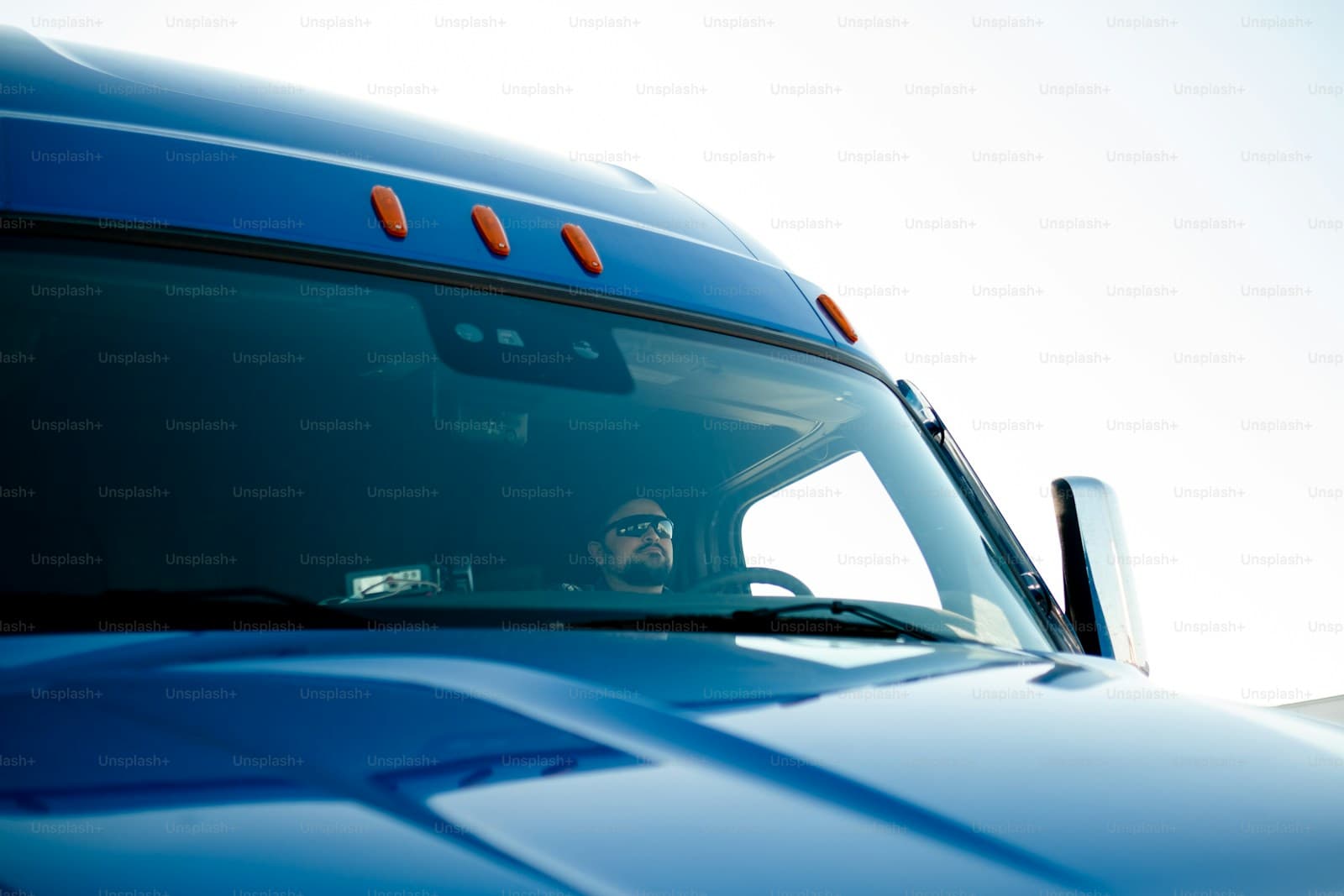
New Jersey conditional licenses restrict CDL holders to specific employer addresses and clock-in times. Route deviation during approved hours still counts as unlicensed operation, a failure mode most commercial drivers discover only after enforcement.
How New Jersey conditional license restrictions differ for CDL holders after reckless driving
New Jersey MVC restricts conditional licenses for CDL holders to documented employer addresses, approved shift schedules, and direct routes. The conditional license order specifies each destination by street address and cross-references it to employer-verified shift documentation. Most commercial drivers assume approved hours grant flexibility to service multiple client sites or make pickup route adjustments. They do not.
Your conditional license covers only the addresses listed in your MVC application and court order. If your employer requires you to drive to a warehouse location not documented in your initial petition, that trip counts as unlicensed operation even if it occurs inside your approved time window. MVC does not automatically update destination lists when employment duties change. You file an amended petition with updated employer documentation, wait 10-15 business days for MVC review, and receive a revised conditional license order before driving the new route.
Reckless driving convictions under N.J.S.A. 39:4-96 trigger CDL suspensions that run concurrently with your passenger vehicle suspension. Your CDL and basic driver's license both suspend for the same period. A conditional license restores limited passenger-vehicle driving privilege, but it does not restore your commercial driving privilege. You cannot operate a CMV under a conditional license, even if your employer address and shift schedule are approved for passenger-vehicle commuting.
Why MVC treats CDL conditional licenses differently than standard hardship privileges
Federal Motor Carrier Safety Regulations prohibit states from issuing restricted commercial driving privileges during a CDL suspension. New Jersey complies by separating conditional license authority into two categories: passenger vehicle operation and commercial vehicle operation. Your conditional license authorizes the first but not the second. Most CDL holders learn this distinction only after attempting to return to work driving a CMV and discovering their employer's insurance will not cover them.
MVC's conditional license application for CDL holders requires employer documentation proving your job duties can be performed without operating a commercial vehicle. If your role requires CMV operation, MVC denies the conditional license application outright. The only exception is when your employer submits documentation that your position includes non-driving duties you can perform during the suspension period and that those duties require passenger-vehicle commuting to job sites.
The practical effect: if you hold a CDL and work as a commercial driver, your conditional license gets you to a non-driving job at a different employer or to a modified role at your current employer that does not involve CMV operation. It does not restore your ability to drive the routes you drove before suspension. For drivers whose livelihood depends on operating CMVs, this means finding alternative employment for the suspension duration or accepting job modification that eliminates driving responsibilities.
Compare car insurance rates in your state
Get quotes from licensed carriers — no obligation, no spam, results in minutes.
Get Your Free Quote✓ No Obligation Required✓ Licensed Carriers Only✓ Available Nationwide✓ Free to Compare
What approved destinations must include in your conditional license application
New Jersey MVC conditional license applications require four categories of approved destinations: employer address, medical provider addresses, childcare provider addresses, and residence address. Each must be listed by full street address. Employer addresses must match the documentation your employer submits verifying your work schedule. If your employer operates from multiple locations and your job requires reporting to different sites on different days, each address must appear separately in the application with corresponding shift documentation.
Most CDL holders applying for conditional licenses list one employer address and assume route flexibility during approved hours. MVC does not grant that flexibility. If your employer schedules you to work at a client site instead of the main office on a specific day, that client site address must have been included in your original petition or added through an amendment. Driving there without MVC approval violates your conditional license terms, even if your employer directed you to go.
MVC cross-references approved destinations against employer shift schedules. If your employer submits documentation showing Monday-Friday 6:00 AM to 3:00 PM shifts at 123 Main Street, your conditional license authorizes travel to and from that address during those hours. A weekend emergency call from your employer does not authorize Saturday driving unless your original petition included weekend work hours. You file an amendment or you do not drive. The distinction between what your employer asks you to do and what your conditional license authorizes is where most violations occur.
How to structure work routes when MVC restricts you to direct travel
New Jersey conditional licenses restrict travel to direct routes between approved destinations. MVC defines direct as the most reasonable path given traffic, road conditions, and time of day. It does not mean the geographically shortest path. It means the route a reasonable driver would take to minimize travel time.
Most violations occur when drivers make stops between approved destinations. Stopping for gas, stopping at a convenience store, stopping to drop off a package—all count as route deviation unless those destinations were listed in your conditional license application. MVC does not enforce this through real-time GPS monitoring. They enforce it when a traffic stop, accident, or employer report places you somewhere other than an approved address during approved hours. At that point, the question becomes: was this location on a direct route between two approved destinations, or was it a deviation?
If your job requires multiple stops, document every regular stop location in your initial MVC petition. Drivers who service multiple client sites, make regular deliveries, or cover regional territories cannot compress that reality into a single employer address and hope for route flexibility. List every address your job requires or accept that your conditional license does not support your current job structure. Most CDL holders discover mid-suspension that their conditional license authorizes commuting to a warehouse office but not the delivery routes they were hired to drive.
What happens when your employer changes your schedule or work location mid-suspension
Your employer reassigns you to a different shift or a different site. Your conditional license still lists the old schedule and the old address. You file an amendment with MVC before driving under the new conditions. The amendment process requires updated employer documentation, a written petition explaining the change, and 10-15 business days for MVC to review and issue a revised order. Most drivers do not file the amendment. They assume internal employer schedule changes do not require MVC approval. They are wrong.
MVC treats conditional license terms as fixed until formally amended. Employer schedule changes, address changes, or job duty modifications do not automatically update your driving authorization. If a traffic stop occurs while you are driving under the new schedule before MVC approves the amendment, you are operating outside your conditional license terms. That counts as driving while suspended, a separate offense that extends your suspension and triggers additional penalties.
The safest practice: when your employer proposes any schedule or location change, do not drive under the new conditions until you receive written confirmation from MVC that your amended conditional license has been approved. If your employer cannot wait 10-15 days, you cannot drive. The employment pressure to accept schedule changes immediately conflicts with MVC's requirement that amendments be approved before driving resumes. Most CDL holders feel that conflict acutely. The law does not bend for employment urgency.
Why SR-22 filing remains required even after conditional license approval
Reckless driving under N.J.S.A. 39:4-96 requires SR-22 filing for three years after your conditional license is approved. The conditional license restores limited driving privilege. The SR-22 filing proves you are carrying liability insurance that meets New Jersey's minimum coverage requirements. Both are separate legal obligations. Conditional license approval does not waive the SR-22 requirement.
Most non-standard carriers that write SR-22 policies for suspended drivers charge $90–$160/month for minimum liability coverage. CDL holders often pay at the higher end of that range because the reckless driving conviction and suspension history place them in the high-risk underwriting tier. Your SR-22 premium reflects your violation record, not your conditional license status. The monthly cost continues for the full three-year filing period, regardless of whether your conditional license expires earlier.
If your SR-22 policy lapses or cancels during the filing period, your carrier notifies MVC electronically within 24 hours. MVC suspends your conditional license immediately and sends a notice to your address on file. Most drivers do not discover the suspension until a traffic stop or an employer insurance audit. By that point, reinstatement requires paying a $100 restoration fee, refiling SR-22 with a new carrier, and waiting 5-10 business days for MVC to process the reinstatement. Employers typically do not wait. Finding SR-22 insurance from a carrier that writes New Jersey suspended-driver policies before your conditional license is approved avoids the compliance gap that ends most conditional-license employment arrangements.
What the cost structure looks like for CDL conditional license compliance
New Jersey MVC charges a $100 conditional license application fee and a $100 license restoration fee. If your reckless driving conviction included court fines, those must be paid before MVC processes your conditional license petition. Most reckless driving fines in New Jersey run $200–$500 depending on the circumstances and the municipal court. Add SR-22 insurance premiums at $90–$160/month for three years, and the total compliance cost reaches $3,500–$6,000+ over the filing period.
Most CDL holders also face employer-driven costs. Some employers require drivers with conditional licenses to provide monthly MVC compliance verification or updated insurance certificates. Some require legal representation at the initial conditional license hearing. Attorney fees for conditional license petitions in New Jersey typically run $500–$1,200 depending on case complexity and whether the attorney represents you at multiple hearings. If your employer mandates legal representation, you pay that cost up front.
The largest hidden cost is employment disruption. If your conditional license restricts you to non-CMV operation and your previous role required driving a commercial vehicle, you either find a new job that fits your conditional license terms or negotiate a modified role with your current employer at reduced pay. Most regional delivery drivers, long-haul truckers, and local route drivers cannot perform their jobs under conditional license restrictions. The income loss during the suspension period often exceeds the direct compliance costs by a factor of three or more.