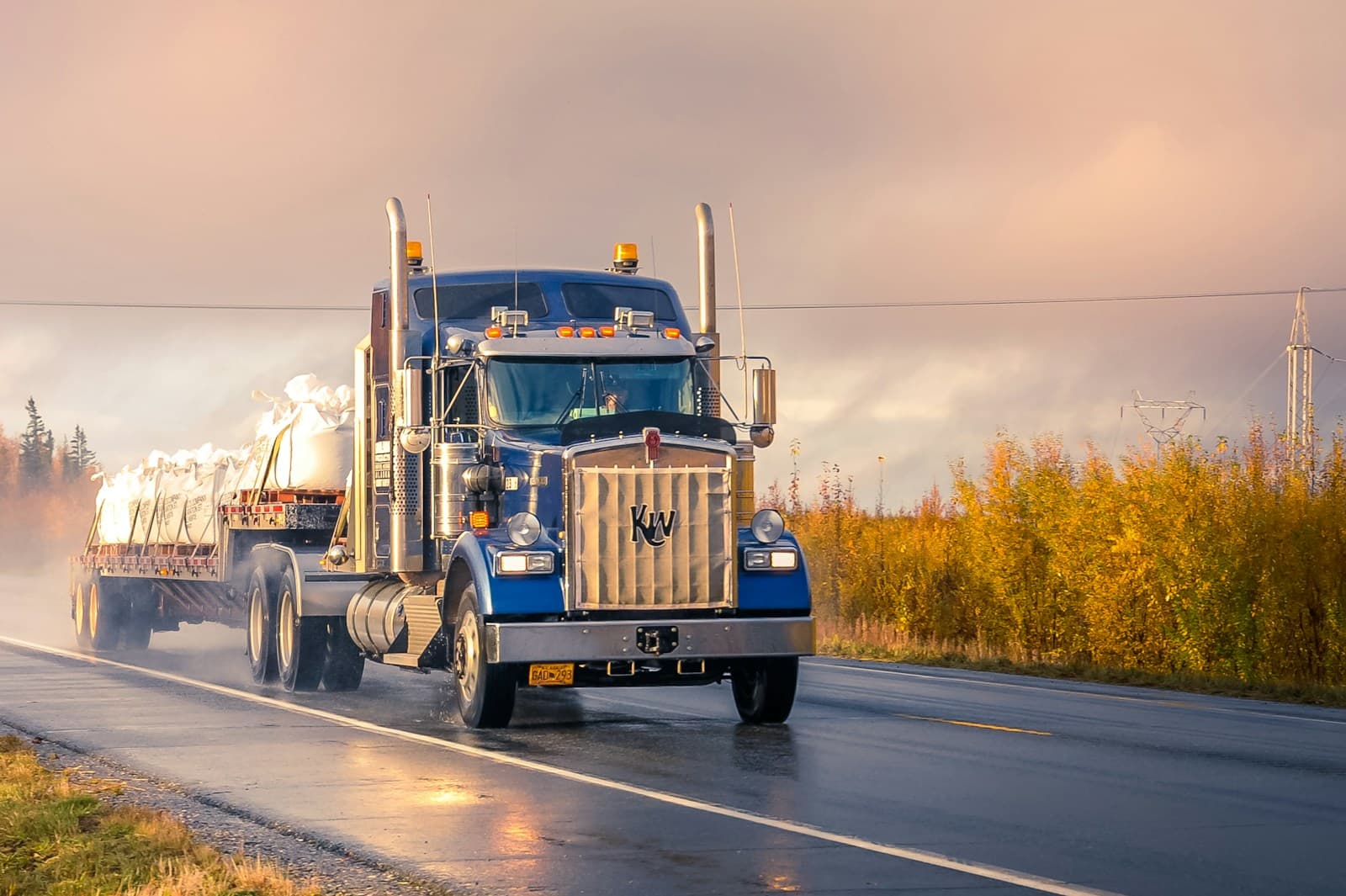
Your insurance lapsed, your CDL was suspended, and you need to keep driving commercially. Oklahoma's Modified Driver License allows commercial work routes, but only under conditions most CDL holders don't learn until their first violation.
What Oklahoma's Modified Driver License Actually Permits for CDL Work
Oklahoma's Modified Driver License allows commercial driving to and from work, but only to the specific employer listed in your court petition by legal business name and federal EIN. Most CDL holders assume approved hours and route descriptions cover them across multiple dispatchers or brokerage clients. They don't.
The permit specifies employer identity separately from route authorization. If you drive for a different carrier during your approved Monday-Friday 5am-7pm window, you are operating without a valid license regardless of route overlap. Oklahoma statutes treat employer deviation the same as geographic deviation.
This creates immediate problems for CDL holders who work through staffing agencies, lease-purchase agreements, or multi-carrier LTL networks. Your Modified License approves ABC Trucking LLC (EIN 12-3456789) for specific pickup and delivery routes. If ABC Trucking loses a contract and shifts you to a subsidiary or refers you to a partner carrier mid-restriction, your permit no longer covers that work even if the physical routes are identical.
Why Insurance Lapse Suspensions Hit CDL Holders Harder Than Passenger-Vehicle Drivers
Oklahoma requires continuous liability coverage for all registered vehicles. A lapse triggers automatic suspension under 47 O.S. § 7-317, typically within 30 days of the lapse date. For CDL holders, this suspension affects both your commercial and personal driving privileges simultaneously.
Most states separate CDL and passenger-vehicle administrative actions. Oklahoma does not. A personal-vehicle insurance lapse suspends your entire driving record, including commercial privileges, even if your employer maintains commercial liability on the truck you operate.
The reinstatement stack includes a $250 reinstatement fee, proof of current SR-22 filing for three years, and payment of any outstanding citations tied to the suspension period. Processing time runs 7-10 business days after all documents reach the Oklahoma Department of Public Safety. For CDL holders who cannot wait that long without losing dispatch assignments, the Modified Driver License becomes the only viable path.
Compare car insurance rates in your state
Get quotes from licensed carriers — no obligation, no spam, results in minutes.
Get Your Free Quote✓ No Obligation Required✓ Licensed Carriers Only✓ Available Nationwide✓ Free to Compare
Approved Destinations Under Modified License: Work Routes, Fuel Stops, and the 'Direct Route' Trap
Oklahoma courts approve Modified Driver Licenses based on specific destination addresses, not general geographic permissions. Your petition must list the employer's terminal address, primary pickup locations, delivery destinations, and any required fuel or rest stops by street address.
The "direct route" language in most permits does not mean the shortest possible route. It means the commercially reasonable route between approved addresses during approved hours. If your typical dispatch route includes a truck stop 2 miles off the highway for fuel, that stop must appear in your approved destination list or you are driving outside your restriction.
Most violations occur during dispatch changes. Your Modified License approves routes to three specific warehouses in Tulsa County. Your dispatcher assigns a fourth Tulsa warehouse mid-week. Driving there without a court amendment is unlicensed operation, even though the new warehouse is closer to your terminal than the three approved locations. Oklahoma DPS does not issue warnings. Traffic stops during unauthorized routes result in immediate arrest for driving under suspension, permit revocation, and extension of the underlying suspension period by 6-12 months.
How Court-Path and DPS-Path Modified Licenses Differ for CDL Holders
Oklahoma offers two Modified License pathways: direct application through DPS for certain administrative suspensions, and court petition for DUI, multiple-violation, or lapse-related suspensions exceeding 90 days. Insurance lapse suspensions under 90 days qualify for DPS administrative processing. Suspensions over 90 days or combined with other violations require district court petition.
The DPS administrative path costs $50 application fee plus the $250 reinstatement fee, processes in 10-15 business days, and approves work-only destinations. The court petition path costs $175-$250 in filing fees depending on county, requires a hearing scheduled 3-6 weeks out, and allows broader destination categories including medical appointments and childcare.
For CDL holders, the DPS path creates a hidden problem: approved destinations are limited to a single employer and direct commute route. No fuel stops, no equipment swaps at secondary terminals, no deviation for traffic or road closures. The court petition path allows you to specify multiple terminals, fuel stop corridors, and alternate routes, which matters for commercial dispatch flexibility. Most CDL holders choose the faster DPS path and discover the restriction gaps only after receiving a violation notice.
SR-22 Filing Requirements and the CDL Non-Standard Carrier Problem
Oklahoma requires SR-22 filing for all insurance-lapse suspensions lasting more than 30 days. The filing must remain active for three years from reinstatement date, not from suspension date. If your Modified License period runs 12 months and you reinstate your full CDL afterward, the SR-22 clock starts at full reinstatement.
CDL holders face a carrier availability problem that passenger-vehicle drivers do not. Most non-standard carriers that write SR-22 policies (The General, Safe Auto, Direct Auto, Acceptance) do not underwrite commercial auto liability. Your SR-22 filing must attach to a personal-vehicle policy, even if you do not own a car.
Non-owner SR-22 insurance provides the required liability certification without requiring vehicle ownership. Premiums typically run $40-$70/month in Oklahoma for drivers with lapse-triggered suspensions and no DUI history. If you add a DUI or multiple violations to the lapse, premiums increase to $85-$140/month. Your employer's commercial liability on the truck you drive does not satisfy the SR-22 requirement. The filing must be in your name, on your personal insurance record, regardless of whether you own a vehicle.
What Happens When You Violate Modified License Terms
Oklahoma statute treats Modified License violations as driving under suspension, a misdemeanor carrying up to one year in county jail and $1,000 fine for first offense. Actual sentencing typically results in 30-90 days suspended jail time, 6-12 months probation, and immediate revocation of the Modified License.
Revocation extends your underlying suspension by the length of time remaining on your original suspension period. If you had 8 months left on a 12-month suspension when you violated, the court adds 8 months to your total suspension. Your next Modified License petition, if approved, starts from zero with stricter terms.
For CDL holders, the commercial consequence often exceeds the legal penalty. Federal Motor Carrier Safety Administration regulations require carriers to suspend drivers after any conviction involving operation without a valid license. Most carriers terminate rather than suspend. A single Modified License violation ends your employment and creates a Clearinghouse entry that follows you to every future carrier for five years.
Cost Stack: What Keeping Your CDL Actually Runs During Restriction
Oklahoma's Modified License costs break into one-time fees and recurring monthly costs. One-time: $50-$250 application/petition fee depending on path, $250 DPS reinstatement fee, $125-$200 attorney consultation fee if you petition through court, $25 certified copy fee for employer documentation. Total one-time: $450-$825.
Recurring monthly costs include SR-22 insurance premium ($40-$140/month depending on violation history), employer-verification administrative fees some carriers charge ($15-$25/month), and potential income reduction if your Modified License restricts you to local routes while your normal assignment was regional or OTR. Over a 12-month restriction period, total cost typically runs $1,200-$2,500 excluding lost income.
Most CDL holders budget only for the reinstatement fee and SR-22 premium. They miss the employer-documentation costs, the attorney fees for court-path petitions, and the dispatch limitations that reduce weekly mileage. If your Modified License restricts you to intrastate routes and your typical income came from interstate loads, you may lose $400-$800/week in take-home pay for the restriction duration.