San Jose drivers losing their license after a DUI or suspension need a California restricted license to keep working. Here's the exact DMV process, court hearing requirements, SR-22 filing rules, and timeline from application to approval.
Does San Jose Use Court Hearings or DMV Process for Restricted Licenses?
California grants restricted licenses through DMV administrative process for most DUI and suspension cases — not through a court hardship hearing. San Jose drivers apply directly to the DMV using form DL 204 (Ignition Interlock Device Installation Verification) after enrolling in a DUI program and filing SR-22 insurance proof. The court is involved only in setting the underlying suspension terms and DUI program requirement, not in approving the restricted license itself.
If your suspension stems from a DUI arrest with a BAC of 0.08% or higher, you became eligible for a restricted license the day your suspension began — no waiting period. If your suspension was administrative (license confiscated at the scene), you can apply immediately after the 30-day hard suspension ends. If you refused chemical testing, the hard suspension period extends to 90 days before restricted eligibility begins.
The DMV does not conduct interviews or hearings for standard DUI restricted licenses. Approval is based on document review: proof of DUI program enrollment, proof of IID installation, and proof of SR-22 filing. If all three documents are on file and verified, the DMV issues the restricted license within 3-5 business days from the date they receive your completed application.
What Does a California Restricted License Allow in San Jose?
A California restricted license permits driving to and from work, during work if your job requires driving, to and from your DUI program classes, and to and from IID service appointments. It does not allow personal errands, grocery runs, or social trips — only the four approved purposes. Violation of the restricted terms revokes the license immediately and often extends your underlying suspension by 6-12 months.
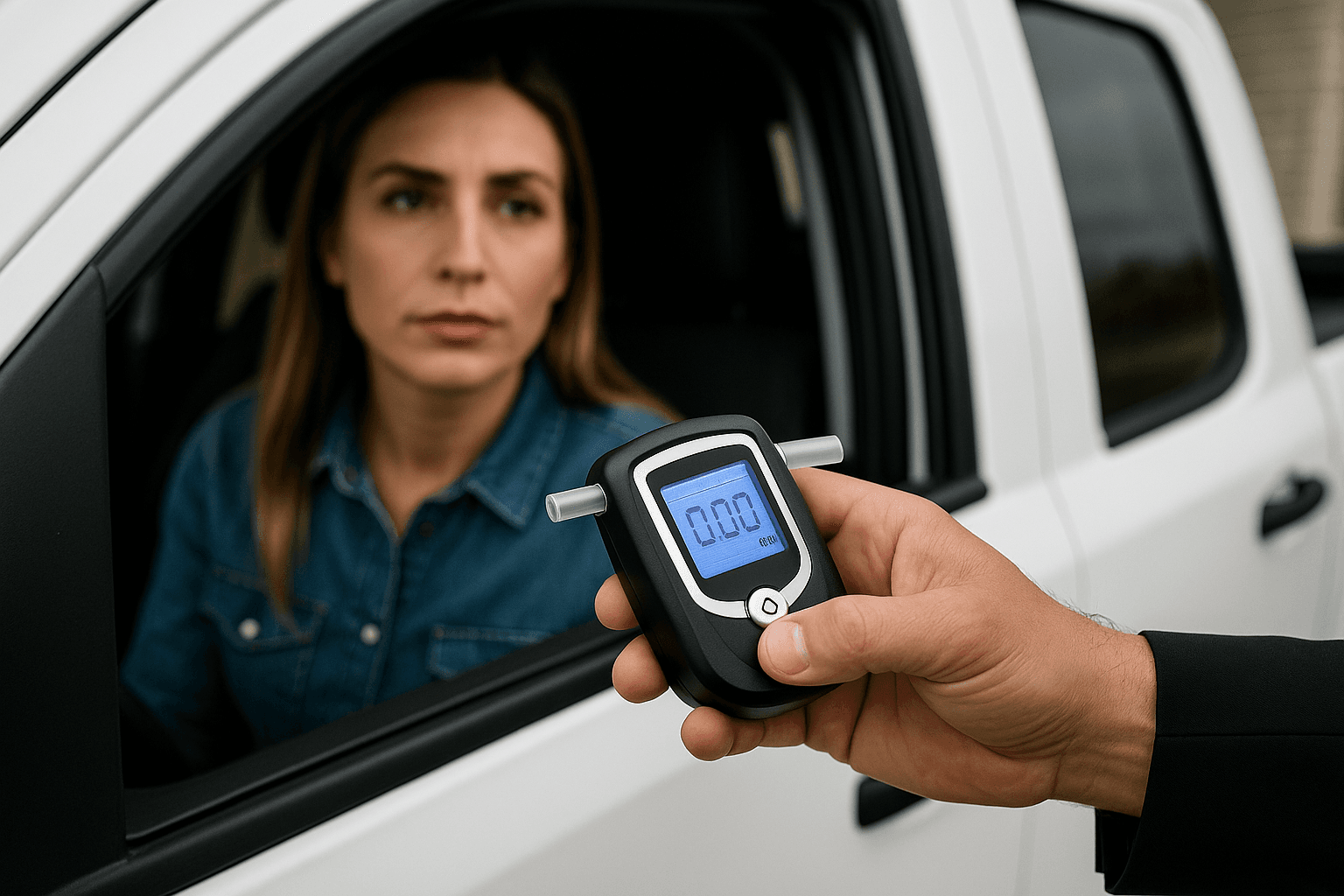
San Jose's restricted license requires an Ignition Interlock Device installed in every vehicle you operate, including employer-owned vehicles if you drive for work. The IID must remain installed for the full restricted period — typically 12 months for a first DUI, 24-48 months for subsequent offenses. Every startup requires a breath test below 0.03% BAC. Every 5-15 minutes while driving, the device prompts a rolling retest. A failed test logs a violation to the DMV and may trigger immediate revocation.
Restricted hours are not limited by the DMV — you can drive at any time of day as long as the trip serves an approved purpose. Most San Jose drivers restrict their own hours by listing work shifts and DUI class schedules on the application, which creates an informal boundary enforced during any traffic stop. If stopped outside the hours you listed, expect the officer to question whether the trip qualifies under restricted terms.
Compare car insurance rates in your state
Get quotes from licensed carriers — no obligation, no spam, results in minutes.
Get Your Free Quote✓ No Obligation Required✓ Licensed Carriers Only✓ Available Nationwide✓ Free to Compare
How Much Does the Restricted License Process Cost in San Jose?
Expect total upfront costs between $2,100 and $3,200 for the full restricted license process in San Jose. The DMV restricted license application fee is $125. SR-22 filing through a non-standard carrier adds $400-$900 for the first six months of coverage, depending on your violation history and vehicle. IID installation costs $70-$150, plus $60-$90 per month for monitoring and calibration — budget $800-$1,200 for a 12-month installation period. DUI program enrollment for a first offense runs $650-$850 for the state-required three-month course.
San Jose's higher cost of living pushes SR-22 premiums 15-25% above California's statewide average. A first-offense DUI driver in San Jose pays approximately $140-$190 per month for minimum liability SR-22 coverage through carriers like Bristol West, Dairyland, or GAINSCO. A second offense or BAC refusal case increases premiums to $180-$260 per month. These are SR-22 filing premiums only — they do not include comprehensive or collision coverage.
The DMV charges a $125 reissue fee when your restricted license converts to a full license at the end of the suspension period. IID removal costs $50-$75. If your SR-22 lapses at any point during the restricted period, the DMV suspends the restricted license immediately and you restart the entire filing clock from zero, adding 6-12 months to your total suspension.
What Is the Exact Timeline from Application to Driving in San Jose?
The restricted license timeline starts the day your suspension begins, not the day you apply. If you were arrested for DUI in San Jose and the DMV issued an administrative suspension, your 30-day hard suspension starts on the date listed on the suspension order — typically the arrest date plus 10 days. You cannot apply for a restricted license until that hard suspension period ends.
Once eligible, the process moves quickly if you complete all steps before applying. Enroll in a DUI program — most San Jose providers issue enrollment verification within 24 hours of your first payment. Schedule IID installation with an approved provider — LifeSafer, Intoxalock, and Smart Start operate service centers in San Jose. Installation takes 30-60 minutes and generates form DL 204, which the installer submits to the DMV electronically. Contact a non-standard SR-22 carrier and request immediate electronic SR-22 filing to the DMV.
After all three documents post to your DMV record — typically 1-3 business days from installation and filing — submit your restricted license application online or by mail. The DMV reviews and approves within 3-5 business days if no discrepancies appear. Your approval letter authorizes restricted driving the moment it is issued, but you are not legally allowed to drive until the IID installer submits verification that the device is active and functioning. That verification posts 24-48 hours after installation in most cases, creating a gap where approval does not equal legal driving status. Confirm the IID verification posted before you drive — a traffic stop during that window counts as driving on a suspended license, a misdemeanor.
Which Carriers Write SR-22 for Restricted License Drivers in San Jose?
San Jose restricted license drivers qualify only for non-standard SR-22 carriers — the same market that writes DUI and high-risk cases statewide. Standard carriers like State Farm, Allstate, and Progressive do not write new policies for drivers under active suspension or with recent DUI convictions. Non-standard carriers include Bristol West, Dairyland, GAINSCO, Direct Auto, Kemper, Acceptance Insurance, and The General.
Not all non-standard carriers operate in Santa Clara County. Bristol West and Dairyland maintain the broadest San Jose availability and write policies for first and second DUI offenses with IID requirements. GAINSCO writes higher-risk cases including BAC refusals and suspended-license violations. Progressive writes some restricted license cases through its non-standard tier, but approval is inconsistent and rates are often 20-30% higher than Bristol West for the same violation.
SR-22 filing must remain active for the full restricted period plus any additional filing duration ordered by the court or DMV. California requires three years of SR-22 filing for a first DUI conviction, measured from the conviction date. That means your SR-22 obligation extends well beyond your restricted license period. If your carrier cancels your policy or you cancel it yourself, the SR-22 filing terminates and the DMV suspends your restricted license within 10 days. Reinstating after an SR-22 lapse requires refiling, paying a $125 DMV reinstatement fee, and restarting the filing clock.
What Happens If You Violate Restricted License Terms in San Jose?
Violating California restricted license terms — driving outside approved purposes, failing an IID test, or driving a vehicle without an installed IID — triggers immediate administrative action. The DMV revokes the restricted license and extends your underlying suspension by 6-12 months. If the violation involves a criminal act (DUI, reckless driving, driving without an IID), the court can impose additional jail time and fines on top of the DMV penalty.
San Jose Police and California Highway Patrol treat restricted license violations as suspended license cases. If stopped while driving to an unapproved destination, you will be cited for driving on a suspended license under California Vehicle Code 14601, a misdemeanor carrying up to 6 months in jail and a $1,000 fine. Your vehicle may be impounded for 30 days, adding $1,200-$1,800 in towing and storage fees.
IID violations are logged electronically and reported to the DMV monthly. A failed startup test (BAC above 0.03%) generates a violation notice. Three violations in a rolling 12-month period trigger automatic restricted license revocation. A rolling retest failure while driving is treated more severely — it suggests ongoing alcohol use and often results in immediate revocation after a single incident. The IID device records every test, every failure, and every attempt to tamper with or bypass the device. Those logs are admissible evidence in both DMV hearings and criminal court.