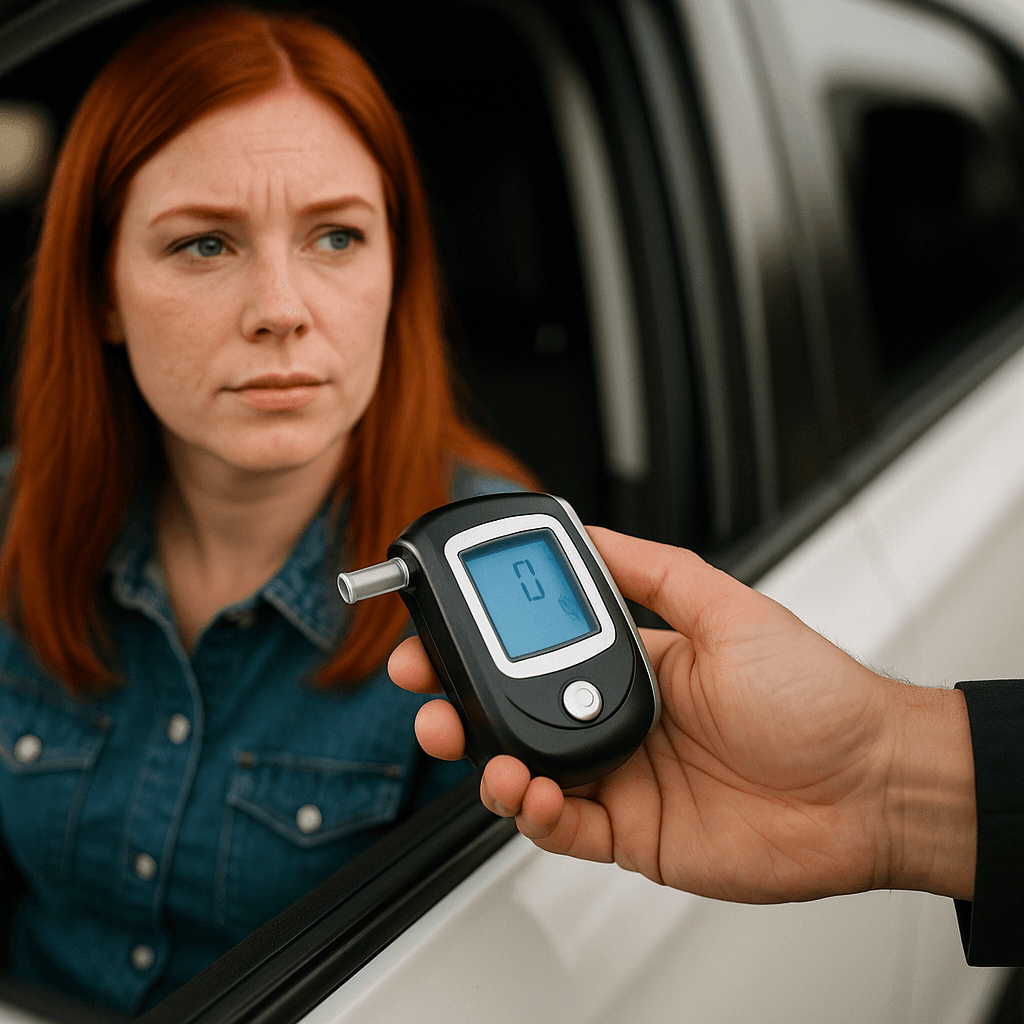
If you're scheduled for a hardship hearing at El Paso County Court after a DUI or suspension, you'll face a judge who decides whether you can drive to work — here's exactly what the court expects and how to prepare.
El Paso County Court handles restricted license hearings differently than DMV administrative processes
Colorado grants restricted driving privileges through county court hearings, not DMV administrative approval. If you're in Colorado Springs, your hearing takes place at El Paso County Court on Vermijo Avenue, typically 30–60 days after you file your petition. The judge — not a DMV hearing officer — decides whether you qualify, what hours you can drive, and what restrictions apply.
This matters because you're preparing for a courtroom proceeding with legal standards of evidence, not a DMV administrative review. You'll testify under oath. The prosecutor may oppose your petition if your violation history includes multiple DUIs or high BAC. The judge has discretion to deny, approve, or approve with conditions stricter than what you requested.
Colorado law allows restricted license petitions immediately after suspension begins for first-time DUI offenders, but El Paso County Court typically requires proof of SR-22 filing and enrollment in Level II alcohol education before scheduling your hearing. If you haven't completed intake for the DUI program, expect the court to continue your hearing 30 days out.
The court requires employer verification 72 hours before your hearing date
El Paso County Court requires written employer verification on company letterhead submitted to the court clerk no later than 72 hours before your scheduled hearing. The letter must include your job title, work address, required work hours, and a statement that your continued employment depends on your ability to drive. Generic employment verification letters from HR are often rejected — the letter must explicitly address your need to drive and the consequences of not driving.
If you're self-employed, you'll submit a notarized affidavit describing your business, income records for the past 90 days, and documentation of client locations or delivery routes that require driving. The court views self-employment claims skeptically — bank statements, invoices, and tax records strengthen your case.
Missing the 72-hour deadline typically results in your hearing being continued to the next available date, which can be 4–6 weeks out in El Paso County. The court does not accept employer letters handed to the judge at the hearing.
Compare car insurance rates in your state
Get quotes from licensed carriers — no obligation, no spam, results in minutes.
Get Your Free Quote✓ No Obligation Required✓ Licensed Carriers Only✓ Available Nationwide✓ Free to Compare
Your restricted license petition must justify why alternative transportation won't work
The judge will ask why you cannot use public transportation, rideshare, or carpooling to maintain employment. Colorado Springs Mountain Metro bus service covers most employment corridors, and the court knows this. Your petition must address specific timing, location, or job requirement barriers that make transit unusable.
Acceptable justifications include: shift work outside Metro operating hours (service ends before 11 p.m. on most routes), job sites in unincorporated El Paso County with no transit access, or job requirements that involve driving between multiple locations during the workday. "It takes too long" or "it's inconvenient" are insufficient — the court expects you to prove transit is genuinely unworkable, not just less convenient than driving.
If you work standard business hours at a single location on a Metro route, expect the judge to deny your petition or restrict approval to non-work essential trips only, such as DUI program attendance and medical appointments.
The court will impose ignition interlock as a condition of any restricted license approval
Colorado law requires ignition interlock device installation for all restricted licenses granted after DUI. El Paso County Court enforces this without exception. Before your hearing, you must obtain IID installation quotes from state-approved vendors — LifeSafer, Intoxalock, and Smart Start operate in Colorado Springs. Installation costs $75–$150, with monthly monitoring fees of $75–$90.
The court order will specify IID as a condition of your restricted driving privilege. You cannot drive legally until the device is installed and the vendor submits proof of installation to the DMV. This typically takes 3–7 business days after your hearing. Budget for the full cost upfront — most vendors require first and last month's monitoring fees at installation.
Violating IID requirements — failed breath tests, circumvention attempts, or missed calibration appointments — triggers immediate revocation of your restricted license and extends your underlying suspension period. El Paso County Court receives monthly IID compliance reports and will issue a warrant if you drive without a functioning device after approval.
SR-22 filing must be active before the court will grant restricted driving privileges
You must file SR-22 with the Colorado DMV before your hearing date. The court will not approve a restricted license without proof of SR-22 on record. SR-22 is a liability certification filed by your insurance carrier confirming you carry state-minimum coverage: $25,000 bodily injury per person, $50,000 per accident, $15,000 property damage.
Colorado requires SR-22 for the entire period of your license suspension plus two additional years after reinstatement — typically 3–5 years total for a first DUI. Your carrier charges $15–$50 to file SR-22, but the real cost is the premium increase. High-risk drivers in Colorado Springs pay $140–$220/month for SR-22 liability coverage, compared to $85–$110/month for drivers with clean records.
Carriers that write SR-22 policies for restricted license holders in Colorado include Dairyland, The General, Bristol West, and GAINSCO. If your current carrier non-renewed you after your DUI, expect to shop the non-standard market. Bring proof of SR-22 filing — the pink copy from your carrier or the DMV filing confirmation — to your hearing.
The judge will specify approved hours, routes, and purposes in the court order
If the court grants your petition, the restricted license order will list approved driving purposes, hours, and routes. Typical approvals include: driving to and from work during scheduled shifts, driving to DUI education classes, medical appointments, and religious services. Driving outside approved purposes or hours is a criminal offense — Driving Under Restraint, a Class 2 misdemeanor carrying up to 90 days in jail and a $1,000 fine.
El Paso County Court orders are specific. If your approved work hours are 7 a.m. to 4 p.m. Monday through Friday, driving at 6 p.m. or on Saturday — even for groceries or childcare — violates the order. You must petition the court to amend your restricted license if your work schedule changes or you need to add approved purposes.
Colorado Springs Police Department and El Paso County Sheriff enforce restricted license violations aggressively. A traffic stop outside your approved hours results in immediate arrest, vehicle impound, and revocation of your restricted privilege. Your underlying suspension period restarts from zero.
Hearing outcomes range from full approval to denial with options to reapply
El Paso County Court grants approximately 60–70% of first-time restricted license petitions for employment purposes, based on local defense attorney estimates. Denials typically occur when the petitioner has multiple prior DUIs, a BAC over 0.15, or insufficient proof of employment necessity.
If the judge denies your petition, you can refile after 90 days with stronger evidence — updated employer verification, documentation of job loss due to inability to drive, or completion of additional DUI program milestones. Some judges issue conditional denials, requiring you to complete a specific number of program hours or maintain SR-22 for 6 months before reapplying.
If approved, your restricted license remains in effect until your full suspension period ends, provided you maintain SR-22, comply with IID requirements, and avoid new violations. Revocation is immediate and non-appealable if you drive outside approved restrictions or fail to maintain insurance.