You've been told you need a hardship hearing to get your restricted license in Nevada. Here's what actually happens in Clark County Justice Court, what the judge asks, and what documentation wins approval.
How Nevada's Restricted License Process Differs from Most States
Nevada uses a two-stage system for restricted driving privileges after a DUI suspension. The DMV grants the restricted license first, typically 45 days after your suspension starts, once you install an ignition interlock device and file SR-22 proof of insurance. The court hearing comes after — usually 30 to 90 days later — to review whether you're complying with all conditions. This inverts the structure most drivers expect from other states, where you petition a judge for permission before the DMV issues anything.
Clark County Justice Court handles the majority of Las Vegas restricted license hearings. If your DUI arrest occurred in the city of Las Vegas, North Las Vegas, Henderson, or unincorporated Clark County, your case moves through one of the regional justice courts. The hearing itself is brief — 10 to 20 minutes — but the documentation you bring determines whether the judge continues your restricted privilege or revokes it.
Your restricted license allows driving to and from work, medical appointments, court-ordered DUI classes, ignition interlock service appointments, and necessary childcare. Routes and hours are not pre-approved by the court. You're responsible for staying within approved purposes. A traffic stop outside those boundaries triggers a violation report back to the DMV and often results in license revocation.
What Documentation the Judge Reviews at Your Hearing
Bring three categories of proof: employment verification, SR-22 certificate, and ignition interlock compliance report. Employment verification means a letter on company letterhead signed by your supervisor or HR, stating your job title, work address, work hours, and confirmation you need to drive to perform the job. A pay stub alone won't satisfy the requirement. Self-employed drivers need business registration, recent tax filings, and client contact information the court can verify.
Your SR-22 certificate must show continuous coverage from the date the DMV granted your restricted license. Any lapse — even one day — resets your filing clock to zero and usually results in immediate revocation at the hearing. The judge receives electronic confirmation from the DMV, but bring a printed copy from your carrier showing your policy number, coverage start date, and that SR-22 is active. Most non-standard carriers serving high-risk drivers in Nevada include The General, Bristol West, GAINSCO, Direct Auto, and Acceptance.
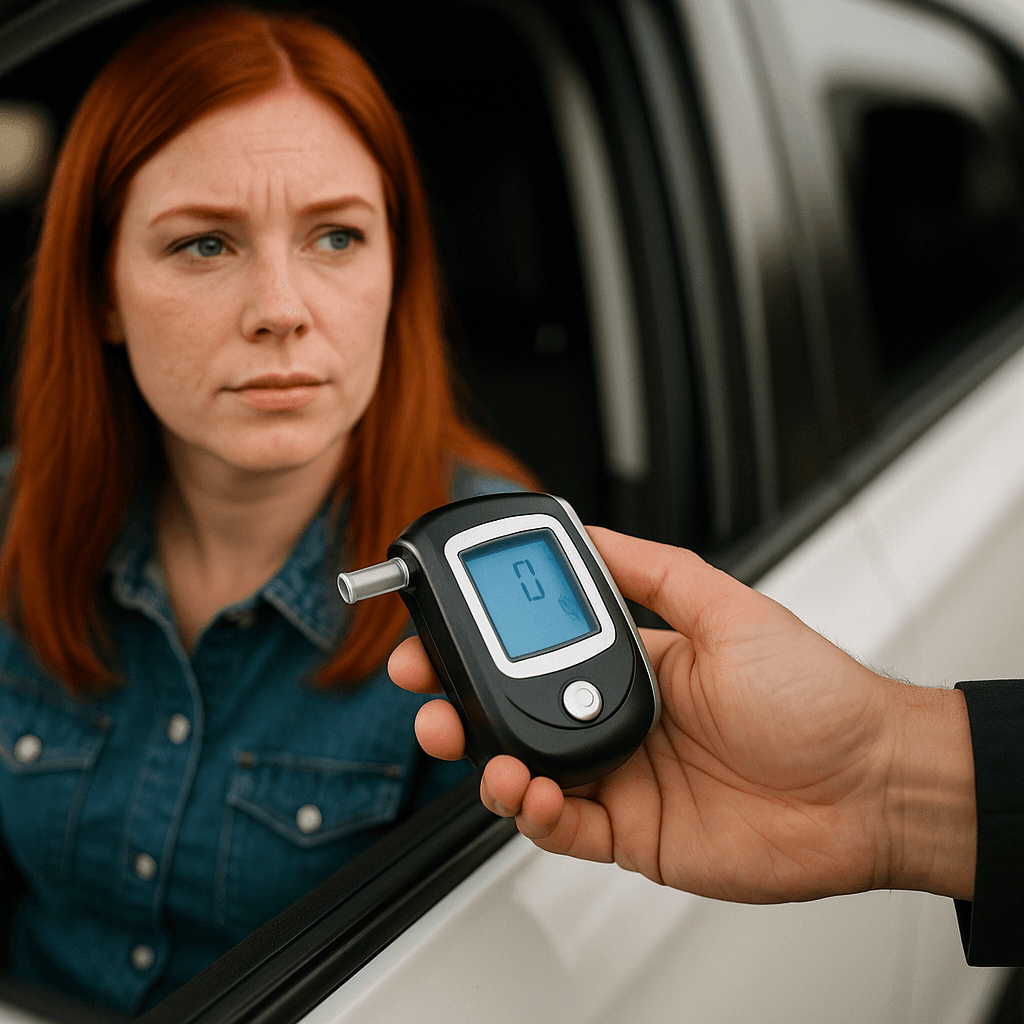
The ignition interlock compliance report comes from your IID provider — typically Intoxalock, Smart Start, or LifeSafer in the Las Vegas area. Request the full compliance printout covering every startup attempt, failed test, and lockout event since installation. The judge looks for clean tests and no circumvention attempts. A single failed morning test, even at 0.02%, often leads to a continuance or conditional approval requiring 90 more days of clean tests.
Compare car insurance rates in your state
Get quotes from licensed carriers — no obligation, no spam, results in minutes.
Get Your Free Quote✓ No Obligation Required✓ Licensed Carriers Only✓ Available Nationwide✓ Free to Compare
What the Judge Asks During the Hearing
Clark County judges ask five standard questions in restricted license review hearings. Where do you work, and what are your typical work hours? Are you currently enrolled in and attending your court-ordered DUI classes? Have you had any failed ignition interlock tests or violations since your restricted license was issued? Do you understand the approved purposes for driving and the consequences of violating those restrictions? Have you been stopped by law enforcement for any reason since receiving your restricted license?
Answer each question directly. If you had a failed interlock test, state when it occurred and what caused it. Judges have already seen the compliance report. Omitting a failure or explaining it inconsistently with the data almost always results in revocation. If you were stopped by police for any reason — even a non-moving violation like an expired registration — disclose it. The court receives traffic contact reports electronically from Nevada Highway Patrol and Las Vegas Metro.
Some judges ask whether you've had any alcohol since your DUI arrest. There is no legal prohibition on drinking alcohol while holding a restricted license in Nevada. The restriction is on driving after drinking. Answer honestly. The ignition interlock data will show any morning residual alcohol readings regardless of your testimony.
When Hearings Result in Revocation or Extension
Revocation happens immediately if the judge finds you drove outside approved purposes, failed to maintain SR-22 coverage, or circumvented the ignition interlock device. Driving to a gym, grocery store, or friend's house does not qualify as an approved purpose under Nevada law. A single documented violation typically results in full revocation and reinstatement of the original suspension period, meaning you start over from day one.
Extension or conditional continuation happens when you've had failed interlock tests but no purposeful violations. The judge may continue your restricted license for another 90 days with a requirement to submit a new compliance report showing zero failures. During that extension period, a single additional failed test usually results in immediate revocation without another hearing opportunity.
Full approval and case closure happen when your documentation is complete, your interlock record is clean, and you've completed the minimum restricted license period ordered by the court — typically 185 days for a first DUI, 365 days for a second. The judge closes the review case, and your restricted license continues until the full suspension period ends. Your SR-22 requirement continues for three years from the DUI conviction date in Nevada.
How Attorney Representation Affects the Hearing Outcome
You are not required to have an attorney at a restricted license review hearing in Clark County. The hearing is administrative review, not a criminal proceeding. Most drivers appear without counsel. However, attorneys who practice DUI defense in Las Vegas know which judges require which documentation formats and can often negotiate a continuance rather than outright revocation when compliance issues exist.
Attorney representation costs $500 to $1,200 for a single hearing appearance in Clark County. The value comes when your case has gray areas: interlock failures you can explain with medical documentation, employment changes that required you to drive a different route temporarily, or SR-22 lapses caused by carrier errors rather than non-payment. Judges are more likely to grant a continuance when an attorney frames the issue as procedural rather than willful non-compliance.
If you cannot afford an attorney and your case involves potential revocation, request a continuance at the hearing to consult with Nevada Legal Services or the Clark County Public Defender's office. Not all public defenders handle post-conviction administrative hearings, but some do when financial hardship is documented. The court will usually grant a 30-day continuance for you to seek counsel if you request it at the start of the hearing.
What Happens After the Hearing
The judge's order is entered into the court record the same day and transmitted electronically to the Nevada DMV within 48 hours. If your restricted license was continued or approved, no further action is required. Your physical license remains valid, and your ignition interlock and SR-22 requirements continue as originally ordered. If the judge revoked your restricted license, the DMV receives notice of the revocation, and your driving privilege ends immediately. You must stop driving the moment the judge announces revocation in the courtroom.
After revocation, you serve the remainder of your original suspension period with no restricted driving privilege. For a first-offense DUI in Nevada, the original suspension is 185 days. If you held a restricted license for 90 days before revocation, you serve the remaining 95 days with no ability to drive at all. Once that period ends, you may apply for full license reinstatement by submitting proof of DUI class completion, paying the $35 reinstatement fee, and maintaining SR-22 coverage.
Your SR-22 requirement does not pause or reset based on the hearing outcome. The three-year filing period runs from your DUI conviction date, not from the date your restricted license was granted or revoked. Maintain continuous coverage throughout the suspension, restricted license period, and after full reinstatement. A lapse at any point during those three years triggers a new suspension and restarts the SR-22 clock.