Lost your license to a DUI or violation in Nevada? Here's the exact DMV process, court hearing requirements, and total cost to get a restricted license in Las Vegas—plus how long you'll actually wait.
Nevada Calls It a Restricted License, and You Apply Through DMV After a Mandatory Waiting Period
Nevada uses the term restricted license, not hardship or occupational license. You apply through the Nevada Department of Motor Vehicles after serving a mandatory waiting period that varies by violation type: 45 days for a first DUI, 90 days for a second DUI within 7 years, and 185 days for a third or subsequent DUI. Suspension for insurance lapse, multiple violations, or refusal to submit to chemical testing also triggers eligibility windows, typically 90–185 days depending on the underlying violation.
The application requires a DMV hardship hearing, not an administrative approval. You petition the DMV for a hearing date, attend in person at a Las Vegas DMV office, and present your case to a hearing officer. Approval is discretionary. The officer evaluates your need for work transportation, completion of required DUI programs, proof of SR-22 filing, and compliance with any ignition interlock device (IID) requirement. If denied, you wait another 30–90 days to reapply.
You cannot drive under a restricted license until the DMV issues the physical license card and your SR-22 is on file. The approval at the hearing is conditional—driving before receiving the card and confirmation of SR-22 filing is treated as driving under suspension, which extends your underlying suspension and disqualifies you from reapplying for a restricted privilege for 6–12 months depending on the violation.
File Your SR-22 Before the Hearing, Not After—Most Applicants Get This Backward
Nevada requires proof of SR-22 filing at the hardship hearing. Most drivers assume they file SR-22 after approval. The hearing officer will deny your petition if SR-22 is not already on file with the Nevada DMV at the time of the hearing. This is the single most common reason for denial in Clark County.
SR-22 is a liability insurance certificate filed by your carrier with the DMV. It proves you carry Nevada's minimum liability limits: $25,000 per person / $50,000 per accident for bodily injury, and $20,000 for property damage. You cannot file SR-22 yourself. You purchase a non-standard auto policy from a carrier licensed to write high-risk coverage in Nevada (Bristol West, Direct Auto, Dairyland, GAINSCO, Kemper, Safe Auto, The General, or Acceptance), and the carrier electronically files the SR-22 with the DMV on your behalf.
The filing itself costs $15–$25 as a carrier processing fee. The SR-22 premium increase is the larger cost: expect $80–$180/mo for liability-only coverage with SR-22 endorsement if you have a DUI, compared to $45–$75/mo for clean-record liability coverage in Las Vegas. SR-22 must remain on file for 3 years from the date of reinstatement for most DUI and violation-related suspensions. If the policy lapses or cancels, the carrier notifies the DMV within 24 hours, your restricted license is revoked, and your suspension clock resets to zero.
Compare car insurance rates in your state
Get quotes from licensed carriers — no obligation, no spam, results in minutes.
Get Your Free Quote✓ No Obligation Required✓ Licensed Carriers Only✓ Available Nationwide✓ Free to Compare
The Hardship Hearing Process Takes 45–90 Days From Petition to Approval in Las Vegas
You petition for a hardship hearing by submitting Form DMV-208 (Petition for Restricted License) at any Nevada DMV office or by mail to the Las Vegas DMV at 2621 E. Sahara Avenue. The petition filing fee is $35. The DMV schedules your hearing 30–60 days after receiving the petition, depending on current hearing backlog in Clark County. As of current DMV data, Las Vegas hearing slots average 45 days out; rural Nevada offices schedule within 20–30 days.
At the hearing, you present: (1) proof of employment or occupational need (employer letter on company letterhead stating your work hours, location, and inability to accommodate public transit), (2) proof of SR-22 filing (obtain a copy of the SR-22 certificate from your carrier), (3) proof of DUI program enrollment or completion if applicable (Nevada requires 12-hour DUI education for first offense, 24-hour for second), and (4) proof of IID installation if required. Nevada mandates IID for all DUI-related restricted licenses—185 days for first offense, 1–3 years for subsequent offenses.
The hearing officer can approve, deny, or defer. Approval is conditional on compliance. The officer sets your approved driving hours (typically 12 hours per day, 6 days per week) and approved purposes (work, DUI program, medical appointments, and childcare in most cases). You receive a temporary paper license valid for 30 days. The permanent restricted license card arrives by mail within 15–21 days. Total process from petition to physical card: 60–105 days if approved on first hearing.
Total Cost to Apply Runs $1,400–$3,200 Depending on IID and Attorney Use
The restricted license application itself costs $35. The license reinstatement fee is $75 for most suspensions, or $150 for DUI-related suspensions. SR-22 insurance premiums add $960–$2,160 annually (or $80–$180/mo) for liability-only coverage with a DUI on record. IID installation costs $75–$150, with monthly monitoring fees of $70–$100 for the required period. DUI program fees range from $150 for 12-hour first-offense programs to $500+ for 24-hour second-offense programs.
If you hire an attorney to represent you at the hardship hearing, expect $500–$1,200 in legal fees. Attorneys are not required, but approval rates are higher with representation—Clark County DMV data shows 68% approval for represented applicants versus 51% for pro se applicants. The attorney prepares the employer documentation, ensures SR-22 is filed correctly, and argues the occupational need case to the hearing officer.
The full cost stack for a first-offense DUI restricted license in Las Vegas: $35 petition + $150 reinstatement + $80–$180/mo SR-22 premium + $75 IID install + $70–$100/mo IID monitoring + $150 DUI program. Total first-year cost: $1,400–$2,800 without attorney representation, $1,900–$4,000 with representation. Budget an additional $300–$500 for potential hearing rescheduling, reapplication if denied, or employer documentation preparation costs.
Approved Hours and Routes Are Non-Negotiable—Violation Revokes the License Immediately
Nevada restricted licenses authorize driving for approved purposes only: travel to and from work, DUI program attendance, medical appointments, and court-ordered obligations. The hearing officer specifies approved driving hours on the license. Most Las Vegas restricted licenses allow driving between 5:00 AM and 7:00 PM, 6 days per week. Some officers approve 12-hour windows; others restrict to exact work shift hours plus 1-hour travel buffer.
You are prohibited from recreational driving, non-work errands, and driving outside approved hours. Nevada Revised Statute 483.490 treats any restricted license violation as driving under suspension. If cited for driving outside approved hours or purposes, your restricted license is revoked, your underlying suspension is extended by 6–12 months, and you are disqualified from reapplying for a restricted privilege for 1 year minimum.
Las Vegas Metropolitan Police and Nevada Highway Patrol routinely stop drivers with restricted plates (which are not used in Nevada—restricted status is visible only in the officer's computer system during the traffic stop). If stopped, provide your employer letter and restricted license immediately. Do not offer explanations for why you are driving outside approved hours. The officer will cite you, and the DMV will receive notification within 72 hours. Keep your employer letter, DUI program schedule, and medical appointment documentation in the vehicle at all times.
IID Requirement Adds $1,200–$3,600 Over the Restricted License Period
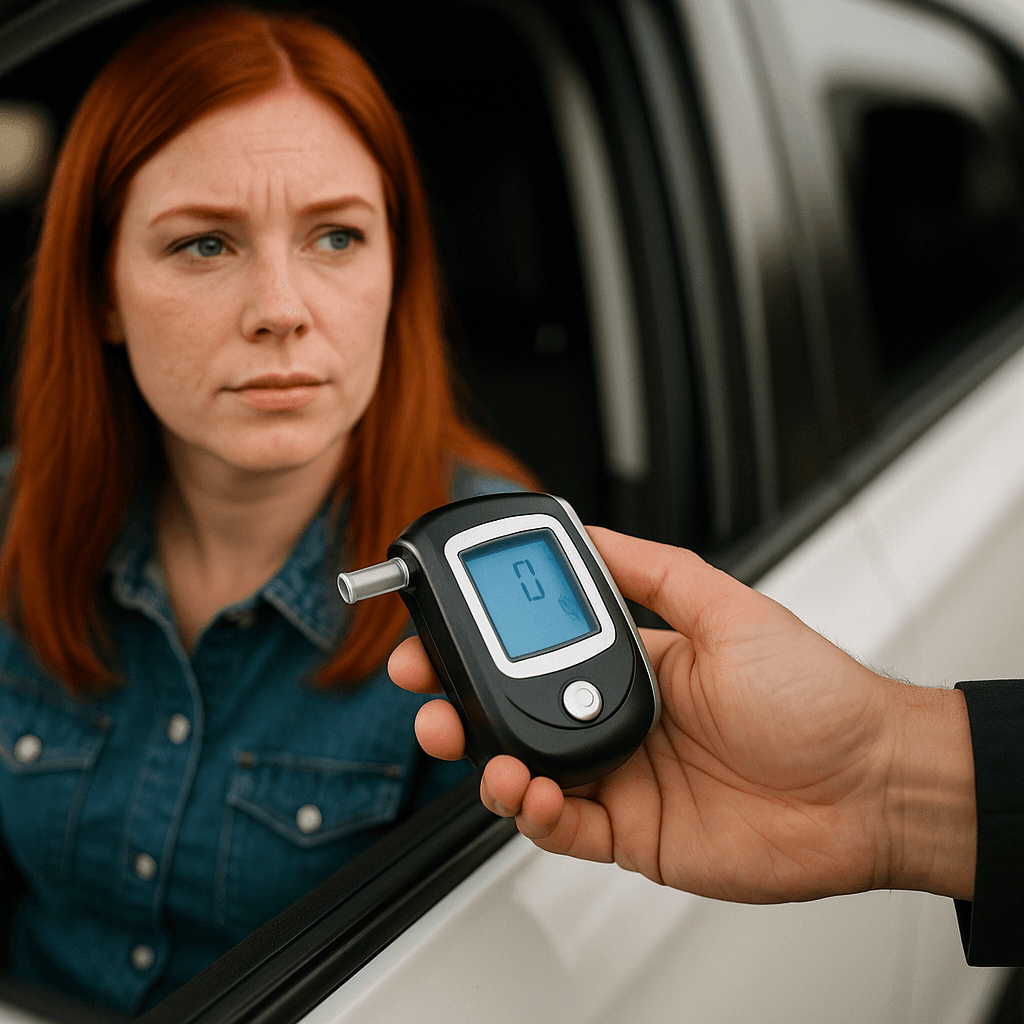
Nevada requires an ignition interlock device on all vehicles you operate under a DUI-related restricted license. The IID is a breath-testing unit wired to your ignition system. You blow into the device before starting the vehicle and at random intervals while driving (rolling retests). If the device detects alcohol above 0.02% BAC, the vehicle will not start, or the alarm sounds and the violation is logged.
IID is required for 185 days for a first DUI, 1–3 years for a second DUI, and 1–3 years for a third or subsequent DUI. The restricted license duration matches the IID requirement—you cannot hold a restricted license longer than the IID period unless the underlying suspension exceeds the IID term. Installation costs $75–$150 depending on the provider (Smart Start, Intoxalock, and LifeSafer are the three approved vendors in Nevada). Monthly monitoring, calibration, and data reporting fees run $70–$100.
IID violations (failed breath test, missed calibration appointment, tampering, or circumvention attempt) are reported to the DMV within 48 hours. Each violation extends your IID requirement by 30–90 days and can result in restricted license revocation. Nevada DMV data shows 22% of restricted license holders incur at least one IID violation during the required period, with the most common violation being missed calibration (required every 60 days). Set calendar reminders. Miss one calibration, and your restricted license is revoked until you comply and reapply.
If You Don't Own a Vehicle, You Still Need SR-22 and Can Apply for a Restricted License
Nevada allows non-owner SR-22 policies for drivers who do not own a vehicle but need to maintain proof of financial responsibility. A non-owner policy provides liability coverage when you drive a borrowed, rented, or employer-owned vehicle. It does not cover a vehicle you own or regularly use. Premiums for non-owner SR-22 policies run $40–$80/mo, roughly half the cost of owner SR-22 policies.
You can apply for a restricted license using a non-owner SR-22 policy if your employer provides a vehicle or you rely on borrowed vehicles for approved purposes. At the hardship hearing, provide the employer letter confirming they provide the vehicle and proof of non-owner SR-22 filing. The hearing officer will approve the restricted license for use of the employer-provided vehicle only. If you later purchase a vehicle, you must convert the non-owner policy to an owner policy and notify the DMV within 30 days. Failure to notify is treated as driving without valid insurance and revokes your restricted license.
Non-owner policies do not satisfy IID requirements. If your restricted license requires IID, you must have access to a vehicle with IID installed, even if you do not own it. The employer or vehicle owner must consent to IID installation, and the device must remain installed for the full required period. Most employers refuse IID installation on company vehicles, which forces restricted license applicants to purchase or lease a personal vehicle to comply.