Utah requires SR-22 filing during your restricted driving privilege period, and only a subset of non-standard carriers will write the combined policy without forcing you into separate filings or denying coverage outright.
What Utah Calls It and How SR-22 Filing Ties to Your Driving Privilege
Utah uses the term restricted license for conditional driving privileges granted during a suspension period. The Utah Driver License Division issues restricted licenses through an administrative process — no hardship hearing required — but SR-22 filing must be active before DMV will process your restricted license application. The two requirements are sequential, not parallel: you file SR-22 with a non-standard carrier first, then apply for the restricted license with proof of filing in hand.
SR-22 duration in Utah runs 3 years from the date of conviction or administrative action, not from the date you file. If you're suspended for 120 days and file SR-22 on day 30, you still owe 3 years of continuous coverage from the original conviction date. The restricted license period runs concurrently with your SR-22 obligation — typically 90 days to 1 year depending on the violation — but letting SR-22 lapse even one day during that period triggers an immediate restricted license revocation and resets your SR-22filing clock to zero.
Utah DMV charges a $50 application fee for the restricted license and a $65 reinstatement fee once your full suspension period ends. SR-22 filing itself carries no state fee, but carriers charge $15-$35 to file the form with DMV on your behalf. Total upfront cost before premium: $115-$150 in administrative fees alone.
Which Carriers Will Write Restricted License SR-22 in Utah and Which Won't
Not every non-standard SR-22 carrier in Utah will insure a driver holding a restricted license. Standard carriers (State Farm, GEICO, Progressive) exit at the restricted license stage regardless of your prior history with them. Non-standard carriers that write SR-22 for DUI or lapse cases — Bristol West, Dairyland, GAINSCO, The General, Direct Auto — evaluate restricted licenses as a separate underwriting tier with higher declination rates.
Dairyland and Bristol West accept restricted license cases in Utah but apply a restricted-privilege surcharge of 15-25% on top of the SR-22 premium increase. A DUI driver paying $180/mo for SR-22 coverage with full driving privileges would pay $205-$225/mo for the same coverage during the restricted license period. The surcharge drops once you reinstate to full privileges, but only if SR-22 remains continuously active through the transition.
The General and Direct Auto handle restricted licenses inconsistently across Utah counties. Salt Lake County and Utah County locations typically approve restricted license policies; rural counties see higher declination rates. If one carrier declines you, the next carrier on your list sees that declination in CLUE and A-PLUS reports, which increases your declination probability at the second carrier by roughly 20%. Apply to your strongest-fit carrier first — not the cheapest quote from a lead aggregator that hasn't underwritten your actual restricted license status.
Compare car insurance rates in your state
Get quotes from licensed carriers — no obligation, no spam, results in minutes.
Get Your Free Quote✓ No Obligation Required✓ Licensed Carriers Only✓ Available Nationwide✓ Free to Compare
Approved Purposes, Hours, and Route Restrictions During Your Utah Restricted License Period
Utah's restricted license allows driving for employment, education, medical appointments, court-ordered obligations (DUI classes, ignition interlock service appointments), and religious observance. Grocery shopping, childcare, and general errands are not approved purposes unless tied directly to employment or medical necessity. Your restricted license order specifies approved hours — typically your documented work schedule plus 1 hour before and after shift start/end times — and you must carry employer documentation, your restricted license, and proof of SR-22 filing every time you drive.
Route restrictions are not explicitly mapped on the restricted license itself, but Utah law requires you to use the most direct route between approved locations. A traffic stop 15 miles off the direct route between your home and workplace — even during approved hours — constitutes a restricted license violation and triggers immediate revocation. Law enforcement in Utah runs your license status on every stop; the restricted privilege flag appears instantly, and officers are trained to verify approved purpose, time, and general route compliance on-scene.
Violating restricted license terms revokes the privilege and extends your underlying suspension by the remaining restricted license period. If you're 60 days into a 120-day restricted license and get stopped outside approved hours, you lose the restricted license immediately and owe the remaining 60 days as full suspension time before you can apply for reinstatement to full privileges. Your SR-22 obligation continues running throughout — meaning you're paying for coverage you cannot legally use.
Ignition Interlock Requirement for DUI-Based Restricted Licenses in Utah
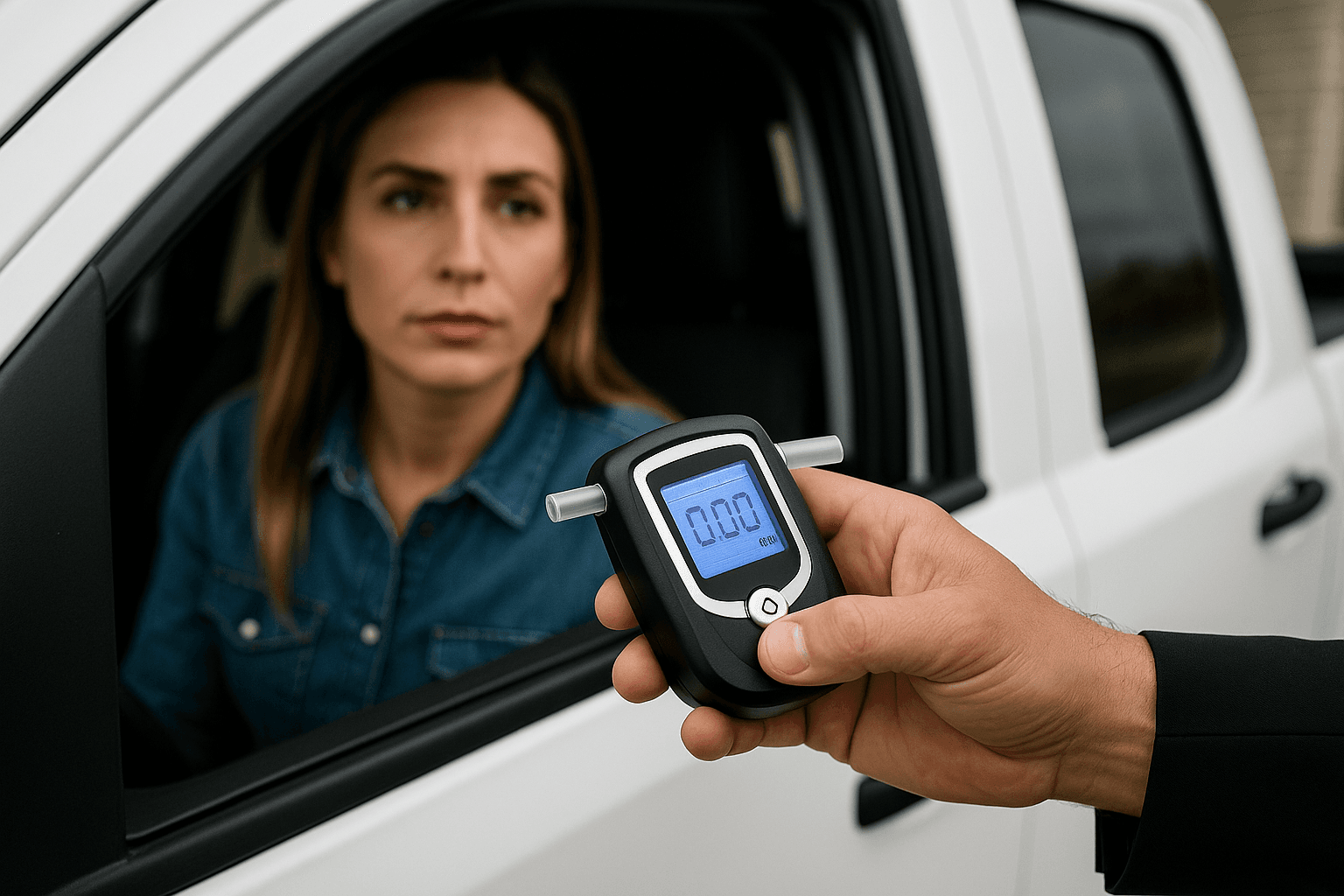
Utah requires ignition interlock devices (IID) for any restricted license issued after a DUI conviction, refusal, or BAC administrative suspension. The IID requirement runs for the full restricted license period — minimum 18 months for first-offense DUI, 36 months for second offense — and costs $70-$100/month for device lease, calibration, and monitoring. IID service fees are separate from your SR-22 premium; budget $1,260-$1,800 in IID costs for an 18-month restricted license period.
Your SR-22 carrier must know you have an IID-restricted license. Some non-standard carriers in Utah offer a 5-10% IID compliance discount if you provide proof of active interlock monitoring, but the discount applies only after 6 consecutive months of violation-free IID use. A single failed start attempt, rolling retest failure, or tampering alert disqualifies you from the discount and may trigger a policy review or mid-term rate increase.
IID violations do not automatically revoke your restricted license, but Utah DMV receives monthly violation reports from interlock providers. Three failed starts or one tampering event in a 30-day period typically triggers a DMV review hearing, which can extend your IID requirement by 6-12 months or revoke the restricted license outright. Your carrier sees the same violation data in underwriting system feeds, often before you receive formal notice from DMV.
What Happens When You Transition from Restricted License to Full Reinstatement
Utah requires continuous SR-22 filing through your full 3-year obligation period, which extends beyond the restricted license period in most cases. When your restricted license period ends — typically 120 days to 1 year — you pay the $65 reinstatement fee, pass a written knowledge test (required for most DUI suspensions), and receive full driving privileges. Your SR-22 filing continues unchanged; the carrier does not re-file or issue a new certificate at reinstatement.
Your premium should decrease 10-20% once the restricted license surcharge drops off, but this adjustment is not automatic. You must contact your carrier and request a policy review after reinstatement. Dairyland and Bristol West process the adjustment within one billing cycle if you provide a copy of your reinstated full license; The General and GAINSCO require you to request the review explicitly or the surcharge remains in place until your next renewal.
If you let SR-22 lapse at any point during the 3-year period — including after you've regained full privileges — Utah DMV suspends your license again and restarts the SR-22 clock from zero. A lapse on day 1,000 of a 1,095-day SR-22 obligation means you owe another full 3 years from the new filing date. Monitor your SR-22 expiration date independently; carriers send renewal notices 30-45 days out, but mail delays and address changes cause missed notices in roughly 8% of SR-22 renewals.
Cost Breakdown: What You'll Actually Pay for Restricted License SR-22 in Utah
Total first-year cost for a restricted license SR-22 case in Utah after a first-offense DUI typically runs $3,200-$4,800. This includes: $50 restricted license application fee, $65 reinstatement fee, $25 SR-22 filing fee, $140-$240/mo SR-22 premium ($1,680-$2,880/year), and $70-$100/mo IID lease and monitoring ($840-$1,200/year for 12 months). Add $450-$800 in DUI program costs and $300-$500 in attorney fees for the restricted license application if you use representation.
Your premium during the restricted license period runs 15-30% higher than the same SR-22 coverage after full reinstatement. A driver paying $180/mo for post-reinstatement SR-22 would pay $205-$235/mo during the restricted license phase with the same carrier and coverage limits. The surcharge reflects underwriting data showing restricted license holders file claims at 1.4x the rate of fully reinstated SR-22 drivers, likely due to the stress of managing approved hours, route compliance, and employment pressure simultaneously.
Non-owner SR-22 policies do not qualify for restricted license purposes in Utah. DMV requires proof of vehicle ownership or regular access, and your restricted license application must list the specific vehicle(s) you'll drive. If you do not own a vehicle, a named non-owner policy with SR-22 will satisfy the filing requirement, but you must also provide a notarized letter from the vehicle owner (family member, employer) confirming you have permission to drive their vehicle during approved restricted license hours.