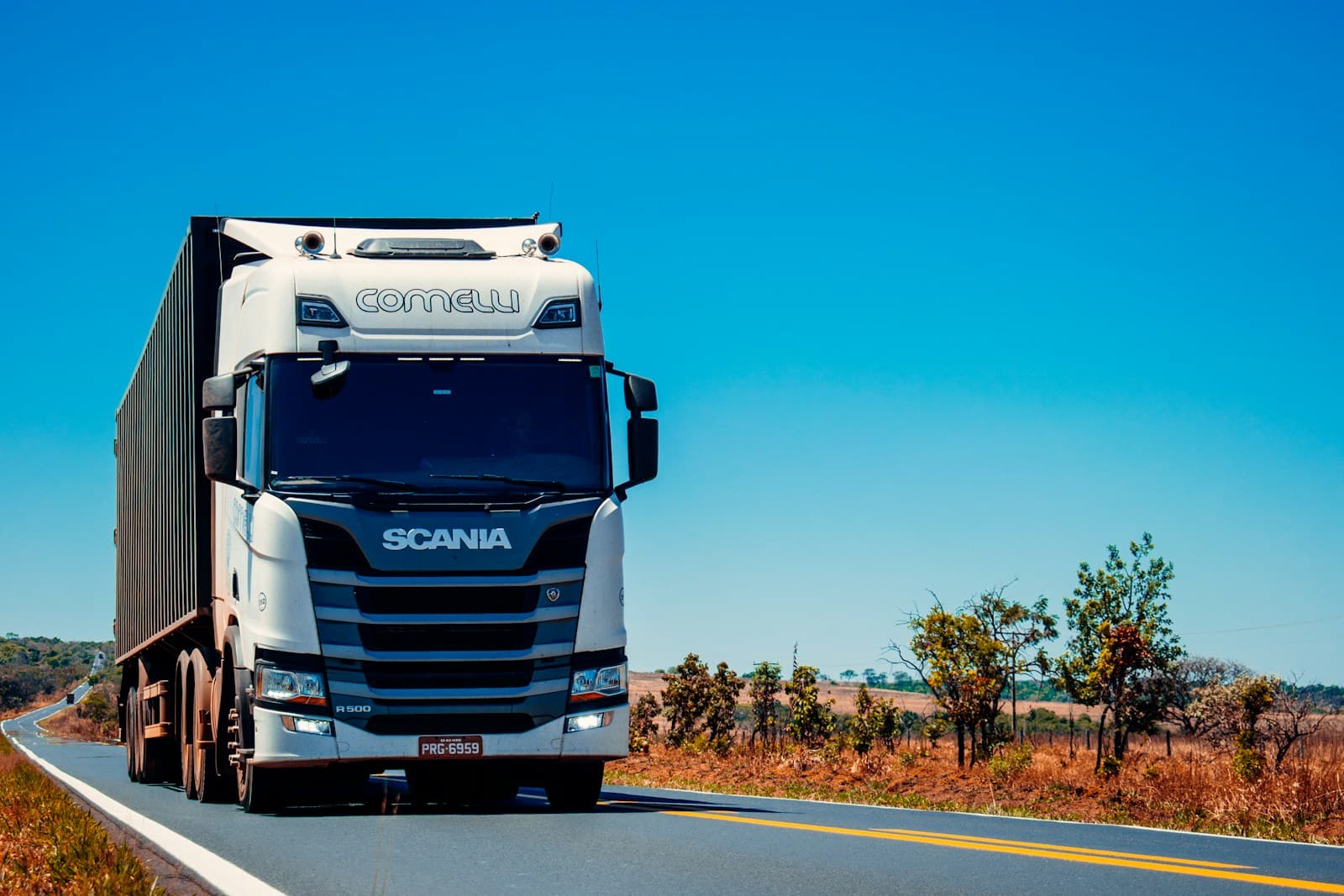
Your commercial driver's license is suspended for an insurance lapse, but you need to drive specific work routes to keep your job. South Carolina's route-restricted license program has stricter approval criteria for CDL holders than standard drivers—and most applicants don't realize the approved destination list requires employer GPS verification before DMV will process the petition.
What South Carolina's Route Restricted License Actually Allows for CDL Holders
South Carolina grants route-restricted licenses for commercial drivers whose CDL was suspended due to insurance lapse, but the approved driving privilege is narrower than most CDL holders expect. The license permits driving only between your home address and your employer's dispatch location, plus any employer-assigned delivery or pickup destinations documented in advance with GPS coordinates and time windows.
The route restriction is literal: you cannot deviate to a gas station, rest stop, or alternate route during your approved driving window, even if traffic conditions justify it. SCDMV cross-references your approved route list against employer dispatch logs monthly, and deviation from documented coordinates triggers automatic revocation before you receive notice.
Most CDL holders assume the route-restricted license covers "work-related driving" generally. It does not. If your employer assigns you a new delivery address mid-week and that address was not submitted in your original petition, driving there counts as unlicensed operation even if your employer confirms the trip was work-required.
Why CDL Route Petitions Require Employer GPS Documentation While Standard Drivers Submit Written Routes
South Carolina separates route-restricted license applications into two administrative tracks: standard driver petitions filed on Form DL-920, and commercial driver petitions filed on Form CDL-920R. The CDL-specific form requires employer-submitted GPS waypoint data for every approved destination, formatted as decimal-degree coordinates paired with approved arrival and departure time windows.
Standard drivers submit handwritten route descriptions ("123 Main St to 456 Oak Ave via Highway 17") and DMV staff convert those into approved addresses. CDL holders cannot use this simplified process because SCDMV compliance monitoring for commercial licenses relies on automated GPS log cross-checks, not manual address verification.
Employers must generate the GPS coordinate list from their dispatch system and submit it directly to SCDMV on company letterhead. Most trucking companies and delivery services have dispatch software that exports waypoint logs, but small employers without GPS-enabled dispatch systems cannot comply with the CDL-920R requirements—meaning drivers working for those employers are ineligible for route-restricted licenses regardless of suspension cause.
This GPS documentation requirement appears nowhere on SCDMV's public-facing hardship license FAQ page. Most CDL applicants discover it only after filing a standard DL-920 form and receiving a rejection notice directing them to resubmit using the CDL-specific process.
Compare car insurance rates in your state
Get quotes from licensed carriers — no obligation, no spam, results in minutes.
Get Your Free Quote✓ No Obligation Required✓ Licensed Carriers Only✓ Available Nationwide✓ Free to Compare
How Insurance Lapse Suspension Affects CDL and Personal License Separately in South Carolina
An insurance lapse on your personal vehicle suspends both your personal Class D license and your CDL simultaneously under South Carolina's unified driver record system. This dual suspension creates a reinstatement cost stack most drivers do not anticipate: you owe the $200 base reinstatement fee for your personal license, plus a $100 CDL reinstatement surcharge, plus the SR-22 filing fee your carrier charges (typically $25-$50), plus approximately $140-$220/month for non-standard liability insurance with SR-22 endorsement.
The route-restricted license petition requires proof of SR-22 filing at application submission. You cannot file the petition, get approved, then obtain SR-22 afterward—the SR-22 certificate must be on file with SCDMV before your petition is reviewed. Most CDL applicants attempt to sequence these backwards because the SR-22 premium is the largest monthly cost and they want approval certainty before committing to it.
South Carolina requires SR-22 filing for three years after an insurance lapse suspension, measured from the date your SR-22 certificate is filed with SCDMV, not the date your suspension began. Drivers who delay SR-22 filing to "wait for approval" extend their total SR-22 obligation by however many months they delayed.
If your CDL suspension was triggered by a lapse on a commercial vehicle policy rather than a personal auto policy, the SR-22 filing must come from a commercial auto policy, not a personal non-owner SR-22. SCDMV rejects personal SR-22 filings when the underlying suspension vehicle was commercial-registered.
What Happens When Your Employer Changes Routes Mid-Restriction Period
Route-restricted licenses list every approved destination as a fixed address at the time of petition approval. When your employer changes your delivery territory, adds a new warehouse location, or reassigns you to a different dispatch hub, those new addresses are not automatically covered under your existing route restriction.
South Carolina requires a formal route amendment petition filed on Form CDL-920R-A, submitted by your employer with updated GPS waypoint data, processed through the same SCDMV review queue as initial applications. Processing time for amendments runs 10-15 business days. During that processing window, you cannot legally drive the new routes even if your employer requires it.
Most CDL holders discover this restriction only after being pulled over while driving a newly assigned route that was not on their approved list. SCDMV treats unauthorized route deviation the same as driving on a suspended license: immediate revocation of the route-restricted privilege, extension of the underlying suspension period by 90 days, and criminal citation for unlicensed operation.
The safest practice: if your employer assigns a new route, request immediate unpaid leave until the amendment is processed, or arrange alternate transportation for that specific route while continuing to drive your pre-approved routes. Employers rarely accommodate either option, which forces many CDL holders into the impossible choice between violating the restriction and losing their job.
How to Apply for a South Carolina Route Restricted License as a CDL Holder
Start by confirming your eligibility waiting period. South Carolina imposes a 30-day mandatory waiting period after an insurance lapse suspension begins before you can file a route-restricted license petition. You cannot file on the suspension effective date—petitions submitted before the 30-day mark are rejected without refund.
Obtain SR-22 insurance before filing. Contact non-standard carriers that specialize in post-suspension CDL coverage: The Hartford, Progressive Commercial, Northland Insurance, and CoverWhale all write liability policies with SR-22 endorsement for lapsed CDL holders. Request the carrier file your SR-22 certificate electronically with SCDMV and provide you a copy of the filing confirmation within 24-48 hours.
Request employer GPS documentation. Provide your employer's dispatch manager with Form CDL-920R (available at scdmvonline.com) and ask them to generate a waypoint export from their dispatch system showing your home address, dispatch location, and all assigned delivery or pickup addresses for the next 90 days. The export must include decimal-degree GPS coordinates and approved time windows for each location. Your employer submits this directly to SCDMV on company letterhead—you do not submit it yourself.
File Form CDL-920R in person at your county SCDMV branch office. Bring your SR-22 filing confirmation, proof of employment (pay stub or employer letter), and $100 application fee (cash, check, or money order—no cards). SCDMV does not accept mailed CDL route-restricted petitions; commercial license petitions require in-person filing with identity verification.
Processing takes 15-20 business days from the date your employer's GPS documentation is received by SCDMV. You will receive a decision letter by mail. If approved, your route-restricted license is mailed separately within 7-10 business days. If denied, the decision letter states the specific deficiency and whether you can refile.
Where to Find SR-22 Insurance That Meets South Carolina's CDL Filing Requirements
Most personal-auto SR-22 carriers do not write commercial policies, and most standard commercial carriers do not accept suspended CDL holders. The overlap market is narrow: expect quotes from 2-4 carriers at most, with monthly premiums typically running $140-$220 for minimum liability coverage (South Carolina requires $25,000/$50,000/$25,000 for personal vehicles, but commercial minimums are often higher depending on vehicle type and cargo).
Carriers that specialize in post-suspension CDL coverage include The Hartford's small fleet division, Progressive Commercial, Northland Insurance, CoverWhale, and Canal Insurance. If you do not own the commercial vehicle you drive, ask about non-owner SR-22 policies—these provide liability coverage and SR-22 filing without insuring a specific vehicle, often at lower monthly cost than standard commercial policies.
SR-22 filing must remain active and uninterrupted for the full three-year requirement period. If your policy lapses or cancels for non-payment, your carrier notifies SCDMV electronically within 24 hours, your route-restricted license is revoked immediately, and your underlying suspension is extended by an additional 90 days. Most CDL holders cannot afford a lapse—set up automatic payment with your carrier to eliminate missed-payment risk.