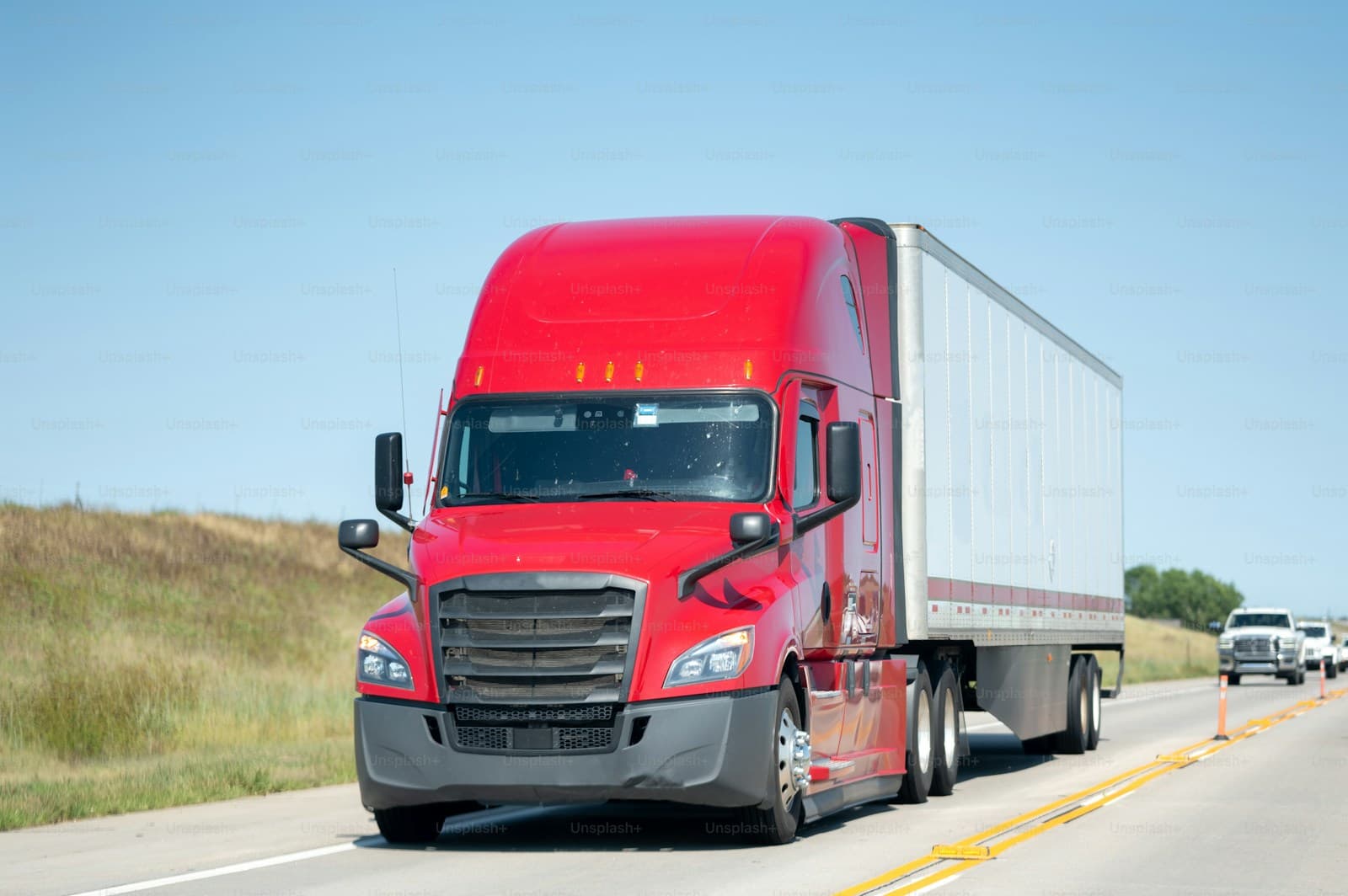
CDL holders face a double-licensing problem after reckless driving convictions: their commercial privilege is suspended separately from their passenger license, and South Dakota's work permit system doesn't automatically restore both. Most drivers don't realize they need to petition for CDL reinstatement separately even after securing a passenger-vehicle work permit.
Why Your CDL Suspension Operates on a Separate Track from Your Passenger License
South Dakota processes CDL suspensions under federal FMCSA regulations that operate independently from state Class D license suspensions. A reckless driving conviction triggers both a Class D suspension and a CDL disqualification, even when the violation occurred in your personal vehicle. The state Department of Public Safety suspends your passenger driving privilege under SDCL 32-12-49, while your CDL disqualification follows 49 CFR 383.51 federal guidelines.
Most CDL holders assume that obtaining a work permit restores their ability to drive commercially for work. It does not. South Dakota's restricted driving permit—issued through circuit court under SDCL 32-12-52—applies only to Class D passenger vehicle operation. Your commercial driving privilege remains disqualified throughout the work permit period unless you petition for CDL reinstatement separately.
The gap creates an employment crisis for drivers whose livelihood depends on commercial vehicle operation. A reckless driving conviction typically triggers a 30-day Class D suspension and a 60-day CDL disqualification for a first offense. Securing a work permit within 10 days protects passenger-vehicle commuting to a warehouse job, but does nothing for the trucker who needs to drive the truck itself.
What South Dakota's Work Permit Actually Authorizes for CDL Holders
South Dakota circuit courts issue restricted driving permits for employment, medical appointments, educational programs, court-ordered obligations, and attendance at substance abuse treatment. The permit authorizes operation of a Class D passenger vehicle only—sedans, SUVs, pickup trucks under 26,001 pounds GVWR without commercial placarding.
Your work permit cannot authorize operation of a commercial motor vehicle as defined under 49 CFR 390.5: any vehicle requiring a CDL, any vehicle designed to transport 16 or more passengers, or any vehicle transporting hazardous materials requiring placarding. This prohibition applies even when your employer schedules align perfectly with your approved work-permit hours.
Drivers who assume their court-approved work hours cover commercial driving discover the error only after being stopped. Operating a CMV during a CDL disqualification period counts as driving without a valid license under SDCL 32-12-65. The violation extends your original suspension, adds criminal penalties, and often triggers immediate termination from employers who cannot insure drivers with unlicensed-operation convictions.
Compare car insurance rates in your state
Get quotes from licensed carriers — no obligation, no spam, results in minutes.
Get Your Free Quote✓ No Obligation Required✓ Licensed Carriers Only✓ Available Nationwide✓ Free to Compare
The CDL Reinstatement Petition Process South Dakota Doesn't Advertise
CDL reinstatement after a disqualification requires filing a petition with the South Dakota Department of Public Safety after your disqualification period expires. You cannot file early. A 60-day disqualification for reckless driving means you wait the full 60 days, then submit your reinstatement application with proof of SR-22 filing, payment of the $100 reinstatement fee, and completion of any court-ordered substance abuse evaluation if alcohol was involved.
The Department of Public Safety does not send reminder notices when your disqualification period ends. Most drivers miss the filing window because they assume reinstatement happens automatically once time is served. It does not. Your CDL remains disqualified until you affirmatively petition and the department approves your reinstatement application.
Processing typically takes 10-15 business days after submission. During this processing window, you still cannot drive commercially even though your disqualification period has technically ended. Drivers who need to return to commercial work immediately should submit their reinstatement packet on day 60 with all documentation complete—employer verification letters, SR-22 certificates, court completion records, and payment confirmation—rather than waiting for the department to request missing items later.
How SR-22 Filing Requirements Apply to CDL Holders with Reckless Driving Convictions
South Dakota requires SR-22 filing for CDL reinstatement after reckless driving convictions under SDCL 32-35-113. The filing must remain active for three years from your conviction date, not your reinstatement date. Your insurance carrier files the SR-22 certificate electronically with the Department of Public Safety, confirming you maintain continuous liability coverage meeting state minimums: $25,000 bodily injury per person, $50,000 per accident, $25,000 property damage.
CDL holders face a carrier availability problem most passenger-vehicle drivers don't encounter. Not all non-standard carriers that write SR-22 policies for Class D drivers will underwrite policies for CDL holders with recent reckless driving convictions. The carrier must be willing to cover both your personal vehicle and endorse your commercial driving activity if you're an owner-operator, or confirm coverage while you're listed as a driver on your employer's commercial policy.
Premiums for CDL holders with SR-22 requirements typically run $180-$280 per month for liability-only coverage in South Dakota, compared to $85-$140 for non-CDL drivers with similar violations. The difference reflects the higher liability limits many CDL holders carry and the statistical risk carriers assign to commercial drivers with recent moving violations. Drivers employed by companies with fleet policies still need personal SR-22 filing—the employer's commercial policy does not satisfy the state's individual SR-22 requirement for license reinstatement.
Why Most Employers Won't Accept Work Permits as CDL Substitutes
Fleet insurance policies exclude drivers operating under restricted licenses or work permits. The endorsement language in most commercial trucking policies explicitly states that all drivers must possess a valid, unrestricted CDL in the appropriate class for the vehicle operated. A work permit—even one with court-approved employment hours—does not satisfy this policy requirement.
HR departments deny work-permit holders not because they're unsympathetic, but because their insurance carrier has already communicated the restriction in the fleet policy terms. Allowing you to drive commercially under a work permit exposes the company to uninsured liability if an accident occurs. The carrier would deny the claim, leaving the employer facing direct litigation exposure for every mile you drove.
Small owner-operators sometimes assume they can continue driving under a work permit if they secure their own commercial policy. This doesn't work either. No admitted carrier in South Dakota will write a commercial auto policy for a driver operating under a passenger-vehicle work permit. The work permit's legal authority does not extend to commercial operation, making the entire arrangement void from the carrier's underwriting perspective.
What to Do About Insurance While Your CDL Disqualification Runs
If you don't own a vehicle and won't be driving during your disqualification period, a non-owner SR-22 policy satisfies South Dakota's filing requirement at approximately $40-$70 per month. This option works for CDL holders who plan to return to company-fleet driving after reinstatement and don't need personal vehicle coverage during the suspension.
Drivers who own a personal vehicle and secure a work permit need a standard SR-22 auto policy with liability coverage. Expect quotes from non-standard carriers like Dairyland, Direct Auto, The General, and GAINSCO. Submit applications to multiple carriers—approval rates and premium quotes vary significantly for CDL holders, and the first quote you receive is rarely the lowest available rate.
Once your CDL reinstatement is approved and your three-year SR-22 period expires, expect your commercial insurance options to improve. Carriers treat CDL disqualifications that are fully satisfied and closed differently from active suspensions or repeated violations. Your MVR will still show the reckless driving conviction, but closed disqualifications without subsequent violations typically move you back into standard-rate commercial underwriting within 18-24 months of reinstatement.