Arkansas triggers license suspension at 0.02% BAC for drivers under 21. The administrative DFA path and criminal court conviction path lead to different hardship license timelines—knowing which you're on determines when you can apply for restricted driving.
Arkansas Zero-Tolerance Law: What Triggers Suspension for Drivers Under 21
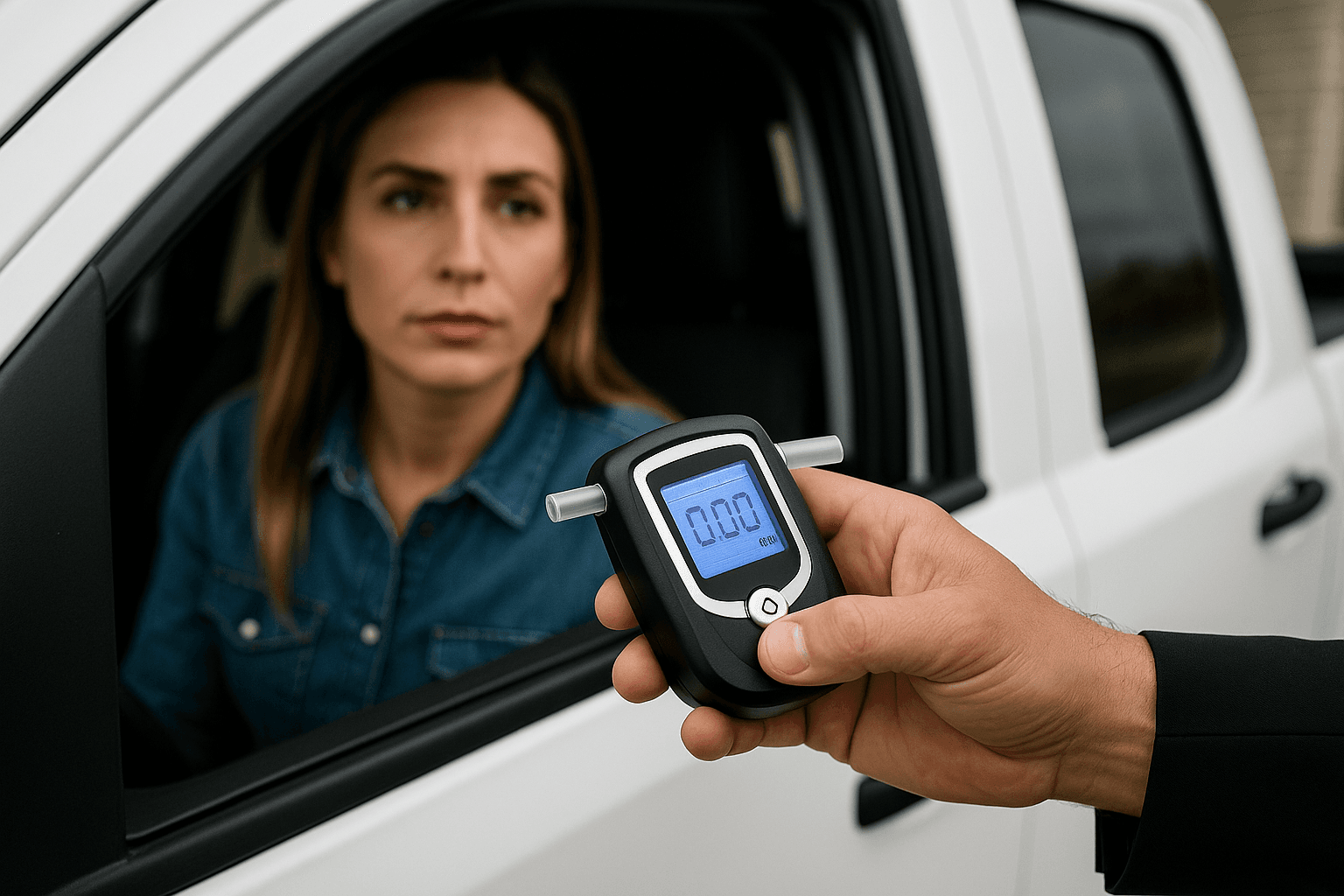
Arkansas law suspends the license of any driver under 21 caught operating a vehicle with a blood alcohol concentration of 0.02% or higher. This is not the standard 0.08% DUI threshold—it's the under-21 zero-tolerance threshold, and it applies whether you're 14, 16, or 20. A single beer, a spiked soda, or mouthwash can put you over 0.02%.
The suspension happens through two parallel paths: an administrative suspension imposed by the Arkansas Department of Finance and Administration (DFA) Driver Services division, and a criminal charge processed through district court if the officer files formal charges. These paths operate independently. You can face both simultaneously, and each carries different suspension lengths, hardship license eligibility windows, and SR-22 filing requirements.
The administrative DFA suspension is automatic. If you take the breath test and register 0.02% or higher, DFA suspends your license for 90 days on a first offense. If you refuse the test, DFA suspends for 180 days. The criminal court path depends on whether the prosecutor files charges and whether you're convicted. A criminal conviction for DUI under age 21 triggers a one-year license suspension plus SR-22 filing for three years.
Two Suspension Paths: Administrative DFA vs Criminal Court Conviction
The administrative DFA suspension begins 30 days after your arrest unless you request a hearing within seven days. If you miss that seven-day window, the suspension starts automatically on day 30. The 90-day administrative suspension (or 180-day refusal suspension) runs independently of any criminal case outcome.
The criminal court conviction path takes longer to resolve but carries harsher penalties. If you're charged with DUI under age 21 and convicted, the court imposes a separate one-year license suspension. This suspension does not replace the DFA administrative suspension—it runs consecutively or concurrently depending on timing. Most teen drivers serve the DFA suspension first, then face the court-ordered suspension after conviction.
Hardship license eligibility depends entirely on which suspension you're under. The DFA administrative suspension allows hardship license application after 30 days on a first offense. The criminal court suspension requires you to serve a minimum period before hardship eligibility—typically 90 days on a first DUI conviction, but the judge sets the specific waiting period. If you're convicted after already serving the DFA suspension, you start the court-ordered suspension clock from zero.
Compare car insurance rates in your state
Get quotes from licensed carriers — no obligation, no spam, results in minutes.
Get Your Free Quote✓ No Obligation Required✓ Licensed Carriers Only✓ Available Nationwide✓ Free to Compare
Hardship License Eligibility Timeline: When You Can Apply
Arkansas allows drivers under 21 to apply for a hardship license (also called a restricted license) after meeting the minimum suspension period. For the DFA administrative suspension, you can apply after 30 days on a first offense. For a criminal court conviction suspension, the judge sets the minimum period—usually 90 days for a first DUI under 21, but it can be longer if aggravating factors exist.
You must complete the Alcohol and Drug Safety Education Program (ADSEP) before applying for a hardship license. ADSEP is a state-approved program that runs 10-12 hours across multiple sessions. The program costs $200-$300 and must be completed in person. DFA will not process your hardship application without the ADSEP completion certificate.
The hardship license application itself requires proof of employment, school enrollment, or medical necessity. You submit the application to DFA Driver Services along with the ADSEP certificate, SR-22 filing proof, a $50 hardship license fee, and employer or school documentation. DFA processes applications in 7-14 days. If approved, the hardship license restricts you to travel between home, work, school, and medical appointments only. Deviation from approved routes or times violates the hardship license and triggers immediate revocation.
SR-22 Filing Requirement: Who Needs It and How Long It Lasts
Arkansas requires SR-22 filing for any driver under 21 convicted of DUI in criminal court. The administrative DFA suspension alone does not trigger SR-22 filing—it's the criminal conviction that does. If you're suspended administratively but never convicted in court, you do not need SR-22. If you're convicted, you must maintain SR-22 filing for three years from the date of conviction.
SR-22 is not insurance—it's a liability certificate your carrier files with DFA proving you carry minimum liability coverage: $25,000 per person, $50,000 per accident for bodily injury, and $25,000 for property damage. Non-standard carriers write most SR-22 policies for drivers under 21 with DUI convictions. Expect premiums between $200-$400/mo for basic liability with SR-22 filing, depending on your exact age and violation details.
The SR-22 filing itself costs $15-$50 as a one-time carrier filing fee. The premium increase comes from the underlying DUI conviction and your age. If your SR-22 lapses even one day during the three-year filing period, DFA suspends your license again and resets the three-year clock. Most carriers send a cancellation notice to DFA 10 days before policy termination, giving you a narrow window to renew or switch carriers without triggering suspension.
Restricted Driving Privileges: What the Hardship License Actually Allows
Arkansas hardship licenses restrict you to necessary travel only. Approved purposes include travel to and from work, school, medical appointments, court-ordered programs (like ADSEP or alcohol treatment), and religious services. The hardship license specifies your approved hours and days—typically matching your documented work or school schedule.
You cannot drive for social reasons, recreation, errands, or any purpose not listed on the hardship license. If you're stopped outside approved hours or routes, the officer can arrest you for driving on a suspended license, a misdemeanor that carries up to 90 days in jail and a $1,000 fine. The hardship license itself is revoked immediately, and you lose eligibility to reapply for the remainder of your original suspension period.
If you're under 18, Arkansas applies additional restrictions. Drivers under 18 with a hardship license cannot drive between 11 p.m. and 4 a.m. unless traveling directly to or from work or a school activity. Passengers are limited to immediate family members unless a licensed adult over 21 is in the front seat. These restrictions layer on top of the hardship license route and hour limits.
Cost Breakdown: Hardship License, SR-22, and Reinstatement Fees
The full cost to obtain a hardship license and eventually reinstate your full license after an under-21 DUI in Arkansas includes:
**Immediate costs:** ADSEP program ($200-$300), hardship license application fee ($50), SR-22 filing fee ($15-$50), initial SR-22 insurance premium ($200-$400/mo for minimum liability).
**Monthly recurring costs:** SR-22 insurance premium ($200-$400/mo for 36 months), potential ignition interlock device rental if court-ordered ($70-$120/mo), court fines and fees if criminally convicted ($500-$1,500 total).
**Reinstatement costs:** License reinstatement fee after suspension ends ($150), SR-22 maintenance for the full three-year period (totaling $7,200-$14,400 in premiums).
Total first-year cost typically runs $3,500-$6,000 including insurance, fees, and program completion. If you're required to install an ignition interlock device, add another $800-$1,500 annually. Most teen drivers cannot afford this without family support, and many lose the hardship license due to missed premium payments or lapsed SR-22 filing.
Finding Coverage: Which Carriers Write SR-22 for Drivers Under 21
Standard carriers (State Farm, Allstate, GEICO) either decline to write new policies for drivers under 21 with DUI convictions or cancel existing policies at renewal. Non-standard carriers dominate this market. In Arkansas, Bristol West, Dairyland, GAINSCO, The General, Direct Auto, and Safe Auto write SR-22 policies for teen drivers with zero-tolerance violations.
Not every non-standard carrier writes drivers under 18. Some impose a minimum age of 18 or 19 for SR-22 filing. If you're 16 or 17, your options narrow further—you may need a parent to hold the policy with you listed as a driver, though this often disqualifies the parent's existing coverage and forces the entire household onto a non-standard policy.
Rates vary widely by carrier and your exact age. A 17-year-old with a zero-tolerance DUI conviction typically pays 30-50% more than a 20-year-old with the same conviction. Shop at least three non-standard carriers and confirm each can file SR-22 with Arkansas DFA before purchasing. Some carriers file SR-22 in neighboring states but not Arkansas due to state-specific filing requirements.