Missouri's zero-tolerance law for drivers under 21 triggers a 90-day suspension on the first offense. You can apply for a hardship license immediately — but only if you install an ignition interlock device and maintain SR-22 filing for two years.
What Missouri's Zero-Tolerance Law Actually Means for Drivers Under 21
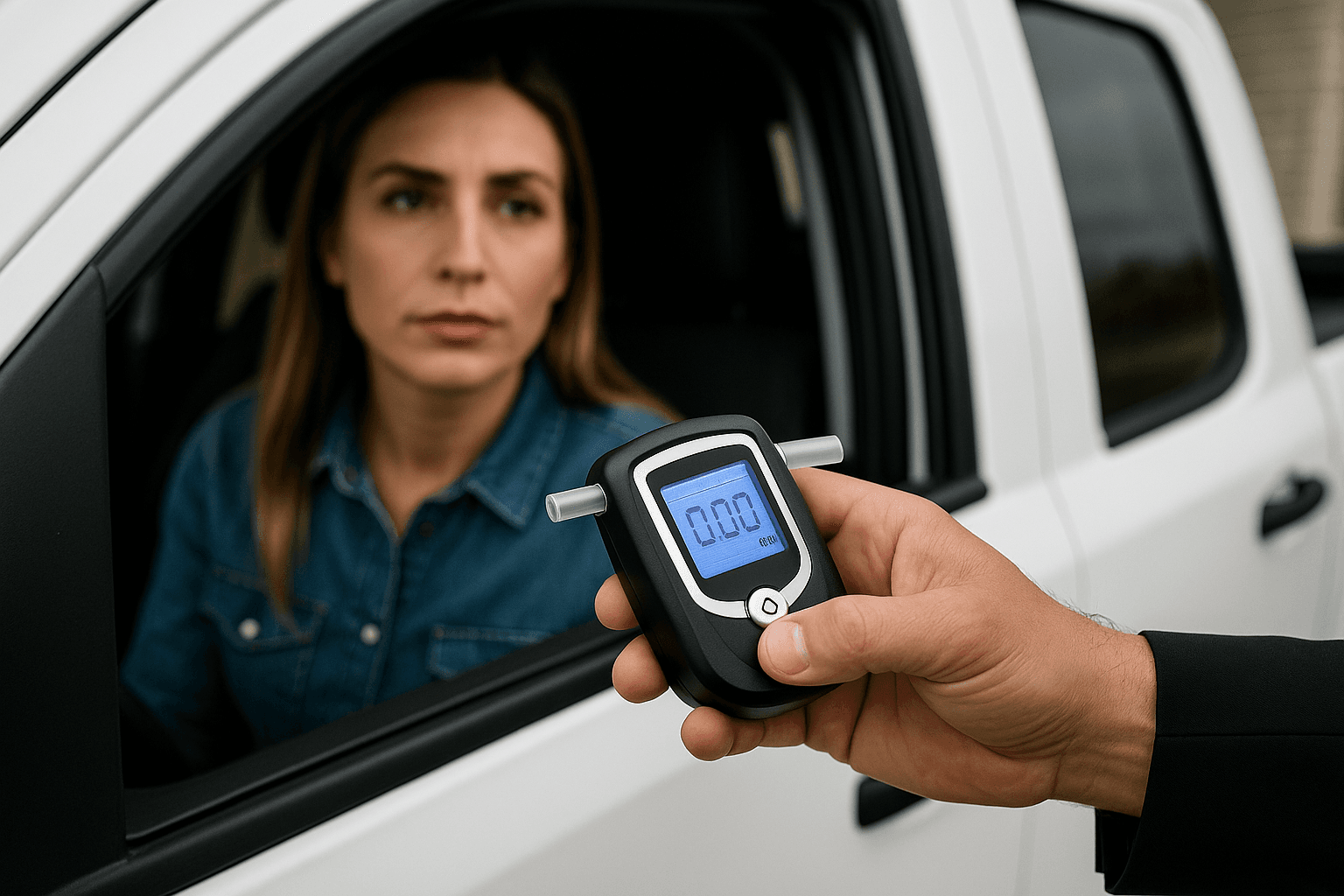
Missouri prohibits drivers under 21 from operating a vehicle with any detectable alcohol — defined as a blood alcohol content of 0.02% or higher. A first violation triggers an automatic 90-day license suspension administered by the Missouri Department of Revenue, not the criminal courts. This is a separate administrative process that begins the moment you fail or refuse a chemical test, regardless of whether criminal charges follow.
The 0.02% threshold captures one drink in most cases. A 120-pound driver who consumes a single 12-ounce beer within an hour typically registers between 0.02% and 0.04% BAC. Missouri law does not distinguish between intentional consumption and incidental exposure — mouthwash, communion wine, or trace amounts from food cooked with alcohol all count if detected.
The suspension period doubles to 1 year for a second offense and extends to 1 year for refusal to submit to chemical testing. These penalties apply even if criminal DUI charges are reduced or dismissed in court. The administrative suspension runs on a separate track and does not require a criminal conviction.
How to Apply for a Limited Driving Privilege After a Zero-Tolerance Suspension
Missouri allows you to apply for a Limited Driving Privilege immediately after a zero-tolerance suspension begins — there is no mandatory waiting period. You file your petition with the circuit court in the county where you were arrested, not with the Department of Revenue. The application fee is $50, plus circuit court filing fees that range from $100 to $175 depending on the county.
You must prove undue hardship — specifically, that losing your license prevents you from reaching employment, attending school, or obtaining necessary medical care. The court does not grant privileges for social driving, extracurricular activities, or general convenience. You need documentation: a letter from your employer on company letterhead stating your work schedule and location, school enrollment verification with class times, or medical appointment schedules if relevant.
The court schedules a hearing within 30 days of filing. You may attend with or without an attorney, but representation significantly improves approval rates — Missouri courts approve roughly 65% of petitions filed with attorney assistance compared to 40% of pro se applications. At the hearing, you present your hardship evidence and proof of SR-22 insurance filing. The judge has full discretion to approve, deny, or modify the requested privilege.
Compare car insurance rates in your state
Get quotes from licensed carriers — no obligation, no spam, results in minutes.
Get Your Free Quote✓ No Obligation Required✓ Licensed Carriers Only✓ Available Nationwide✓ Free to Compare
Ignition Interlock Device Requirement for Under-21 Zero-Tolerance Cases
Missouri requires ignition interlock installation for all Limited Driving Privileges issued after a zero-tolerance suspension, even on a first offense with BAC below 0.08%. This is a statutory requirement under RSMo 302.309 — the court cannot waive it. You must install the device before the Limited Driving Privilege becomes effective, and the device must remain installed for the full duration of your underlying suspension period.
Installation costs range from $75 to $150, with monthly monitoring and calibration fees of $70 to $100. Most providers require a minimum 90-day contract. Total cost for a 90-day zero-tolerance suspension runs $500 to $750 for the interlock alone, separate from SR-22 insurance premiums and court fees. Missouri certifies six interlock providers: LifeSafer, Intoxalock, Smart Start, Guardian Interlock, Low Cost Interlock, and Monitech.
The device requires breath samples before the vehicle starts and at random rolling intervals while driving. A failed test — registering 0.025% BAC or higher — locks the vehicle and triggers a violation report sent to the court and the Department of Revenue. A single failed rolling retest extends your suspension by 90 days. Three violations during the monitoring period revoke your Limited Driving Privilege and restart the suspension clock at zero.
SR-22 Filing Duration and Insurance Cost Impact
Missouri requires SR-22 filing for two years following any zero-tolerance violation, measured from the date of reinstatement or the date your Limited Driving Privilege is granted, whichever comes first. The SR-22 is a certificate of financial responsibility filed by your insurance carrier directly with the Department of Revenue. It confirms you carry at least Missouri's minimum liability coverage: $25,000 per person for bodily injury, $50,000 per accident for bodily injury, and $25,000 for property damage.
Insurance premiums for under-21 drivers already run 150% to 200% higher than adult rates due to age-based risk pricing. A zero-tolerance violation adds an additional 60% to 90% surcharge on top of the minor driver base rate. A 19-year-old driver in Missouri who paid $280 per month before the violation typically faces $450 to $530 per month after SR-22 filing is required. Not all carriers write SR-22 policies for drivers under 21 — expect quotes from non-standard carriers including Direct Auto, Dairyland, The General, Safe Auto, and GAINSCO.
The SR-22 filing itself costs $25 to $50 as a one-time fee, but letting the policy lapse even one day resets your two-year filing requirement to zero and triggers an additional one-year license suspension. You cannot switch carriers without ensuring the new carrier files an SR-22 before the old policy cancels. Most under-21 drivers stay with the same carrier for the full two-year period to avoid coordination gaps.
Limited Driving Privilege Restrictions and Violation Consequences
Missouri's Limited Driving Privilege restricts you to approved purposes: travel to and from work, school, necessary medical appointments, court-ordered obligations (alcohol education programs, community service), and religious services. The court order specifies approved days, hours, and routes. Driving outside these parameters — even five minutes past your authorized window or one mile off your approved route — violates the privilege and triggers immediate revocation.
You must carry the court order, proof of SR-22 insurance, and ignition interlock compliance documentation in the vehicle at all times. A traffic stop outside your authorized hours or location results in a new charge of driving while revoked, a Class A misdemeanor carrying up to one year in jail and a $2,000 fine. The violation also extends your underlying suspension by at least 90 days and often results in denial of future hardship petitions.
Most courts approve 12 to 16 hours of daily driving for work and school combined. If your work schedule changes, you must petition the court for a modification before driving the new hours — verbal approval from your probation officer or attorney is not sufficient. Modification petitions require another court appearance and typically a $50 filing fee. Missouri judges deny roughly 30% of modification requests, particularly when the change appears discretionary rather than employment-critical.
Full License Reinstatement Process and Timeline
Your full unrestricted license becomes eligible for reinstatement the day your suspension period ends — 90 days for a first zero-tolerance offense, one year for a second offense or test refusal. Reinstatement is not automatic. You must pay a $45 reinstatement fee to the Department of Revenue, provide proof that your SR-22 filing remains active, and submit ignition interlock removal certification from your device provider.
If you held a Limited Driving Privilege during suspension, you must also provide the court order showing successful completion without violations. A single interlock violation or driving-outside-hours citation during your privilege period delays reinstatement until you complete an additional 90-day violation-free period. Missouri does not issue partial credit — any violation resets the clock.
Once reinstated, your SR-22 filing requirement continues for the full two years from the original violation date. Your insurance surcharge typically remains in effect for three to five years, depending on carrier underwriting rules. Most non-standard carriers re-evaluate your rates at the three-year mark if you have maintained a clean record since reinstatement. Expect premiums to drop 30% to 50% once the violation ages past three years and SR-22 filing is no longer required.
Criminal DUI Charges vs. Administrative Zero-Tolerance Suspension
Missouri separates zero-tolerance administrative penalties from criminal DUI prosecution. The Department of Revenue suspends your license automatically based on chemical test results — this happens regardless of whether the prosecutor files criminal charges. If your BAC registers between 0.02% and 0.079%, you face administrative suspension but often avoid criminal DUI charges, which require 0.08% BAC or higher for drivers 21 and over.
If the prosecutor does file criminal DUI charges — common when BAC exceeds 0.08% or when the stop involved an accident or injury — you face parallel processes. The administrative suspension proceeds immediately. The criminal case follows a separate timeline with arraignment, potential plea negotiations, and trial. A criminal DUI conviction for a driver under 21 triggers additional penalties: mandatory 48 hours to 6 months in jail for a first offense, $500 to $1,000 fine, and completion of a Substance Abuse Traffic Offender Program (SATOP).
You can fight the criminal charge in court while your administrative suspension remains in effect. Winning the criminal case does not erase the administrative suspension — those are separate legal findings with separate evidence standards. Conversely, losing your administrative hearing does not guarantee a criminal conviction. Most under-21 drivers resolve the criminal charge through a plea to a reduced offense (careless driving, speeding) to avoid a permanent DUI conviction, but this does not affect the administrative suspension or SR-22 requirement already imposed by the Department of Revenue.