Illinois restricts occupational driving permits for under-21 drivers with zero-tolerance DUI violations — but eligibility exists after your first suspension if you meet program requirements and proof-of-hardship standards.
Illinois Zero-Tolerance Law Triggers Immediate License Suspension for Drivers Under 21
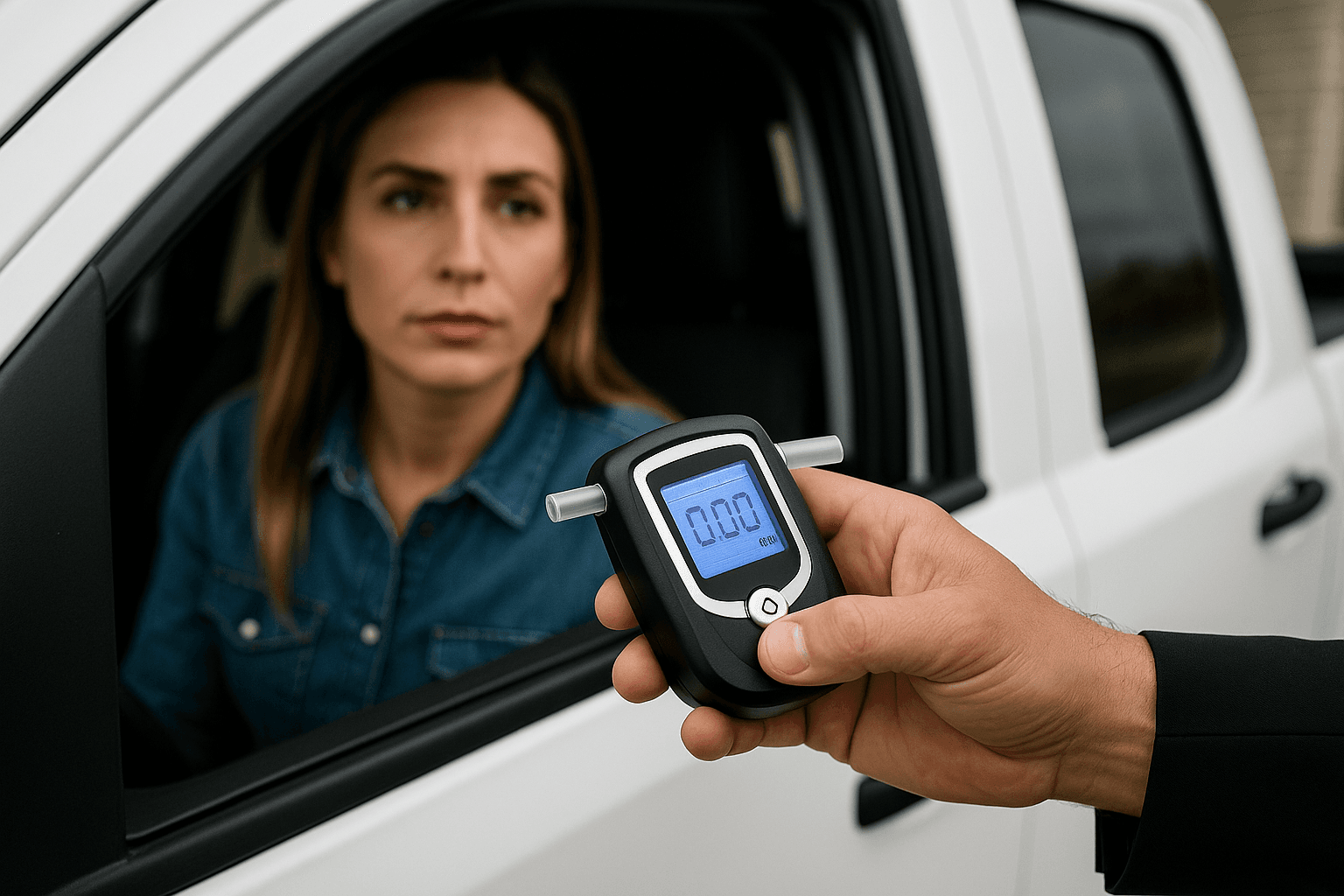
Illinois enforces a zero-tolerance standard for drivers under 21: any detectable BAC above 0.00% triggers an automatic license suspension, even if you are below the 0.08% adult DUI threshold. A first offense results in a 3-month suspension. A second offense extends that to 6 months. Unlike adult DUI cases, where you can apply for a Monitoring Device Driving Permit (MDDP) immediately, Illinois law blocks under-21 offenders from any driving relief during the first 30 days of suspension.
The suspension starts the moment you submit to or refuse chemical testing, not when you are convicted. Law enforcement forwards the suspension notice to the Illinois Secretary of State within 5 days. Your license is invalid 46 days after the arrest date. Most drivers under 21 do not realize the suspension clock is already running while their criminal case proceeds separately in court.
If you hold a Graduated Driver License (GDL) — which applies to most drivers under 18 — the zero-tolerance suspension also cancels your GDL status entirely. Reinstatement requires restarting the GDL process from the beginning, including retaking written and road tests. That adds 9–12 months to your total timeline before you regain full driving privileges.
Restricted Driving Permits Are Available After 3 Months, but Not Through DMV Administrative Process
Illinois does not offer administrative work permits for zero-tolerance violations. You cannot walk into a Secretary of State facility and request a Restricted Driving Permit (RDP) based on employment hardship alone. Illinois requires a formal hearing before a Secretary of State hearing officer, and you must complete the mandatory 3-month hard suspension before you are eligible to apply.
The hearing is adversarial. You submit a petition, pay a $50 filing fee, and appear in person with documentation proving employment necessity, lack of alternative transportation, and completion of a Risk Education course approved by the Secretary of State. The hearing officer evaluates whether your need meets statutory hardship standards. Approval is discretionary — not automatic. Denial rates exceed 40% for first-time under-21 petitioners statewide, primarily due to incomplete employer documentation or failure to prove no alternative transportation exists.
Approved RDPs restrict you to approved routes and approved hours only. Work, school, medical appointments, and court-ordered programs are the only permissible purposes. Deviation from approved hours or routes — even one trip to a gas station not on your documented route — constitutes unlawful driving and revokes the RDP. Most carriers will not issue SR-22 policies to drivers under 18, which creates a secondary barrier to RDP eligibility even if you win the hearing.
Compare car insurance rates in your state
Get quotes from licensed carriers — no obligation, no spam, results in minutes.
Get Your Free Quote✓ No Obligation Required✓ Licensed Carriers Only✓ Available Nationwide✓ Free to Compare
SR-22 Filing Is Required for All Under-21 Zero-Tolerance Cases, but Carrier Availability Is Narrow
Illinois mandates SR-22 filing for any alcohol-related suspension, including zero-tolerance violations. The SR-22 must remain active for the full reinstatement period — typically 3 years from your suspension end date. If your SR-22 lapses for any reason, the Secretary of State extends your suspension and restarts the 3-year filing clock from zero.
Finding a carrier willing to write SR-22 policies for drivers under 21 is the single largest obstacle most petitioners face. Standard carriers (State Farm, GEICO, Allstate, Progressive) decline SR-22 applications from drivers under 18 outright. Non-standard SR-22 carriers (Bristol West, Dairyland, The General, Safe Auto, GAINSCO) accept applications from drivers 18–20 but apply substantial age-based rate multipliers. Monthly premiums for under-21 SR-22 filers in Illinois typically range from $180–$320/mo for minimum liability coverage, compared to $75–$110/mo for adult SR-22 filers with comparable violations.
If you are under 18 and cannot secure an SR-22 policy in your own name, Illinois allows a parent or legal guardian to file an SR-22 on your behalf under their policy. That strategy works only if the parent's carrier permits named-driver SR-22 endorsements for household members — most do not. The result: many under-18 petitioners cannot satisfy the SR-22 requirement at all, which renders them ineligible for an RDP regardless of hardship proof.
The Total Cost Stack for RDP Approval Exceeds $2,500 in Most Cases
Budgeting for an RDP petition requires accounting for fees and costs most drivers under 21 do not anticipate. The $50 petition filing fee is the smallest line item. You pay $500 for a Risk Education course approved by the Secretary of State — required before your hearing date. Legal representation is not mandatory, but hearing officers deny unrepresented petitioners at higher rates. Attorney fees for RDP petition representation run $800–$1,500 depending on county and case complexity.
SR-22 insurance for 6 months (the minimum period carriers require before issuing monthly policies) costs $1,080–$1,920 upfront for most under-21 drivers. Add reinstatement fees of $70–$500 depending on whether your suspension triggered additional administrative holds. Total outlay before you receive an RDP: $2,500–$4,370. If your petition is denied, you forfeit all fees except the SR-22 premium, which you need to maintain for eventual full reinstatement anyway.
Employment income verification is non-negotiable. You must submit pay stubs covering the most recent 60 days, a notarized employer letter on company letterhead stating your job title, work hours, work address, and confirmation that losing driving privileges will result in termination. Self-employment income does not qualify unless you provide business registration documents, a signed client contract, and tax filings showing 12+ months of continuous income. Most gig-economy work (DoorDash, Uber Eats) does not meet Illinois hardship standards because the Secretary of State classifies it as optional income, not necessity employment.
Violation of RDP Terms Revokes Your Permit and Extends Your Suspension Period
Illinois treats RDP violations as seriously as driving on a fully suspended license. If law enforcement stops you outside your approved hours, outside your approved route, or for any purpose not listed on your RDP order, the permit is revoked immediately. The Secretary of State adds 3–12 months to your suspension period depending on the violation severity. A second RDP violation typically results in a permanent denial of driving relief until your full suspension period expires.
RDP holders must carry three documents at all times: the RDP order signed by the hearing officer, proof of SR-22 insurance, and a copy of the approved route and schedule. Failure to produce all three during a traffic stop results in a citation for driving on a suspended license, even if you were within your approved hours. That citation triggers a mandatory court appearance and extends your suspension by 6 months minimum.
Most under-21 drivers do not realize that RDP approval does not erase the underlying zero-tolerance suspension from their driving record. The suspension remains visible to insurers and employers for 5 years. When you apply for full license reinstatement after completing your suspension and SR-22 period, the Secretary of State requires proof of completion of a Victim Impact Panel and payment of all outstanding fines and fees. Missing any component delays reinstatement by 30–90 days.
Alternative Transportation Documentation Can Defeat Your RDP Petition
Illinois hearing officers deny RDP petitions when evidence suggests alternative transportation exists, even if that alternative is inconvenient or expensive. Public transit availability within 2 miles of your home or workplace is sufficient grounds for denial in Cook, DuPage, Lake, and Will counties. Carpooling with a family member who works within 10 miles of your job is also considered a viable alternative, regardless of schedule compatibility.
You must affirmatively disprove alternative transportation. Submit a notarized statement explaining why public transit does not serve your work hours, why no household member can provide transportation, and why rideshare services are financially unworkable. Include screenshots of transit schedules showing no routes align with your shift times. Include a household member affidavit stating they cannot provide rides due to conflicting work schedules or vehicle unavailability.
Rural petitioners in counties without public transit systems have higher approval rates — approximately 65% vs. 52% in metro counties — because disproving alternative transportation is simpler. If you live in a county with Pace, Metra, or CTA service, expect the hearing officer to ask detailed questions about why those options do not work. Vague answers result in denials.