South Carolina's zero-tolerance law means any detectable alcohol triggers a license suspension for drivers under 21. If you need to drive to work or school, here's how hardship license eligibility works and what SR-22 filing you'll need.
What Zero-Tolerance DUI Means for Your License If You're Under 21 in South Carolina
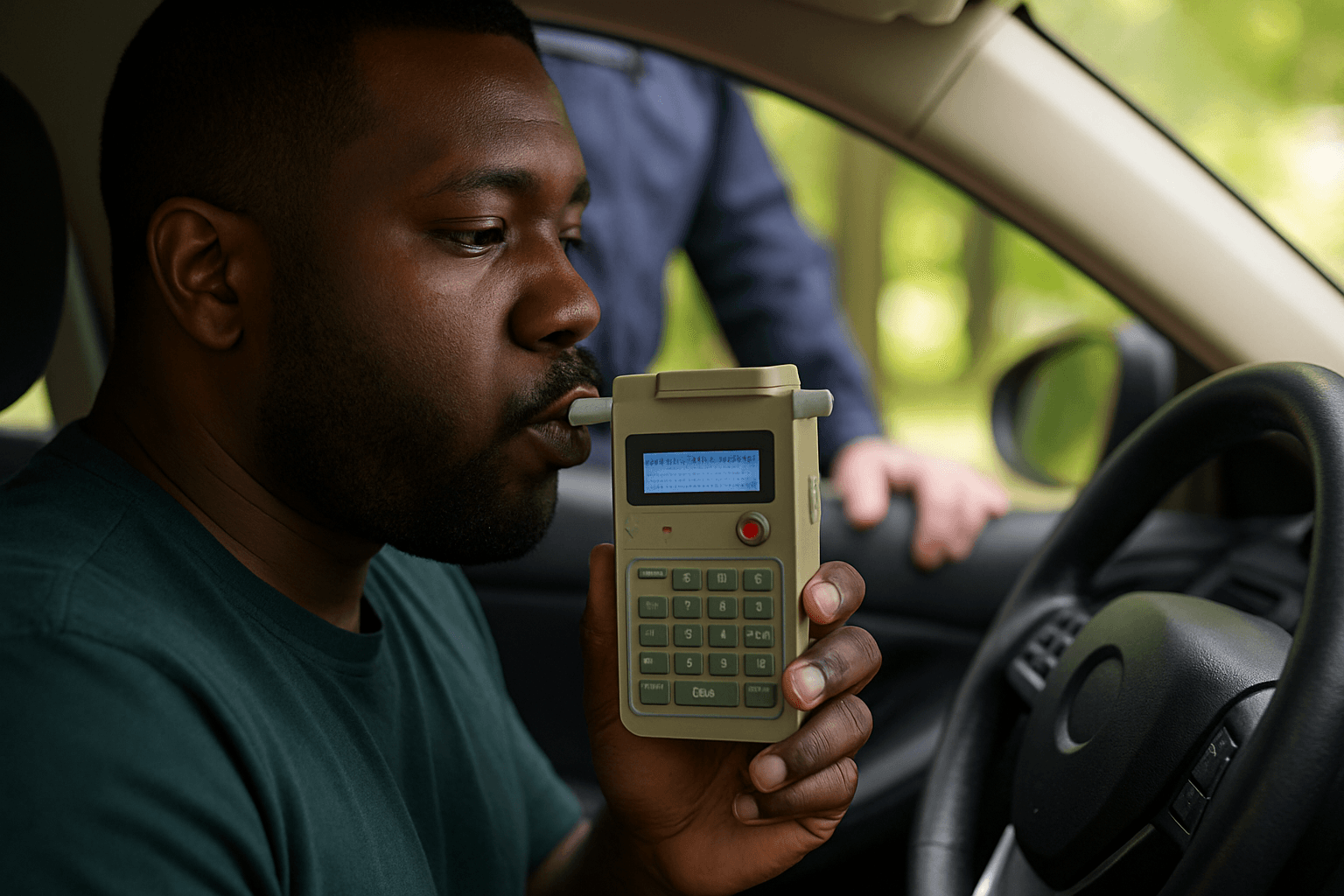
South Carolina's zero-tolerance law suspends your license immediately if you're under 21 and test at any detectable BAC level—0.02% or higher. Unlike adult DUI cases with a 0.08% threshold, zero-tolerance cases trigger automatic administrative suspension through SCDMV, separate from any criminal charges you may face in court.
The suspension runs 3 months for a first offense, 6 months for a second offense within 5 years, and 1 year for a third or subsequent offense. You have 30 days from the date of your suspension notice to request an administrative hearing if you want to contest the suspension or apply for a hardship license route permit. Missing this 30-day window forfeits your hearing right and eliminates hardship license eligibility for the full suspension period.
SR-22 filing is required before SCDMV will process any hardship license application for a zero-tolerance suspension. Most carriers who write SR-22 for adult DUI cases also write for under-21 zero-tolerance violations, but approval is not automatic—you'll need a non-standard carrier willing to file immediately, typically within 7-10 days of your request, to meet the hearing deadline.
Hardship License Eligibility: Mandatory 30-Day Hard Suspension Comes First
South Carolina requires a 30-day hard suspension period before you can apply for a route-restricted hardship license following a zero-tolerance DUI. This hard suspension has no exceptions—you cannot drive at all during the first 30 days, even to work or school, regardless of employment documentation or hardship circumstances.
After the 30-day hard suspension, you become eligible to request a hardship license through an administrative hearing at SCDMV. The hearing evaluates whether you meet the criteria: proof of employment or enrollment in an educational program, SR-22 filing confirmation from your carrier, completion of the Alcohol and Drug Safety Action Program (ADSAP) enrollment, and payment of the $100 hardship license application fee plus the $100 reinstatement fee.
Approval is not guaranteed. SCDMV hearing officers weigh your driving record, the circumstances of the violation, and whether you've had prior suspensions or violations during the lookback period. Any additional traffic violations during your 30-day hard suspension—even a speeding ticket or failure to yield—will disqualify you from hardship license eligibility and extend your full suspension.
Compare car insurance rates in your state
Get quotes from licensed carriers — no obligation, no spam, results in minutes.
Get Your Free Quote✓ No Obligation Required✓ Licensed Carriers Only✓ Available Nationwide✓ Free to Compare
What Approved Routes and Hours Look Like on a South Carolina Hardship License
South Carolina hardship licenses for under-21 zero-tolerance cases restrict you to specific approved routes and specific approved hours documented in your hearing order. You cannot deviate from these routes or drive outside approved hours without violating the terms of your restricted privilege, which triggers immediate revocation and reinstatement of the full underlying suspension.
Approved purposes typically include direct travel to and from work, school, ADSAP classes, medical appointments, and court-ordered obligations. Some hearing officers approve grocery shopping or childcare routes if you provide documentation showing no alternative transportation. Routes must be the most direct path between approved locations—no detours, no errands, no social stops.
Violating your hardship license terms—driving outside approved hours, deviating from approved routes, or getting any traffic violation while driving on the hardship license—results in immediate revocation. SCDMV will reinstate the full original suspension period from the date of the violation, and you'll serve the remaining months without any hardship privilege. Most hearing officers will not grant a second hardship license for the same suspension period.
SR-22 Filing Mechanics: You Need Proof Before the Hearing
SCDMV requires proof of SR-22 filing before your administrative hearing date, not after approval. This means you must secure SR-22 coverage and have your carrier electronically file the SR-22 certificate with SCDMV at least 5-7 business days before your scheduled hearing to ensure the filing appears in the SCDMV system when the hearing officer reviews your case.
Non-standard carriers who write SR-22 policies for zero-tolerance cases include Bristol West, Dairyland, The General, GAINSCO, Safe Auto, Direct Auto, Acceptance, and Kemper. Monthly premiums for under-21 zero-tolerance SR-22 policies in South Carolina typically run $180–$290/month depending on your county, vehicle, and whether you have prior violations. The SR-22 filing itself carries a one-time carrier fee of $15–$50, separate from the premium.
The SR-22 filing requirement lasts 3 years from the date of your suspension for a first zero-tolerance offense. Your carrier must maintain continuous SR-22 filing with SCDMV for the entire 3-year period. Any lapse in coverage—even one day—triggers an automatic notification to SCDMV, which suspends your license again and resets the 3-year SR-22 clock to zero.
Total Cost Breakdown: What You'll Pay to Get a Hardship License
The full cost to obtain a hardship license after a zero-tolerance DUI in South Carolina typically runs $2,400–$4,200 for the first year, depending on your county, carrier, and whether you hire an attorney for the administrative hearing.
Direct costs include: $100 hardship license application fee, $100 license reinstatement fee, $15–$50 SR-22 filing fee, $180–$290/month SR-22 insurance premium ($2,160–$3,480 annually), $300–$450 ADSAP enrollment and completion fee, and $500–$1,200 attorney fee if you use representation at the hearing. Additional expenses may include court fines if criminal charges were filed separately, ignition interlock device (IID) installation and monthly monitoring if ordered by the court, and increased vehicle insurance premiums that persist beyond the SR-22 filing period.
Budget realistically for the 30-day hard suspension period when you cannot drive to work. Most employers do not hold positions open for 30 days without advance notice and documentation showing you'll return with legal driving privileges. If your job requires driving as a primary duty, hardship license approval does not override employer insurance policy restrictions that prohibit employees with DUI violations from operating company vehicles.
Court DUI Case vs. SCDMV Administrative Suspension: Two Separate Tracks
Zero-tolerance violations under South Carolina law trigger two parallel processes: the administrative license suspension through SCDMV and the criminal court case if you were charged with DUI or a related offense. These processes operate independently—winning or losing one does not determine the outcome of the other.
The administrative suspension is based solely on the BAC test result at the time of the stop. SCDMV does not wait for court proceedings to impose the suspension. If you tested at 0.02% or higher, the suspension begins immediately unless you request an administrative hearing within 30 days. The hardship license process runs through SCDMV administrative hearings, not through criminal court.
The criminal court case addresses the DUI charge itself. Penalties for a first under-21 DUI conviction in South Carolina include fines up to $400, possible jail time up to 30 days, and mandatory ADSAP completion. Some judges order ignition interlock device (IID) installation as a condition of probation, even for first offenses, which adds $70–$150/month to your total cost. A court-ordered IID requirement does not replace the SR-22 filing requirement—you'll need both if the judge orders IID and SCDMV requires SR-22.
What Happens If You're Caught Driving Without a Hardship License
Driving during your suspension period without an approved hardship license—or driving outside the approved routes and hours of your hardship license—is a separate criminal offense in South Carolina under driving under suspension (DUS) laws. A first DUS conviction carries fines up to $1,000, possible jail time up to 30 days, and an additional 6-month license suspension that stacks on top of your zero-tolerance suspension.
SCDMV will revoke any existing hardship license immediately upon a DUS charge, even before conviction. You'll serve the remainder of your original suspension without hardship privileges, and the new 6-month DUS suspension begins after your zero-tolerance suspension ends. This means a 3-month zero-tolerance suspension becomes a 9-month total suspension if you're caught driving illegally during the first 30 days.
SR-22 carriers monitor suspension and violation activity. A DUS charge typically triggers policy cancellation or non-renewal, leaving you without the SR-22 filing required to reinstate your license at the end of your suspension. Finding a new SR-22 carrier after a DUS violation is significantly harder and more expensive—expect premiums to increase 40–70% over your original zero-tolerance SR-22 rate.