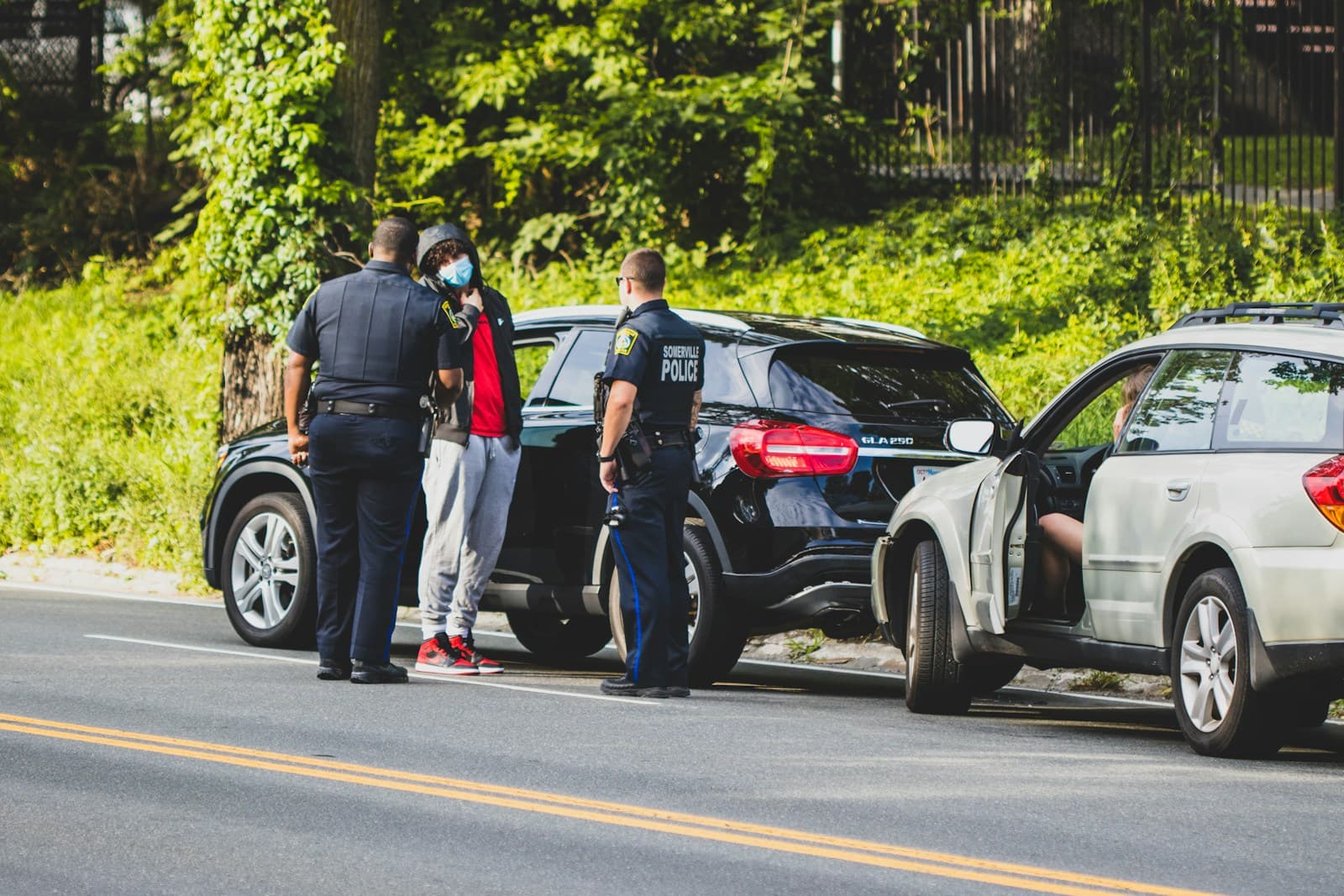
You've accumulated points while attending college in Utah and need a limited license to keep your campus job and clinical rotations. Utah's approved-destination structure is stricter than most drivers expect.
Why College Students Face Limited License Destination Restrictions After Points Accumulation in Utah
Utah Driver License Division grants limited driving privileges to drivers who accumulate 200 points in three years, but the approval process requires complete destination documentation before the license issues. College students applying for limited licenses after points-based suspension list campus buildings as work or school destinations, then discover their clinical rotation site 40 miles away isn't covered. The limited license restricts driving to destinations listed on the approved petition—deviation from those addresses during approved hours still counts as driving on a suspended license under Utah Code 53-3-417.
Most students assume approved hours alone determine legal driving windows. Utah operates differently. Your petition must specify employer address, class building address, medical appointment address, and childcare facility address individually. The DMV cross-references your approved destination list against traffic stops. A clinical nursing student approved to drive to the main campus at 1850 E South Campus Drive in Salt Lake City cannot legally drive to their required rotation site at Jordan Valley Medical Center in West Jordan without amending the limited license petition.
The amendment process requires filing a new DLD 329 form with supporting documentation and waiting 10-15 business days for approval. Students who assume they can update destinations informally by notifying the DMV by phone discover the hard way that verbal notifications carry no legal weight. Your limited license is valid only for the destinations printed on the approval document you carry in your vehicle.
How Utah's Points-Based Suspension Triggers Limited License Eligibility for College Drivers
Utah suspends your license when you accumulate 200 points within three years. Common point-accumulation patterns for college students include speeding violations (35-75 points depending on speed), following too closely (50 points), failure to yield (50 points), and texting while driving (75 points). Two speeding tickets at 15 mph over plus one distracted driving citation puts most students at or above the 200-point threshold.
The suspension notice arrives by mail from Utah DLD with your eligibility date for limited driving privileges. Utah allows immediate application for a limited license—there is no mandatory waiting period for points-based suspensions. You file a petition for limited driving privileges using form DLD 329, pay the $35 application fee, and submit documentation proving your need to drive for employment, education, medical treatment, or court-ordered obligations.
Your petition must include an employer verification letter on company letterhead listing your work address and required work hours, or a registrar-certified class schedule showing campus location and class meeting times. Generic letters stating "student needs transportation" are insufficient. The DLD requires specific addresses and specific time blocks. Part-time student workers submit both employer documentation and class schedules to maximize approved driving windows.
Compare car insurance rates in your state
Get quotes from licensed carriers — no obligation, no spam, results in minutes.
Get Your Free Quote✓ No Obligation Required✓ Licensed Carriers Only✓ Available Nationwide✓ Free to Compare
Documentation Requirements for College Employment and Clinical Rotation Destinations
Utah requires different documentation standards for on-campus employment, off-campus employment, and clinical rotation sites. On-campus jobs require an employer verification letter from the campus department, the specific building address where you work, and your scheduled shift hours. Dining hall workers, library staff, and research assistants submit letters from department supervisors, not general HR offices.
Off-campus employment requires the same employer verification letter format, but the DLD scrutinizes off-campus jobs more closely for fraud. Chain retail employers and restaurants typically provide standardized verification letters that meet DLD requirements. Small businesses and startups sometimes submit letters that lack required detail—your employer must include business legal name, physical address, your job title, your specific shift schedule, and supervisor contact information.
Clinical rotation sites create the most documentation complications. Nursing students, physical therapy students, and medical assistant students rotate through multiple facilities during a semester. Each facility counts as a separate destination. Your petition must list each rotation site individually with facility name, address, and scheduled rotation dates. Students who list only their college campus as the approved school destination discover mid-semester that driving to clinical sites violates their limited license terms. The solution is filing an amended petition 3-4 weeks before the rotation start date to allow processing time.
Approved Hours vs Approved Destinations: What Most College Students Miss
The limited license approval document specifies both approved hours and approved destinations. These are independent restrictions that both apply simultaneously. You cannot drive to an approved destination outside your approved hours. You cannot drive to an unapproved destination during your approved hours. Both restrictions must be satisfied at the moment you're driving.
College students typically receive approval for Monday-Friday 6 AM to 11 PM to cover class schedules, work shifts, and evening study sessions. Weekend approval requires separate justification—most students submit weekend work schedules or Saturday clinical rotations to secure 7-day approval. The DLD grants the narrowest time window that covers your documented need. If your employer letter lists Tuesday-Thursday 4 PM to 9 PM shifts, the DLD approves Tuesday-Thursday 3:30 PM to 9:30 PM to allow commute time, not a blanket weekday evening approval.
Destination deviations during approved hours trigger the same penalty as time violations. Driving to a friend's apartment at 7 PM on Tuesday to study for an exam violates your limited license even though 7 PM falls within your approved hours. The friend's address is not on your approved destination list. Utah law enforcement does not recognize intent-based exceptions. The violation is binary: were you driving to an approved address during approved hours, or were you not.
The Route Restriction Reality Utah Doesn't Advertise to Limited License Holders
Utah limited licenses specify destinations but not routes. You are expected to use the most direct reasonable route between approved destinations. Law enforcement interprets "direct reasonable route" contextually—taking I-15 instead of local roads between your apartment and campus is defensible. Stopping at a coffee shop 12 blocks off the direct route is not.
The practical consequence is that students cannot run errands during approved driving windows unless those errands happen to fall directly on the path between approved destinations. Grocery shopping after work requires grocery store approval as a separate destination. Picking up a prescription requires pharmacy approval. Dropping off a sibling at their school requires that school's address approval. Students accustomed to normal driving patterns drastically underestimate how restricted limited license privileges actually are.
Most discover the restriction's severity when pulled over for a minor traffic violation during legal hours while detouring to an unapproved address. The traffic stop reveals the destination deviation. The officer cites driving on a suspended license under Utah Code 53-3-227, a Class B misdemeanor carrying up to six months jail time and $1,000 fine. The limited license is revoked. The underlying points-based suspension extends. The student loses the privilege they were trying to preserve.
SR-22 Filing Requirements and Insurance Cost Reality for Utah College Students
Utah does not require SR-22 filing for points-based suspensions unless the violation triggering the points involved uninsured operation or specific high-risk violations. Most college students accumulating points through speeding, following too closely, and distracted driving citations do not face SR-22 requirements. Verify your suspension notice carefully—the notice specifies whether financial responsibility filing is required.
Students who do require SR-22 face a different insurance market. Standard carriers often non-renew policies after multiple violations. Non-standard carriers specializing in high-risk drivers—Bristol West, Dairyland, GAINSCO, The General—quote SR-22 policies for Utah college students typically at $140-$210 per month for minimum liability coverage. The SR-22 filing fee itself is $15-$25 with most carriers, a one-time charge added to your first premium payment.
The three-year SR-22 filing period runs from the date your insurer files the certificate with Utah DLD, not from your violation date or suspension date. A lapse in coverage during the filing period triggers automatic license re-suspension and restarts the three-year clock. College students switching carriers mid-year must confirm the new carrier files SR-22 before the old policy cancels. A coverage gap of even one day reports to the DLD as a filing lapse.
What Happens When You Violate Limited License Terms on Campus or at Clinical Sites
Violation of limited license terms results in immediate revocation and criminal citation. Campus police have full arrest authority and access to the same DLD database as municipal police. Driving to an unapproved campus building during approved hours is a violation campus police routinely cite during parking enforcement and traffic stops.
Clinical site violations follow similar enforcement patterns. Hospital security and facility administrators sometimes verify limited license terms when students present restricted licenses as identification. A nursing student approved to drive to Primary Children's Hospital cannot substitute a shift at Intermountain Medical Center without amending the petition first. The clinical coordinator reporting the unauthorized facility to your college program triggers academic consequences separate from the legal violation.
The legal consequence is prosecution for driving on a suspended license, a Class B misdemeanor. First-time violators typically receive 30-90 days additional suspension beyond the original points-based suspension term, $500-$1,000 in fines, and potential jail time up to six months at judicial discretion. The limited license is permanently revoked for the remainder of the suspension period—you cannot reapply. College students who lose limited license privileges mid-semester face the choice between withdrawing from classes requiring transportation or arranging alternative transportation for the remaining suspension duration.