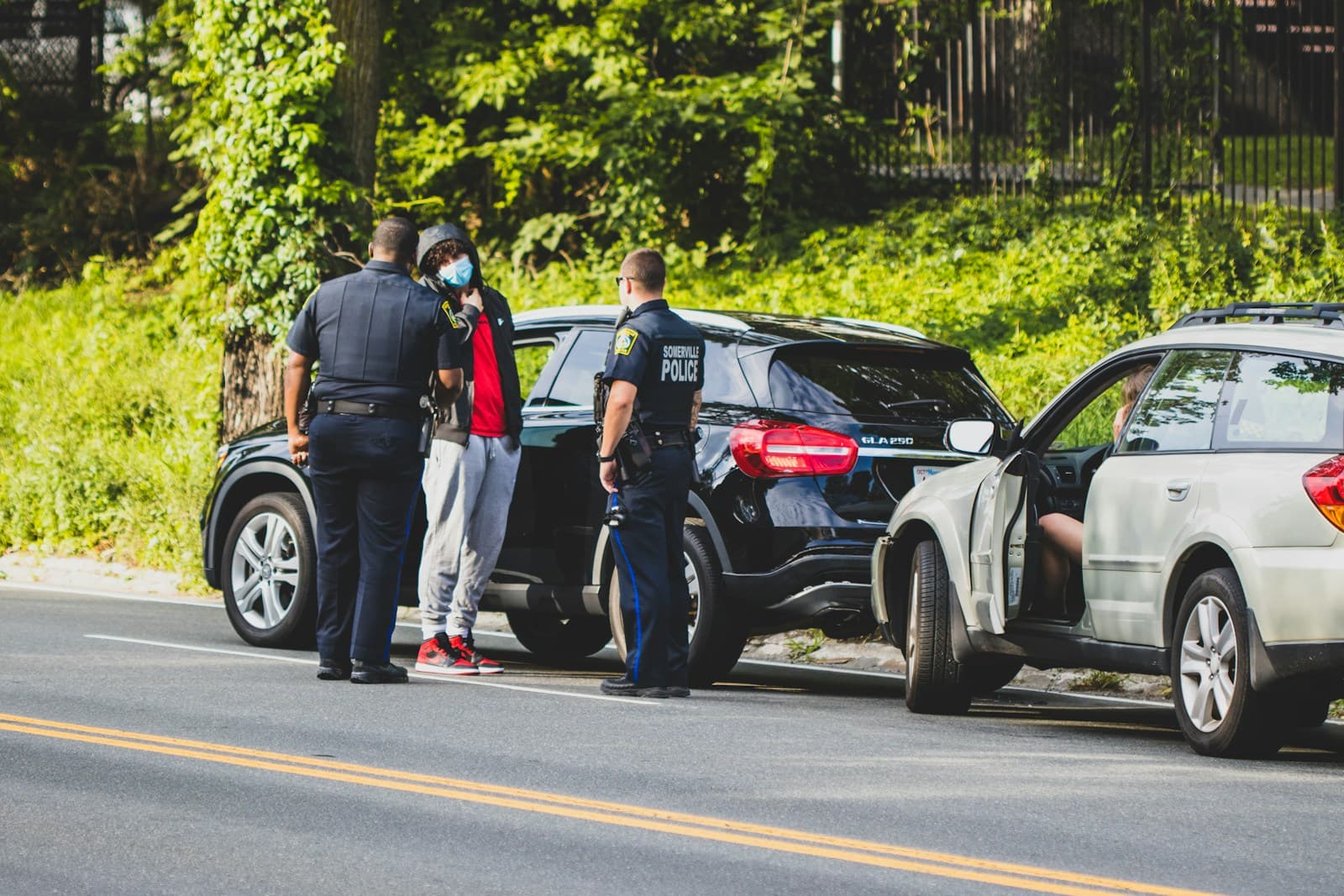
Utah's point-triggered suspension program limits your work license to employer-verified destinations only. Route deviation during approved hours still counts as driving on a suspended license—most drivers miss this until they're charged.
Utah's Hardship License Address Restriction Applies to Points Suspensions
Your Utah hardship license approval letter lists specific street addresses, not just approved hours. Most drivers who accumulate 200 points in three years assume the court-approved time window covers them for work, medical appointments, and groceries during those hours. It doesn't.
Utah Administrative Code R708-42 requires address verification for every destination listed on your restricted driving privilege. Your employer's address appears on your application and must match the address on your employer verification letter. Driving to a job site, client location, or temporary worksite during approved hours without amending your hardship license is driving on a suspended license.
The Driver License Division processes address amendments within 5-7 business days if submitted with employer documentation. Most drivers discover the address requirement only after a traffic stop during legal hours to an unlisted location.
Route Deviation Triggers Automatic Revocation for Points Suspensions
Utah's hardship license for points suspensions operates under stricter terms than DUI-triggered restricted licenses. DUI cases receive occupational driving privileges through court petition with judicial discretion. Points suspensions receive administrative hardship approval from the Driver License Division with zero flexibility on route compliance.
A single verified route deviation—even during approved hours, even for legitimate employment purposes—revokes your hardship license immediately. The revocation extends your underlying suspension by the full original suspension period. For a 90-day points suspension, one route violation restarts the clock for another 90 days from the revocation date.
Law enforcement in Utah County and Davis County cross-reference GPS timestamps from traffic stops against hardship license approved-hour records. If the stop location doesn't match an approved address, the citation includes both driving on a suspended license and hardship license violation.
Compare car insurance rates in your state
Get quotes from licensed carriers — no obligation, no spam, results in minutes.
Get Your Free Quote✓ No Obligation Required✓ Licensed Carriers Only✓ Available Nationwide✓ Free to Compare
Work Permit Application Requires Employer Street Address Verification
Your hardship license application must include a notarized employer affidavit on company letterhead listing your work schedule and the exact street address where you report. Remote workers, delivery drivers, rideshare drivers, and construction workers with rotating job sites face immediate denial unless their employer lists a fixed reporting location.
Utah DLD requires the employer affidavit to specify a single primary work address. Secondary addresses (client sites, delivery zones, construction projects) require separate justification and approval at application. Most applicants don't realize the single-address restriction until their petition is denied at the 10-day review.
Drivers who work multiple jobs must list all employers with all addresses. Each additional employer extends processing time by 3-5 business days for verification. The $50 application fee does not increase with multiple employers, but the SR-22 filing requirement and insurance cost structure do—carriers price multi-address hardship licenses as higher-risk endorsements.
Medical and Childcare Destinations Follow the Same Address Verification Rule
Utah hardship licenses approved for medical appointments require the healthcare provider's street address listed on the application. Generic approval for "medical appointments" doesn't exist. Your application lists your primary care physician's office, your specialist's office, your pharmacy, and your regular dialysis or physical therapy location if applicable.
Childcare destinations operate under identical restrictions. Your daycare provider's address, your child's school address, and your regular babysitter's address must appear on the application with supporting documentation. A single emergency deviation to a hospital not listed on your permit is still a violation—Utah statute doesn't distinguish intent.
Most parents don't realize their child's after-school activity locations (sports practice, tutoring, music lessons) don't qualify as approved childcare destinations unless the activity is court-documented as necessary for employment. The Driver License Division interprets "childcare" narrowly: transportation required to maintain employment, not general parenting convenience.
How Route Compliance Affects Your SR-22 Filing Requirement
Utah requires SR-22 filing for hardship license issuance following points suspensions when the accumulation includes at-fault accidents, reckless driving, or speed contest violations. Points from moving violations alone (speeding, failure to yield, improper lane change) typically don't trigger SR-22 unless combined with an accident.
Your SR-22 policy must list all approved driving purposes and addresses. Non-standard carriers (Bristol West, Dairyland, GAINSCO, The General) underwrite hardship licenses with address restrictions as separate risk tiers. A work-only permit with one address costs approximately $95-$140/month. Adding medical and childcare destinations increases the monthly premium to $120-$175/month.
Carriers report hardship license violations to the Driver License Division within 72 hours of notification. A route deviation citation triggers an SR-22 compliance review even if the underlying insurance policy remains active. Most drivers don't realize the carrier reports the violation before the court processes the citation—your hardship license revocation often precedes your court date.
What Single Parents Need to Know About Childcare Justification
Utah courts and the Driver License Division require proof that childcare transportation is necessary to maintain employment. Single parents must submit custody documentation, employer verification of work hours that conflict with school hours, and childcare provider verification that no transportation service is available.
The application asks whether another licensed driver in the household can provide childcare transportation. Answering yes disqualifies the childcare destination from your hardship license approval. Answering no requires documentation: a signed affidavit from household members or proof of single-occupant residence.
Most single parents assume childcare qualifies automatically. It doesn't. Approval requires demonstrating that losing childcare transportation would result in immediate job loss. Employers rarely provide this level of specific written verification without HR policy concerns, creating a documentation gap that delays applications 15-25 days beyond the standard 10-day review period.