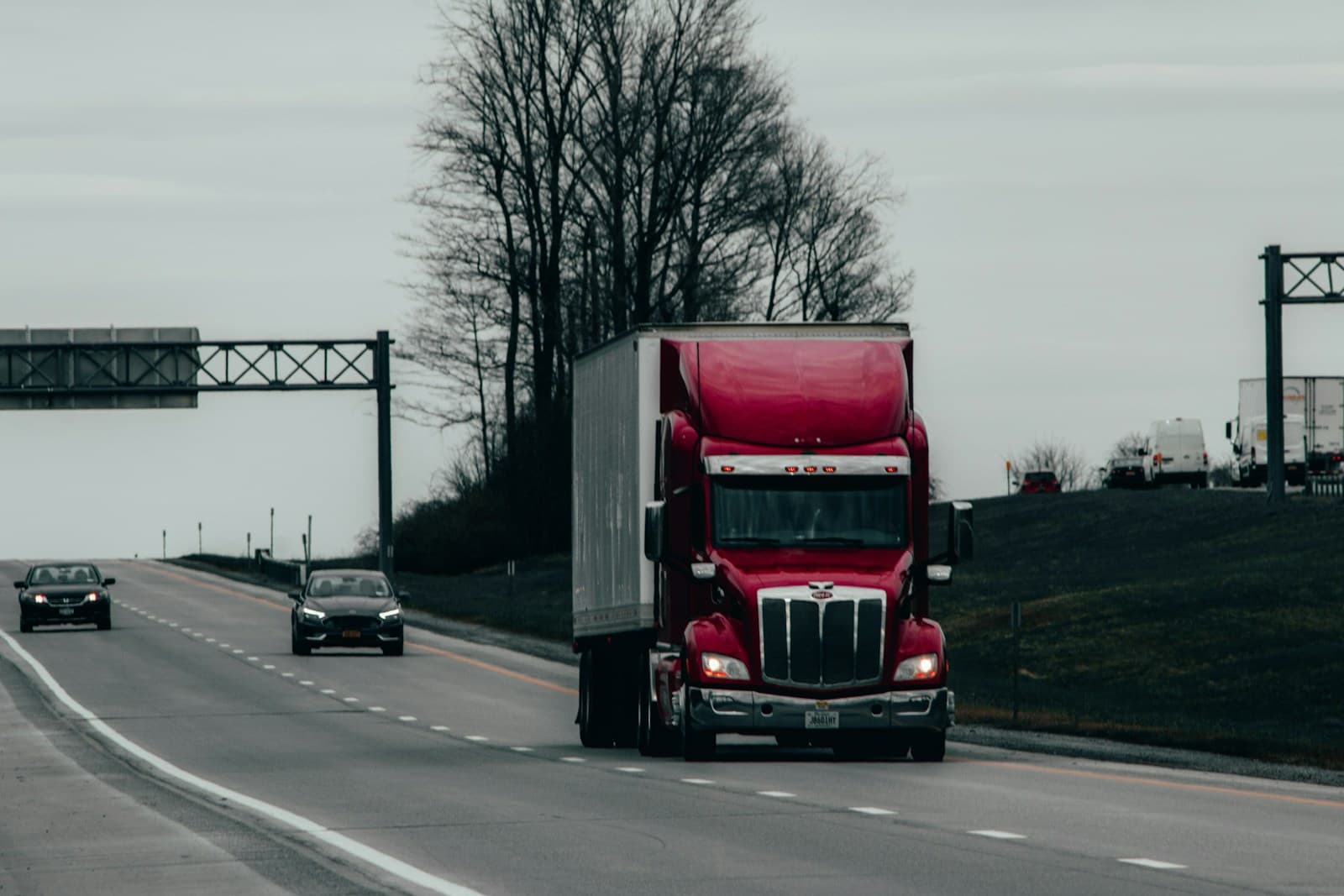
Wisconsin's occupational license system treats CDL holders as commercial drivers even when the violation happened in a personal vehicle. Your approved destinations must specify commercial routes, not just your employer's address.
Why CDL Holders Face Different Occupational License Requirements in Wisconsin
Wisconsin treats commercial drivers differently even when the DUI occurred in a personal vehicle. Your occupational license petition must document commercial delivery territories, not just your employer's business address. Most CDL holders submit petitions listing their employer's location as the sole approved destination, assuming their commercial routes fall under that umbrella. Wisconsin circuit courts deny approximately 40% of these petitions because the petition doesn't specify which counties, delivery zones, or customer locations the driver needs access to during work hours.
The distinction matters because Wisconsin Statutes § 343.10(5)(a) requires the court to approve specific places of employment and routes necessary for the occupation. For CDL holders, "places of employment" means every loading dock, customer site, and delivery zone you service regularly, not the address where you clock in. If your route takes you through Dane, Jefferson, and Rock counties weekly, all three counties and the primary highways connecting them must appear in your petition.
Circuit court judges review petitions with commercial driving differently because the occupational license grants a privilege that would otherwise be suspended. A driver whose job is local delivery within a 50-mile radius needs different route documentation than a regional driver covering the southeastern Wisconsin corridor. The petition must reflect the geographic scope of the job, not just the employer's headquarters.
What Approved Destinations Must Include for Commercial Routes
Wisconsin occupational license orders approved for CDL holders typically specify: employer's primary business address, the counties where commercial delivery or pickup occurs, the primary state and U.S. highways used to reach those counties, and any recurring customer sites visited at least twice monthly. A delivery driver for a Madison-based distributor who services accounts in Janesville, Beloit, and Fort Atkinson would list the employer's Madison address, Rock and Jefferson counties, U.S. Highway 14, State Highway 26, and Interstate 90 as approved routes.
The petition must distinguish between regular commercial routes and occasional trips. If you deliver to a customer in Green Bay once every three months, that destination doesn't belong in the occupational license petition. Courts approve recurring, documented routes. One-time or irregular trips require a separate variance petition after the occupational license is granted, which most counties process in 5-10 business days if the request is employer-verified.
Some Wisconsin counties require employer documentation that lists every customer site by address, not just city. Marathon County judges, for example, often request a route manifest showing delivery frequency. If your employer uses dispatch software, export a 90-day delivery history and attach it to your petition. If not, a signed employer affidavit listing customer names, addresses, and approximate monthly visit frequency satisfies most circuit courts.
Compare car insurance rates in your state
Get quotes from licensed carriers — no obligation, no spam, results in minutes.
Get Your Free Quote✓ No Obligation Required✓ Licensed Carriers Only✓ Available Nationwide✓ Free to Compare
How Wisconsin's 45-Day Waiting Period Affects CDL Holders Differently
Wisconsin imposes a 45-day waiting period after OWI conviction before a driver can apply for an occupational license. For CDL holders, this waiting period often overlaps with the one-year CDL disqualification period under federal law (49 CFR § 383.51). The occupational license restores your ability to drive a personal vehicle for work-related purposes, but it does not restore your CDL privilege during the federal disqualification period.
Most CDL holders misunderstand this separation. An approved Wisconsin occupational license allows you to drive a non-commercial vehicle to your employer's location, to medical appointments, and to court-ordered treatment programs during the 45-day-plus waiting period. It does not allow you to operate a commercial motor vehicle until the federal disqualification ends. If your job requires operating vehicles over 26,001 pounds GVWR or carrying hazardous materials, the occupational license doesn't reinstate that privilege.
Some employers allow CDL holders to work non-driving roles during the disqualification period: warehouse duties, dispatch support, load planning, or dock supervision. The occupational license allows you to drive your personal vehicle to that job. If your employer has no non-driving role available, the occupational license serves primarily to maintain access to OWI treatment programs, medical care, and other court-required appointments until your CDL is eligible for reinstatement.
What Happens If You Deviate From Approved Commercial Routes
Wisconsin law enforcement monitors occupational license compliance through traffic stops and employer verification. If you are stopped while driving outside your approved hours, outside your approved counties, or on a route not listed in your court order, the stop is treated as operating while revoked (OWR), a separate criminal charge. OWR carries a fine of $2,500 and up to one year in jail for a first offense, and it extends your underlying revocation period by an additional 6-12 months.
Deviation intent doesn't matter. If your approved petition lists Dane, Jefferson, and Rock counties and you take a delivery into Walworth County because your dispatcher assigned it last-minute, you are operating outside the scope of your occupational license. Most CDL holders assume approved hours alone protect them, but Wisconsin circuit court orders bind both time and place. The safest approach: any route change requested by your employer should trigger a variance petition filed the same day the route changes.
Some counties allow emergency variance requests by phone or email if a dispatcher assigns an urgent delivery outside approved zones. Dane County, for example, accepts employer-verified emergency variance requests via email to the clerk of courts, effective immediately if the email is filed before the trip begins. Milwaukee County does not. If your employer dispatches you outside your approved territory without advance notice, contact your attorney before accepting the assignment. The two-hour delay to file a variance petition is faster than the months of revocation extension that follow an OWR charge.
How SR-22 Insurance Works During CDL Disqualification
Wisconsin requires SR-22 filing for all OWI-related occupational licenses. The SR-22 is filed by your auto insurance carrier and certifies that you carry at least Wisconsin's minimum liability limits: $50,000 per person, $100,000 per accident for bodily injury, and $15,000 for property damage. The SR-22 must remain on file with Wisconsin DMV for three years from the date of conviction, not from the date of occupational license approval.
Most CDL holders need non-owner SR-22 policies during the federal disqualification period if they don't own a personal vehicle. A non-owner SR-22 policy provides the liability coverage Wisconsin requires without insuring a specific vehicle. Monthly premiums for non-owner SR-22 policies in Wisconsin typically range from $40 to $90 per month depending on age, county, and carrier. If you own a personal vehicle, a standard auto policy with SR-22 endorsement costs approximately $120 to $210 per month.
SR-22 filing must be continuous. If your policy lapses for any reason—missed payment, cancellation, non-renewal—the carrier notifies Wisconsin DMV within 10 days and your occupational license is automatically suspended. Reinstatement after SR-22 lapse requires filing a new SR-22, paying a $60 reinstatement fee, and waiting 5-10 business days for DMV processing. Some employers terminate drivers whose occupational license is suspended for SR-22 lapse because the suspension counts as a separate compliance failure, not part of the original OWI consequence.
What Ignition Interlock Device Requirements Mean for CDL Holders
Wisconsin requires ignition interlock device (IID) installation for all OWI convictions as a condition of occupational license eligibility. The IID must be installed in every vehicle you operate, including employer-owned vehicles if your occupational license allows you to drive those vehicles during approved hours. Installation costs approximately $100 to $150, and monthly monitoring fees range from $75 to $90. Wisconsin requires IID for a minimum of 12 months for a first OWI, 18 months for a second OWI, and 24 months for a third or subsequent OWI.
CDL holders face a complication most non-commercial drivers don't: if your job eventually requires operating a commercial vehicle, that vehicle must also have an IID installed unless the vehicle is owned by your employer and used by multiple drivers. Wisconsin Statutes § 343.301(1g)(am)3 exempts employer-owned commercial vehicles from the IID requirement if the driver operates the vehicle only during work hours and the employer has not been notified of the driver's IID requirement. Most trucking and delivery employers are notified because the occupational license order itself discloses the IID condition, so the exemption rarely applies.
If you own the commercial vehicle or lease it individually, IID installation is mandatory. IID providers in Wisconsin (LifeSafer, Intoxalock, Smart Start) install units compatible with Class A and Class B vehicles, but installation appointment lead times often run 10-15 business days. Schedule IID installation immediately after your occupational license petition is filed, not after the court hearing. Courts deny petitions if IID isn't installed by the hearing date.
How to Document Commercial Routes for Your Petition
Wisconsin circuit courts expect employer affidavits that list: your job title, your work schedule (days and hours), the primary business address, all counties where you perform work duties, the highways or state routes you use to reach those locations, and the names of recurring customer sites if applicable. The affidavit must be signed by a supervisor, fleet manager, or HR representative with direct knowledge of your route assignments, not a coworker.
Attach a route map to the petition. Google Maps or equivalent satellite view showing your employer's location and the counties you service is sufficient for most courts. Highlight the highways you use most frequently. If your routes change seasonally or by contract, include a note explaining the variation and list the maximum geographic scope. Courts approve the broadest reasonable interpretation if documentation supports it.
If you work for a company that dispatches routes daily with no fixed territory, the employer affidavit should describe the dispatch zone and maximum range. A Madison-based driver whose dispatch zone covers all of southern Wisconsin would list Dane, Rock, Jefferson, Green, Iowa, Grant, Lafayette, Columbia, Sauk, and Dodge counties, plus the primary state and U.S. highways connecting them. Some judges request a sample two-week dispatch history showing actual customer locations. Bring 60-90 days of dispatch records to your hearing if your employer can provide them.