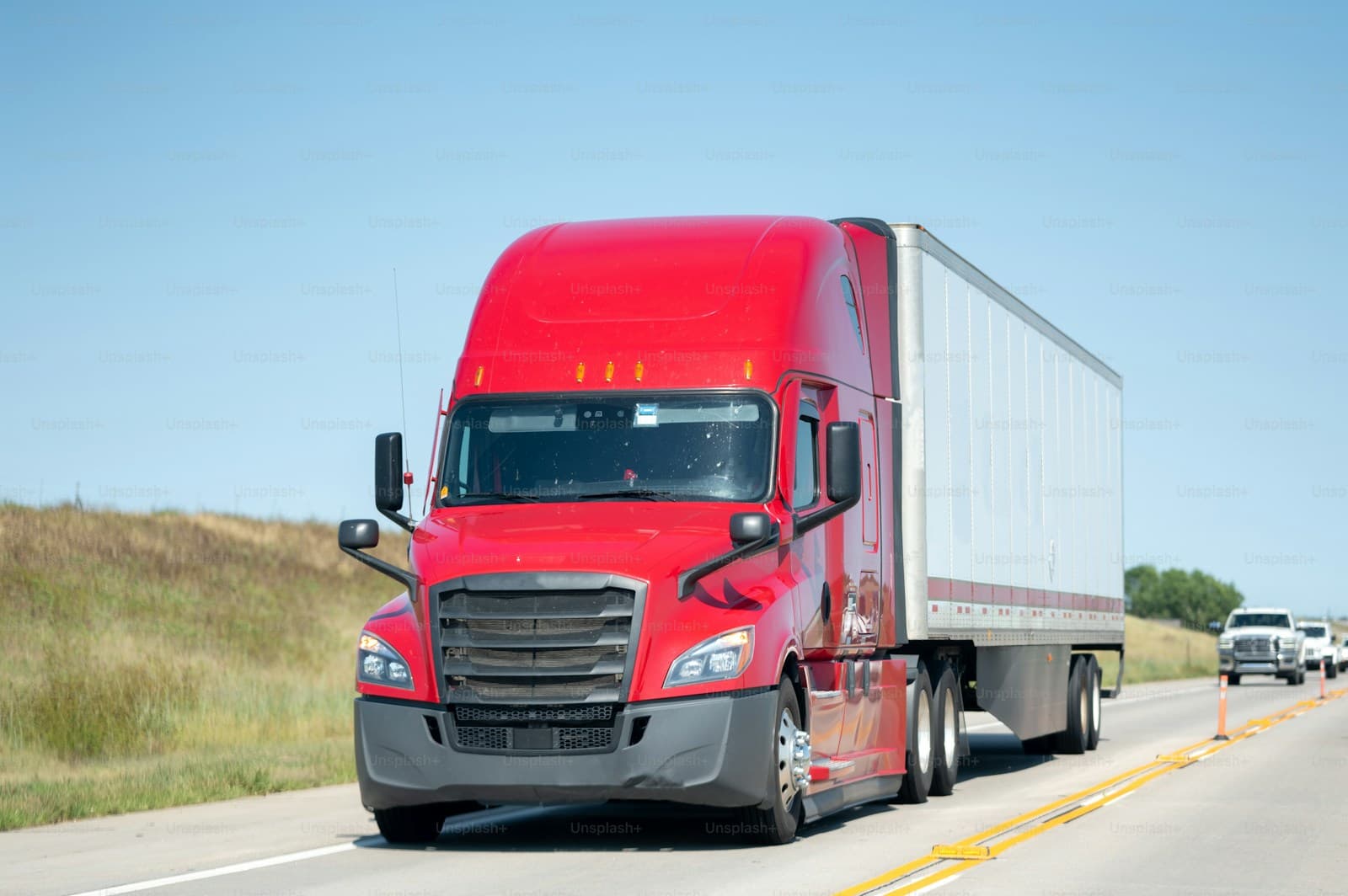
Kansas does not issue work permits for CDL holders whose commercial license is suspended. You cannot legally drive commercial vehicles under a restricted license, even for employment.
Kansas Does Not Issue Work Permits for Commercial Driver License Holders
Kansas statute K.S.A. 8-292 explicitly prohibits issuing occupational (work permit) licenses to drivers whose commercial driving privilege is suspended or revoked. If your CDL is suspended — whether for DUI, multiple violations, child support delinquency, unpaid tickets, or insurance lapse — you cannot obtain a work permit to drive commercial vehicles during the suspension period. The restriction applies to all commercial operation, including intrastate routes, local delivery, and agricultural exemptions.
This creates an immediate employment crisis for CDL holders. Most trucking employers will not hold a position open during a 30-, 60-, or 90-day suspension, and you cannot substitute a work permit the way non-commercial drivers can. Kansas DMV will process your work permit application and collect the filing fee, but the approved permit will authorize personal vehicle operation only — not the semi, bus, or delivery truck that constitutes your job.
The exclusion applies regardless of suspension cause. DUI-related suspensions, administrative revocations under implied consent, points-based suspensions under K.S.A. 8-254, and failure-to-appear suspensions all trigger the same CDL work permit prohibition. If the suspension affects your commercial privilege, the work permit will not restore it.
What Kansas Work Permits Actually Authorize for CDL Holders
If you hold a CDL and apply for a Kansas work permit during suspension, the DMV will grant restricted driving privileges for Class C personal vehicle operation only. You may drive to and from work, medical appointments, court-ordered programs, and childcare using a personal car or truck under 26,001 pounds GVWR with no passengers for hire and no placarded hazmat. You may not operate the vehicle type that requires your CDL.
Approved purposes under the work permit include employment travel, but employment travel means driving yourself to a worksite — not performing commercial driving as the job itself. A CDL holder working as a local delivery driver cannot use the work permit to make deliveries. A bus driver cannot transport passengers. A tanker operator cannot haul liquid cargo. The work permit authorizes the commute, not the commercial operation.
This distinction is not clearly explained in Kansas work permit application materials, and many CDL holders discover the restriction only after the permit is issued and they present it to their employer or a DOT enforcement officer. The permit itself will state "Valid for Class C operation only" or similar language, but the employment consequences are not spelled out in the approval notice.
Compare car insurance rates in your state
Get quotes from licensed carriers — no obligation, no spam, results in minutes.
Get Your Free Quote✓ No Obligation Required✓ Licensed Carriers Only✓ Available Nationwide✓ Free to Compare
SR-22 Filing Requirement Continues During Work Permit Period
Kansas requires SR-22 filing for most suspensions that trigger work permit eligibility — DUI, refusal, points accumulation, uninsured accident, and insurance lapse cases. The SR-22 must remain active throughout the suspension period and the work permit period. If your CDL suspension runs 90 days and you obtain a work permit for the final 60 days, you must maintain continuous SR-22 coverage for the full 90 days plus any post-reinstatement filing period the court or DMV imposed.
CDL holders face a narrow SR-22 carrier market. Most standard commercial auto insurers do not write SR-22 policies, and most non-standard SR-22 carriers do not write commercial coverage. You will typically need two separate policies: a personal auto SR-22 policy to satisfy the state filing requirement (even if you do not own a personal vehicle), and commercial coverage if you return to CDL work after reinstatement. Non-owner SR-22 policies cover liability for borrowed or rental personal vehicles and satisfy the Kansas filing mandate without requiring vehicle ownership.
SR-22 filing costs for Kansas CDL holders typically run $120–$220/month for minimum liability coverage through non-standard carriers such as Dairyland, Bristol West, The General, or GAINSCO. The filing itself costs $25–$50 as a one-time DMV processing fee. Lapses reset the filing clock to zero — if your SR-22 policy cancels for non-payment even one day before the required period ends, Kansas DMV treats it as a new suspension and you start the entire filing duration over.
CDL Reinstatement Process After Suspension Ends
Kansas does not automatically reinstate your CDL when the suspension period expires. You must complete reinstatement requirements, pay all fees, and in many cases retake CDL knowledge and skills tests. DUI-related CDL suspensions require completion of a certified alcohol and drug evaluation, proof of treatment program enrollment or completion, payment of a $100 reinstatement fee, and active SR-22 filing on the date you apply for reinstatement. Points-based suspensions require payment of reinstatement fees and proof of insurance but typically do not require retesting unless the suspension exceeded one year.
If your commercial privilege was disqualified under federal FMCSA regulations (49 CFR 383.51) — for example, DUI in a commercial vehicle, refusal of testing in a commercial vehicle, or a second serious traffic violation within three years — Kansas cannot reinstate your CDL even after the state suspension ends until the federal disqualification period expires. FMCSA disqualifications run independently of state suspension periods and appear on your CDLIS (Commercial Driver License Information System) record, which all states access during reinstatement processing.
Total reinstatement costs for Kansas CDL holders typically run $600–$1,800 depending on violation type: $100 state reinstatement fee, $25–$50 SR-22 filing fee, $85–$175 for CDL reissuance and testing fees if required, and $300–$1,200 for alcohol evaluation and treatment program costs in DUI cases. These costs are in addition to the SR-22 insurance premiums you paid during suspension.
Employment Options During CDL Suspension in Kansas
Most CDL holders cannot maintain trucking employment during suspension. Carriers face federal and state liability exposure if they allow a driver with a suspended commercial privilege to operate, even on private property or intrastate routes. Your employer will typically place you on unpaid leave or terminate your position when notified of the suspension. Kansas law requires you to surrender your physical CDL to the DMV within 10 days of suspension notice, and your employer can verify suspension status through the CDLIS system.
Some CDL holders transition temporarily to non-driving roles — warehouse work, dispatch, freight coordination, or vehicle maintenance — if their employer can accommodate the shift and the pay reduction. These roles do not require a work permit because you are not driving commercially. Others take non-CDL employment outside the trucking industry during suspension and re-enter the commercial driver market after reinstatement, though this often means starting over with a new carrier at entry-level pay.
A small number of CDL holders qualify for hardship reinstatement under K.S.A. 8-254d if the suspension is points-based, the suspension period exceeds one year, and they can demonstrate severe economic hardship. Hardship reinstatement is not a work permit — it is early termination of the suspension with full privilege restoration. Approval rates are low, and the process requires a formal hearing with the DMV, documented financial crisis, and often legal representation. DUI and refusal suspensions are not eligible for hardship reinstatement.
Why Kansas Prohibits CDL Work Permits
Kansas excludes CDL holders from commercial work permit privileges due to federal commercial driver safety regulations. The Federal Motor Carrier Safety Administration (FMCSA) requires states to disqualify commercial driving privileges for specific violations, and federal law prohibits states from issuing restricted commercial licenses that would allow continued CMV operation during disqualification periods. Kansas aligns state work permit law with federal CDL disqualification rules by categorically excluding suspended CDL holders from commercial operation under any restricted license.
The policy reflects the higher public safety risk associated with commercial vehicle operation. A Class A CDL authorizes operation of combination vehicles exceeding 26,001 pounds with trailers over 10,000 pounds — vehicles that cause catastrophic damage in crashes. Allowing a driver suspended for DUI, multiple violations, or refusal to continue operating these vehicles under restricted hours would create liability exposure states are unwilling to accept, even if the driver's employment depends on it.
Other states follow the same approach. Iowa, Missouri, Nebraska, and Oklahoma — Kansas's neighboring states — all exclude CDL holders from commercial operation under work permits, hardship licenses, or restricted licenses. Federal regulations preempt state discretion on this issue. A state that allowed commercial operation under a restricted license during a federally-mandated disqualification period would lose federal highway funding under 49 U.S.C. 31311.