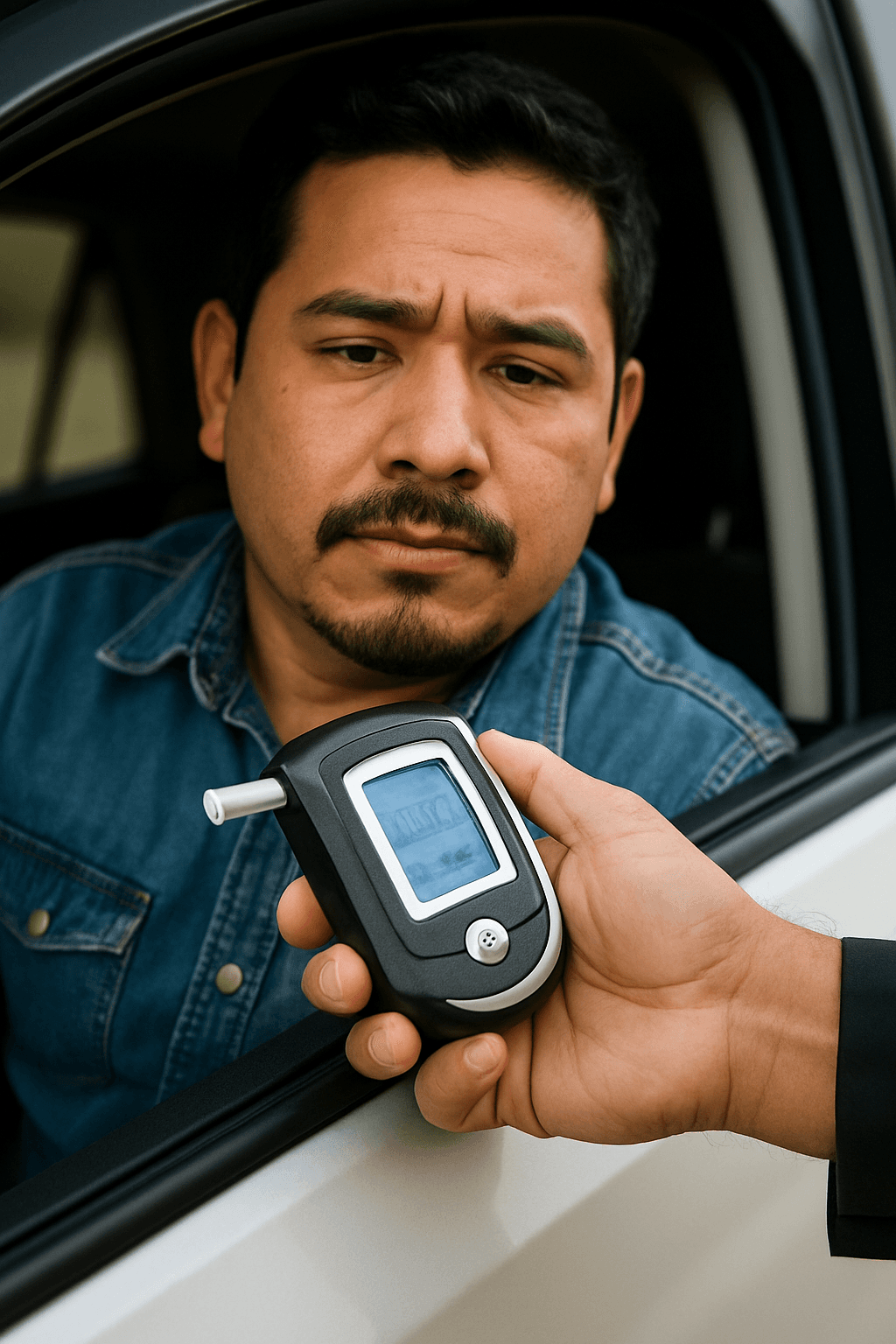
Kansas issues your restricted license before you install the ignition interlock device—but your 330-day IID requirement starts the day the device goes in, not the day you get the permit.
Kansas Issues the Work Permit First, IID Installation Happens Second
Kansas grants your restricted driving privilege before you install the ignition interlock device. You receive the work permit from the Division of Vehicles after submitting proof of SR-22 insurance, paying the $59 restricted license fee, and filing your employer documentation—IID installation is not a prerequisite for permit issuance. This creates a compliance gap most drivers misread.
The work permit allows driving to work, medical appointments, and the IID installer. It does not allow unrestricted driving. Kansas statute 8-1015 requires the IID installed within 3 days of receiving the work permit if your suspension order includes an IID condition. Driving beyond approved purposes during those 3 days revokes the permit and extends your underlying suspension.
Your 330-day IID compliance period starts the day the installer activates the device and files the installation certificate with the Kansas Department of Revenue, not the day you receive the work permit. Delaying installation to avoid monthly IID costs ($70–$100/month) moves your IID completion date forward, which delays full license reinstatement even if your suspension period has ended.
Schedule Installation Before You Apply for the Work Permit
The fastest path to unrestricted driving is installing the IID before your work permit hearing or administrative approval. Kansas allows pre-permit installation—the device can be activated while you're still under full suspension, and those days count toward your 330-day requirement.
Call an approved Kansas IID provider (Smart Start, Intoxalock, LifeSafer, or Draeger) the week before your work permit application. Installation appointments typically book 5–10 business days out in metro areas, longer in rural counties. Installation takes 60–90 minutes and costs $70–$150 upfront, plus $70–$100 monthly monitoring. The installer files the activation certificate with DOR within 24 hours.
If you install 10 days before receiving your work permit, you've already completed 10 of your 330 required days before you start driving. Drivers who wait until after permit issuance lose those days and finish IID compliance 10 days later. Over a 330-day period, early installation can recover 2–3 weeks of unrestricted driving time.
Compare car insurance rates in your state
Get quotes from licensed carriers — no obligation, no spam, results in minutes.
Get Your Free Quote✓ No Obligation Required✓ Licensed Carriers Only✓ Available Nationwide✓ Free to Compare
Your SR-22 Filing Must Be Active Before Permit Application
Kansas will not issue a work permit without proof of SR-22 insurance on file. The SR-22 is a certification your carrier files electronically with the Division of Vehicles showing you carry at least Kansas minimum liability coverage: $25,000 per person, $50,000 per accident, $25,000 property damage. The filing itself costs $15–$50 depending on carrier; the underlying policy costs $85–$180/month for drivers with DUI or multiple violations.
Carriers that write SR-22 policies for work permit drivers in Kansas include Bristol West, Dairyland, Direct Auto, GAINSCO, The General, Safe Auto, and Progressive. Not all write restricted license endorsements—ask specifically whether the carrier writes work permit policies in Kansas before quoting. The SR-22 must be filed before your work permit application is approved; Kansas does not issue conditional permits pending insurance.
Your SR-22 requirement runs for the full duration of your suspension plus 2 years in most Kansas DUI cases. Letting the SR-22 lapse at any point during that period cancels your work permit immediately and triggers a new suspension. The IID requirement and SR-22 requirement run on separate timelines—completing your 330 days of IID does not end your SR-22 obligation.
Work Permit Approval Takes 7–21 Days in Kansas
Kansas processes administrative work permit applications in 7–14 business days if all documentation is complete. Hardship hearings scheduled through district court take 14–28 days from petition filing to hearing date, then another 3–7 days for the court order to reach the Division of Vehicles. Missing documents—employer verification letter, proof of SR-22, application fee receipt—add 10+ days to processing time.
Your employer verification letter must state your job title, work address, required work hours, and a manager signature. Kansas does not accept generic employment letters. Self-employed drivers must submit a business license, tax ID documentation, and a signed affidavit describing work necessity. The Division of Vehicles rejects applications with vague or incomplete employer documentation without notification—the 7-day processing clock resets when you resubmit.
Schedule your IID installation for the day after you submit your work permit application if using the administrative process, or the day after your hardship hearing if going through district court. Installation before approval wastes no compliance days; installation 2 weeks after approval loses 2 weeks of credit toward your 330-day requirement.
IID Violations Reset Your Compliance Clock to Zero
Kansas counts a failed breath test, missed rolling retest, or tamper alert as an IID program violation. Three violations in any 90-day period reset your 330-day compliance requirement to day zero—you start over regardless of how many clean days you've already completed. The Division of Vehicles receives violation reports directly from your IID provider within 48 hours of the event.
A failed startup test registers a violation if your BAC reads .025% or higher. A missed rolling retest—prompted randomly while driving—registers a violation if you don't provide a passing sample within 5 minutes of the first prompt. Attempting to remove the device, disconnecting the camera, or blocking the air intake registers a tamper violation. Kansas does not distinguish between intentional and accidental violations; the compliance reset applies to all.
Drivers who reset their IID clock twice lose 660 days of compliance credit and often exceed the length of their underlying suspension. Your work permit remains valid during IID violations, but full license reinstatement cannot occur until you complete 330 consecutive violation-free days. Budget 12–15 months of IID monitoring if you have any violations in your first 6 months; most drivers underestimate the reset impact.
Full Reinstatement Requires IID Completion Certificate and SR-22 Clearance
Kansas does not automatically reinstate your full driving privilege when your suspension period ends. You must complete your 330-day IID requirement, maintain SR-22 coverage for the full filing period, pay the $100 reinstatement fee, and request removal of the IID restriction from your license record. The Division of Vehicles processes reinstatement requests 10–15 business days after receiving your IID provider's completion certificate.
Your IID provider files the completion certificate electronically after your final monitoring appointment. That appointment must occur on or after day 330 of violation-free use. If your last violation occurred on day 200, your completion certificate is filed on day 530 or later. Kansas does not prorate or credit partial compliance periods.
If your SR-22 requirement extends beyond your IID completion date, your full license remains restricted until both obligations clear. A DUI suspension with 330-day IID and 3-year SR-22 filing means you cannot remove the SR-22 until year 3, even if IID ends in year 1. Letting the SR-22 lapse before the 3-year period ends triggers a new suspension and reinstates the IID requirement.