Washington grants restricted licenses for some suspension types but not others — and applying through the wrong channel (DMV vs court) costs you weeks. Here's when you qualify and how to file correctly the first time.
Washington restricted license eligibility depends on what triggered your suspension — not just how long it's been
Washington DOL issues restricted licenses for alcohol-related and ignition interlock device (IID) suspensions, habitual traffic offender (HTO) revocations after a waiting period, and certain administrative suspensions. You apply directly through DOL for these. Financial responsibility suspensions (insurance lapse, SR-22 noncompliance, judgment debt) and most criminal driving under suspension convictions do not qualify for restricted privileges under any timeline.
If your suspension stems from a DUI or physical control arrest, you're eligible for a restricted license immediately after your arrest if you install an IID and file SR-22 proof of insurance. The restricted license allows driving to and from work, school, court-ordered treatment, medical appointments, and IID service appointments. Routes and hours are not pre-approved by DOL — you self-certify your destinations, but violation of the restriction converts your driving under suspension charge from a misdemeanor to a gross misdemeanor with mandatory jail time.
If you're suspended as an HTO (three major moving violations or alcohol offenses within five years), you must serve one year of the revocation period before applying for a restricted license. The one-year clock starts from the effective date of the HTO revocation, not the date you stopped driving. During the restricted period, you're limited to the same destinations as DUI-related restrictions, and IID installation is required for the full restricted period plus any subsequent reinstatement period.
Court-ordered suspensions require a different process and almost never qualify for restricted privileges
If a judge suspended your license as part of a criminal sentence — common for reckless driving, vehicular assault, hit-and-run, or third-degree driving while license suspended (DWLS 3) — the suspension is a court order, not a DOL administrative action. Washington courts rarely grant occupational or restricted driving privileges during a criminal suspension. The court controls the suspension term, and DOL has no authority to issue a restricted license until the court-ordered period ends.
DWLS convictions complicate this further. If you're caught driving on a suspended license and convicted of DWLS 1 (suspended for DUI, reckless driving, vehicular homicide, or vehicular assault), the mandatory minimum jail sentence is 10 days and the license suspension extends one year from the conviction date. DWLS 2 (suspended for most other reasons) carries 0-90 days jail and extends the underlying suspension. DWLS 3 (suspended for failure to respond to a ticket or failure to pay a fine) is the only driving under suspension charge that does not extend your suspension, but a judge can still impose a discretionary suspension as part of sentencing.
If you're facing a DWLS charge, the restricted license you were driving on does not count as a defense unless you were genuinely within the approved purposes at the time of the stop. Prosecutors routinely charge drivers who claim work-related travel but cannot produce employer verification or whose route does not match the stated destination.
Compare car insurance rates in your state
Get quotes from licensed carriers — no obligation, no spam, results in minutes.
Get Your Free Quote✓ No Obligation Required✓ Licensed Carriers Only✓ Available Nationwide✓ Free to Compare
SR-22 filing is required for all Washington restricted licenses and must stay active through full reinstatement
Washington requires SR-22 filing for the entire period you hold a restricted license, plus three years after full reinstatement if your suspension was alcohol-related. The SR-22 filing period begins the day your SR-22 form is filed with DOL, not the day your carrier issues the policy. If your SR-22 lapses for any reason — nonpayment, policy cancellation, switching carriers without overlap — DOL revokes your restricted license immediately and your suspension period resets to day one.
Most carriers who write restricted license policies in Washington (The General, Dairyland, GAINSCO, Bristol West, Direct Auto) require six-month prepayment or monthly EFT with no grace period. If a payment fails, the carrier cancels the policy the same day and files an SR-26 cancellation notice with DOL within 24 hours. You receive no warning. The SR-26 filing triggers an automatic license suspension notice, and you're suspended again before you know the payment failed.
SR-22 premium for a restricted license policyholder in Washington typically runs $140–$280/mo depending on violation density, county, and whether you own a vehicle. If you don't own a vehicle, you need a non-owner SR-22 policy, which costs $90–$160/mo but provides no coverage for a vehicle you drive regularly. If you're listed on a household vehicle or drive a vehicle provided by your employer, a non-owner policy does not satisfy the SR-22 requirement — you need an owner policy with your name on the title or registration.
IID installation is required for DUI-related restricted licenses and costs $120–$180/mo on top of SR-22
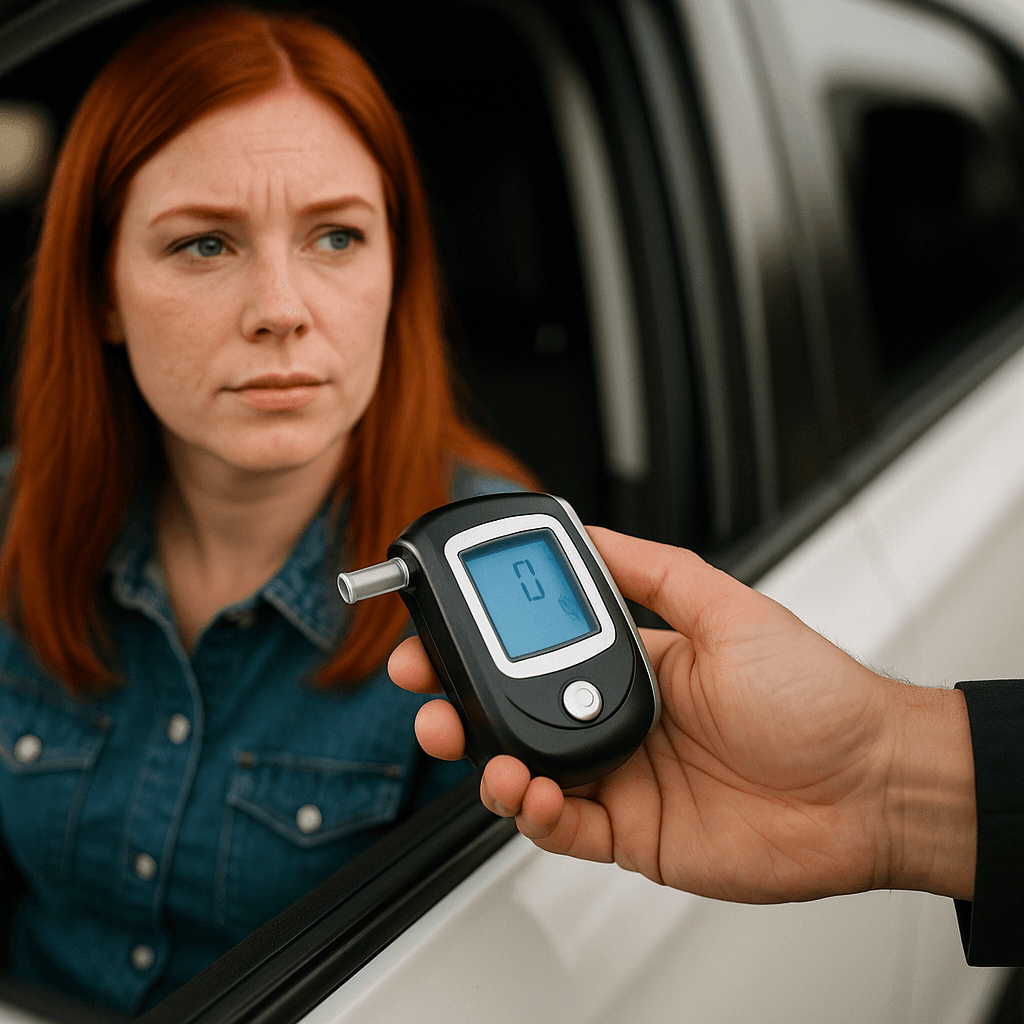
If your restricted license stems from a DUI arrest, refusal to submit to a breath test, or physical control charge, Washington requires ignition interlock device installation for the entire restricted period and for a minimum of one year after full reinstatement. The IID requirement is separate from your SR-22 requirement — both must remain active continuously or your license is revoked.
IID costs break down as $120–$180 installation fee, $80–$120/mo monitoring and calibration fee, and $80–$120 removal fee. Total cost over a typical one-year restricted period plus one-year post-reinstatement period runs $2,100–$3,100. Low-income drivers can apply for a reduced monitoring fee through the IID vendor, but installation and removal fees are not waived. If you cannot afford IID costs, you do not qualify for a restricted license — Washington DOL does not offer payment plans or deferrals.
Violating IID restrictions — attempting to start the vehicle after a failed breath test, disconnecting the device, having someone else blow into the device — triggers an immediate DOL violation report. First violation extends your IID requirement by six months. Second violation extends it by one year. Third violation revokes your restricted license and you're ineligible to reapply for restricted privileges for the remainder of your suspension period.
Financial responsibility suspensions (insurance lapse, unpaid judgment, SR-22 noncompliance) never qualify for restricted privileges
Washington suspends licenses for failure to maintain insurance, failure to pay a judgment arising from an at-fault accident, and SR-22 noncompliance. None of these suspension types qualify for a restricted license under any circumstance. The only path to reinstatement is full compliance: pay the $75 reinstatement fee, file SR-22 proof of insurance, and maintain it for three years without lapse.
If you're suspended for an insurance lapse, DOL requires SR-22 filing starting from the reinstatement date. The three-year SR-22 clock does not start until you reinstate — driving on a suspended license for six months does not count toward the requirement. If you're suspended for an unpaid judgment (typically after an at-fault accident where you had no insurance or insufficient coverage), you must pay the judgment in full or arrange a payment plan approved by the judgment creditor before DOL will reinstate your license. SR-22 filing is required for three years starting from reinstatement, and if you miss a payment on the judgment plan, the creditor can file a notice of default with DOL and your license suspends again immediately.
If you're suspended for SR-22 noncompliance (your carrier filed an SR-26 cancellation notice), you must file a new SR-22 with a different carrier and the three-year clock resets to day one. There is no restricted license option during the new suspension period. You're suspended until you file the new SR-22 and pay the $75 reissue fee.
Applying for a Washington restricted license: how to file correctly and avoid the 30-60 day delay most drivers hit
If you qualify for a restricted license, you apply directly through Washington DOL — not through a court, not through your attorney. The application is form DR-510-028 (Application for Ignition Interlock Driver's License), available on the DOL website or at any driver licensing office. You must submit proof of IID installation (vendor provides a verification form), SR-22 proof of insurance filed with DOL, and $75 reissue fee. Processing takes 5-10 business days if all documents are complete.
Most drivers lose 30-60 days because they file SR-22 proof of insurance after submitting the restricted license application. DOL will not process your restricted license application until the SR-22 is on file and active. If you submit your application on Monday and your carrier files your SR-22 on Friday, your application sits unprocessed for four days. If your carrier mails the SR-22 form instead of filing electronically, add another 7-10 days. Always confirm your carrier has filed the SR-22 electronically with DOL before you submit your restricted license application.
If you're applying for a restricted license after an HTO revocation, you must also submit proof of completion of a DOL-approved driver improvement course and proof that you've satisfied all court-ordered requirements (fines, restitution, community service). DOL will not issue a restricted license until all court holds are cleared, even if you've served the one-year waiting period. Check your driving record abstract (order online through DOL for $13) to confirm no holds exist before applying.