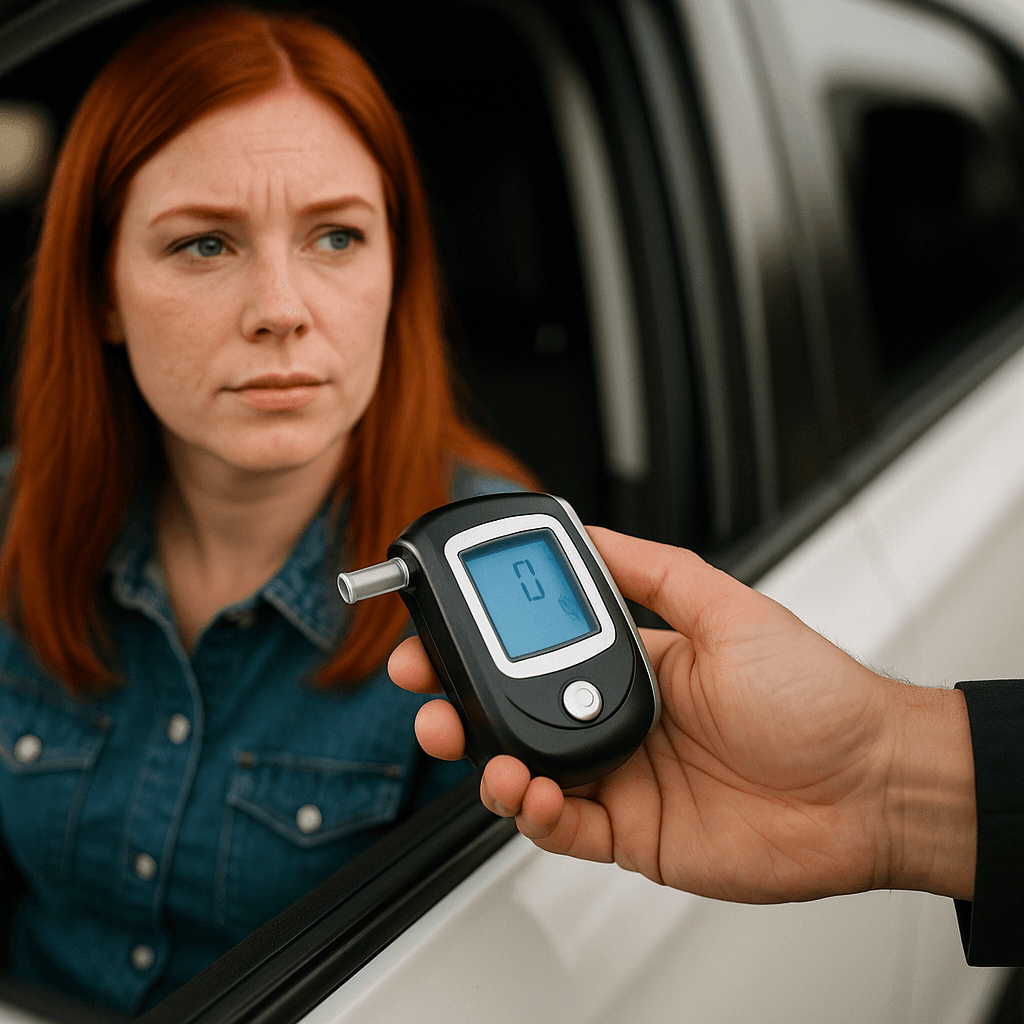
Kentucky ties your hardship license directly to active enrollment in your court-ordered DUI program. Drop a session and you lose the license, even if you've complied everywhere else.
Kentucky Hardship License Requires Active DUI Program Enrollment, Not Just Completion
Kentucky hardship licenses granted under KRS 189A.410 include a statutory condition: you must remain actively enrolled in your court-ordered Substance Abuse Program (SAP) or DUI education program throughout the entire hardship license period. Completion before you apply is not enough. The license is conditioned on continuous enrollment, attendance, and compliance with program requirements until you finish.
This means if you miss a class, fail a drug screen within the program, or get dropped by your program provider for non-payment, the program administrator notifies the Kentucky Transportation Cabinet. The Cabinet revokes your hardship license immediately. There is no grace period for reinstatement and no option to cure the deficiency retroactively. You lose driving privileges and must wait for the underlying suspension period to end before reapplying.
Most hardship license applicants assume program enrollment is a one-time eligibility hurdle. Kentucky treats it as an ongoing condition of the license itself. The distinction costs drivers their jobs when they underestimate the attendance requirement or assume court-ordered programs offer the same flexibility as voluntary DUI classes.
What Triggers DUI Program Disenrollment in Kentucky
Kentucky DUI education programs operate under Kentucky Board of Alcohol and Drug Counselors (KADC) certification standards. Programs must report disenrollment to the Transportation Cabinet within 5 business days when a participant: fails to attend scheduled sessions without prior approval, fails a substance test administered as part of the program, accrues more than one unexcused absence in a 30-day period, or fails to pay program fees within the provider's stated payment deadline.
Program fees in Kentucky typically range from $300 to $600 for the full course, depending on whether you're assigned a 90-day outpatient program or a more intensive 180-day track. Most providers require payment in full or a payment plan commitment before the first session. If you miss a payment installment, the provider drops you from enrollment and files the disenrollment notice with the Cabinet.
The Cabinet does not verify whether you had a valid reason for the absence or payment delay. The program provider's disenrollment notice is treated as sufficient evidence for hardship license revocation. Drivers who lose income due to medical leave, job loss, or family emergency often discover their hardship license has been revoked before they realize they've been disenrolled from the program.
Compare car insurance rates in your state
Get quotes from licensed carriers — no obligation, no spam, results in minutes.
Get Your Free Quote✓ No Obligation Required✓ Licensed Carriers Only✓ Available Nationwide✓ Free to Compare
How SR-22 Filing Interacts With Hardship License Program Conditions
Kentucky requires SR-22 filing for all hardship license holders under KRS 186.411. The SR-22 is filed by your auto insurer and certifies continuous liability coverage at state minimums: $25,000 bodily injury per person, $50,000 per accident, and $25,000 property damage. The filing must remain active for the entire hardship license period, which is typically the same duration as your underlying suspension: 45 days to 5 years depending on DUI offense count and aggravating factors.
SR-22 filing and DUI program enrollment are independent conditions. You can maintain perfect SR-22 compliance and still lose your hardship license if you're disenrolled from the DUI program. The Cabinet does not cross-check the two systems. Your insurer files SR-22 with the Kentucky Department of Insurance, and your DUI program provider reports to the Transportation Cabinet's Division of Driver Licensing. Both must show continuous compliance for the hardship license to remain valid.
Carriers who write SR-22 policies in Kentucky — Bristol West, Dairyland, Direct Auto, GAINSCO, The General, Safe Auto, Acceptance — expect hardship license holders to maintain both conditions. If your hardship license is revoked due to program disenrollment, your carrier will be notified of the license status change and may non-renew your policy at the next term. Losing the policy triggers an SR-22 lapse notice to the Cabinet, which extends your suspension clock and adds reinstatement fees.
Kentucky Hardship License Application Process and DUI Program Proof Requirements
You apply for a Kentucky hardship license through the Circuit Court in the county where your DUI case was adjudicated, not through the DMV. The court conducts a hardship hearing where you must demonstrate: genuine hardship (typically employment, medical treatment, or education), no alternative transportation available, and enrollment in a court-approved DUI education program. You must bring proof of program enrollment — a letter from the program provider on official letterhead showing your enrollment date, assigned program track, and scheduled completion date.
The court grants the hardship license as a court order, which you then take to the Transportation Cabinet to have the restricted license physically issued. The Cabinet adds the program enrollment condition to the license endorsement. If the court order does not explicitly reference continuous enrollment as a condition, the Cabinet adds it under statutory authority anyway. There is no option to waive the enrollment condition.
Typical wait time from DUI conviction to hardship license eligibility in Kentucky is 30 days for a first offense, 180 days for a second offense, and 365 days for a third or subsequent offense. During the waiting period, you cannot drive at all unless you hold a valid out-of-state license in a non-compact state, which Kentucky recognizes only if the suspension is Kentucky-specific and not mirrored in your home state. Most Kentucky employers will not hold a position open for 30 to 365 days, which forces drivers to apply for the hardship license as soon as the waiting period ends.
Cost Stack for Kentucky Hardship License With DUI Program and SR-22
Total upfront cost to obtain and maintain a Kentucky hardship license for a first-offense DUI typically runs $1,800 to $3,200 over the first year. Breakdown: $450 to $600 for DUI education program fees (paid in installments over 90 to 180 days), $200 to $350 for hardship license court filing and administrative fees, $40 Transportation Cabinet reinstatement fee after suspension ends, $900 to $1,800 annual SR-22 insurance premium (compared to $500 to $900 for standard liability coverage pre-DUI), and $500 to $800 in attorney fees if you hire counsel for the hardship hearing.
If your DUI conviction included an ignition interlock device (IID) requirement, add $75 to $100 per month for IID lease and monitoring, which runs $900 to $1,200 annually. Kentucky does not require IID for all first-offense DUI hardship licenses, but courts order it frequently when BAC was .15 or higher or when a child was present in the vehicle. IID is mandatory for second and subsequent offenses.
Many drivers underestimate the ongoing cost of maintaining both the SR-22 policy and the DUI program simultaneously. Missing a program payment to cover an SR-22 premium due date creates the disenrollment risk described above. Budgeting for both obligations across a 12-month period is the only way to avoid the compliance gap that revokes the hardship license.
What Happens When You Complete DUI Program Requirements
When you complete your DUI education program in Kentucky, the program provider files a completion certificate with the Transportation Cabinet and the court that issued your hardship license order. Completion does not automatically convert your hardship license to a full unrestricted license. You must still serve the remainder of your suspension period unless the court modifies the original suspension order, which is rare.
Once your suspension period ends and you have completed the DUI program, you apply for full license reinstatement through the Transportation Cabinet. You must pay the $40 reinstatement fee, provide proof of SR-22 filing (which must remain active for the full statutory period, typically 3 years from conviction date in Kentucky), and pass a written knowledge test if your suspension exceeded 12 months. The Cabinet issues an unrestricted license once all conditions are satisfied.
SR-22 filing continues after your license is fully reinstated. Kentucky's 3-year SR-22 requirement runs from the DUI conviction date, not from the hardship license issue date or the reinstatement date. Most drivers finish their DUI program and reinstate their license within the first 12 to 18 months, which means they drive on an unrestricted license with SR-22 filing for the remaining 18 to 24 months until the filing period ends.