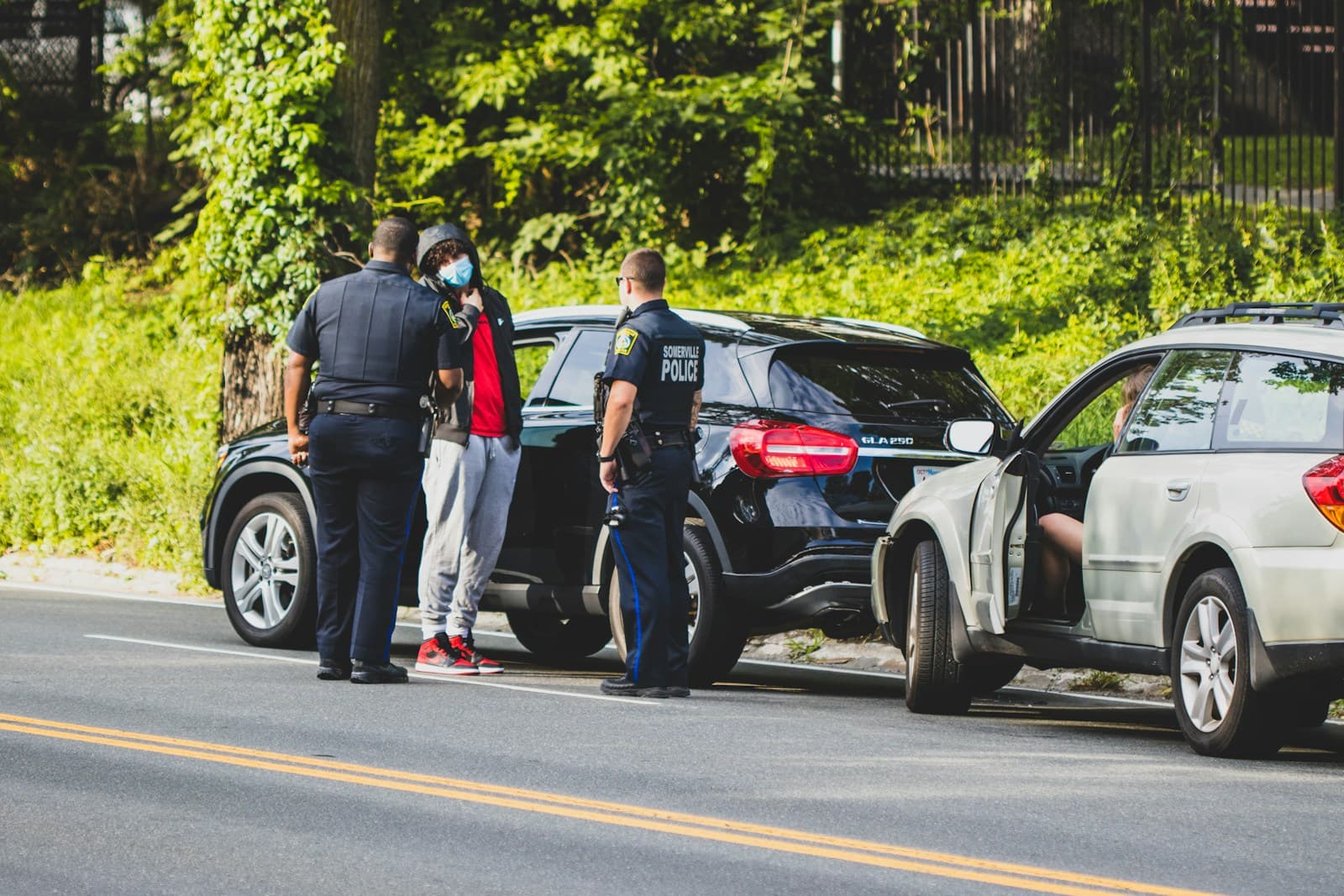
Michigan's Secretary of State approves specific street addresses for occupational license routes, not broad geographic areas—college students commuting between campus, work, and home must map each building's exact address during the appeal hearing or risk unlicensed-driving charges inside approved hours.
Why Michigan's Occupational License Uses Street Addresses Instead of Approved Zones
Michigan Secretary of State hearing officers approve occupational driving privileges by specific street address, not by employer name or campus. If you're a college student whose points suspension triggered from multiple speeding tickets and you work on-campus at three separate buildings—dining hall, library, tutoring center—you need all three addresses listed in your appeal order. The hearing officer's written order becomes your legal driving boundary. Operating outside those exact destinations during approved hours still counts as unlicensed driving under MCL 257.904.
Most college students assume their university employment letter covers any campus location under one employer. It doesn't. Campus police and local law enforcement read the Secretary of State order literally. If your order lists "123 Library Lane, Ann Arbor" and you're stopped at the student union two blocks away during your approved work window, the stop is treated as driving without a valid license.
This address-specific framework exists because Michigan treats occupational licenses as narrow exceptions to a suspension, not as restricted full licenses. The statute requires proof of "undue hardship" tied to specific, non-substitutable trips. Generic campus access doesn't meet that standard—each approved address must justify separate hardship at the hearing.
How Points Accumulation Suspensions Interact With College Enrollment Status
Michigan suspends your license when you accumulate 12 points within 24 months. Two speeding tickets 16+ mph over the limit (four points each) plus one careless driving citation (three points) exceeds that threshold. The suspension period depends on your driving history: 30 days for a first suspension, 60 days for a second within seven years. College enrollment status doesn't extend or reduce the suspension period.
You become eligible to request an occupational license appeal hearing immediately after the suspension takes effect. The Secretary of State does not impose a waiting period for points-based suspensions the way DUI suspensions carry mandatory hard suspension windows. You submit your appeal request to the Driver Assessment and Appeal Division within 14 days of the suspension notice to preserve your hearing date priority.
Most college students don't realize the occupational license requires employer documentation that satisfies Michigan's hardship standard. A campus job working 12 hours per week at minimum wage typically won't meet the "essential to employment" threshold unless you can prove those earnings cover tuition, housing, or dependent care that no family member can substitute. The hearing officer evaluates financial hardship, not academic inconvenience. If your parents' address is listed as your permanent residence and they could reasonably drive you to class, your campus commute doesn't qualify as undue hardship.
Compare car insurance rates in your state
Get quotes from licensed carriers — no obligation, no spam, results in minutes.
Get Your Free Quote✓ No Obligation Required✓ Licensed Carriers Only✓ Available Nationwide✓ Free to Compare
What College Students Must Provide at the Secretary of State Appeal Hearing
The appeal hearing requires specific documentation tied to each requested destination. For work routes, you need an employer letter on letterhead stating your job title, work schedule with specific days and hours, the exact street address of each work location, and a statement that your employment will be terminated if you cannot drive. Generic HR letters stating "employment verification" are insufficient—the hearing officer needs termination-contingency language.
For educational routes, Michigan allows occupational licenses to include class attendance only if you're enrolled in a degree or certificate program required for current employment or imminent job placement. A nursing student with a conditional job offer requiring RN licensure can request class routes. A liberal arts student taking general education credits cannot. You must bring your course schedule showing class meeting times and building addresses, plus documentation linking the coursework to employment necessity.
For medical routes, you need appointment records showing recurring treatment (dialysis, chemotherapy, physical therapy) that cannot be rescheduled outside your suspension period. One-time appointments don't qualify. For dependent care routes, you need documentation proving you are the sole available caregiver during specific hours—daycare drop-off, elderly parent medical transport—with addresses and recurring schedules. Each claimed hardship category adds to your hearing preparation burden, and hearing officers deny requests that appear over-broad or speculative.
How Route Deviations Trigger New Violations During College Commutes
Michigan law enforcement officers have access to the Secretary of State's occupational license database during traffic stops. When you're pulled over, the officer verifies your current location and time against your approved order. If you're driving on a road that doesn't connect your approved addresses during your approved hours, you're cited for driving while license suspended under MCL 257.904, a 93-day misdemeanor carrying up to $500 in fines.
College students encounter this most often during multi-stop trips. Your order approves home to campus dining hall, 7:00 AM to 11:00 AM Monday through Friday. You stop at a gas station two miles off your direct route at 9:30 AM. That detour is unlicensed driving even though you're within your approved time window and ultimately heading to an approved destination. The statute requires the most direct route between approved addresses. The hearing officer's order typically includes language requiring "direct and uninterrupted travel"—any stop not explicitly approved violates the order.
Emergency situations do not create an automatic exception. If your passenger has a medical emergency and you drive them to an ER not listed in your order, you're technically in violation. Michigan courts have upheld driving-while-suspended convictions in these scenarios, though prosecutors sometimes dismiss charges after reviewing the circumstances. Relying on prosecutorial discretion is not a legal strategy—it's a gamble that creates a second suspension risk on top of the points suspension you're already serving.
What Happens When Campus Jobs Change Buildings Mid-Semester
Campus employment often shifts locations mid-semester. Your dining hall shifts staffing to a different building. Your tutoring assignment moves to a satellite campus. Your library closes for renovation and operations relocate temporarily. None of these changes automatically update your occupational license order. You're legally restricted to the addresses the hearing officer approved at your original hearing date.
To add or change an approved address, you must file a new appeal request with the Driver Assessment and Appeal Division. This requires updated employer documentation, a written explanation of the job location change, and in many cases a second hearing. Processing time ranges from two to four weeks. During that window, you cannot legally drive to the new location, even if your employer requires it and your old location no longer exists.
Most students don't discover this until they're stopped driving to the new address during approved hours and learn their order hasn't been updated. At that point, you're facing a new driving-while-suspended citation, and your existing occupational license is subject to immediate revocation. The Secretary of State can revoke your occupational privilege if you violate its terms, extending your full suspension period and making you ineligible for another occupational license until the full underlying suspension is served.
How SR-22 Insurance Requirements Apply to College Student Occupational Licenses
Michigan does not require SR-22 insurance filing for points-accumulation suspensions. SR-22 is mandated for specific violation types: driving without insurance, certain alcohol-related offenses, and at-fault accidents while uninsured. If your suspension stems solely from speeding tickets, careless driving, or other point-assessed violations, you do not need SR-22 to obtain an occupational license or reinstate your full license after the suspension period.
If one of your point-generating violations was driving without insurance, the suspension triggers both a points penalty and a separate no-insurance suspension. The no-insurance component requires SR-22 filing for two years from your reinstatement date. You'll need proof of SR-22 at your occupational license hearing and continuous SR-22 coverage throughout your occupational license period and the subsequent two years. Letting SR-22 coverage lapse triggers an automatic new suspension, even if you're otherwise compliant with your occupational license terms.
College students typically see SR-22 premiums ranging from $110 to $180 per month in Michigan when filed with a non-standard carrier. If you don't own a vehicle and are driving a family member's car under your occupational license, you need a non-owner SR-22 policy. This provides liability coverage and satisfies the state's filing requirement without insuring a specific vehicle. Expect non-owner SR-22 premiums to run $90 to $150 per month depending on your age, county, and the severity of violations on your record.
What to Do When You Need Coverage for College Work-Route Driving
Start by confirming whether your suspension requires SR-22. Review your suspension notice from the Secretary of State. If it lists "no insurance" or "failure to maintain required insurance" as a suspension reason, you need SR-22. If it lists only point-assessed violations (speeding, careless driving, failure to yield), you do not.
If SR-22 is required, contact non-standard carriers that specialize in post-suspension filings: Bristol West, Dairyland, GAINSCO, Direct Auto, and The General all write Michigan SR-22 policies for drivers with suspended licenses. Request quotes from at least three carriers—rates vary significantly by carrier risk models, and the lowest-cost option is rarely the brand you recognize. Make sure the quote reflects your occupational license restriction and the specific vehicle you'll be driving. Some carriers charge higher premiums for occasional-driver scenarios where you're listed on a family policy but driving under restricted privilege.
If SR-22 is not required, you still need active liability coverage that meets Michigan's no-fault minimums or the state's new limited liability options under the 2019 insurance reform. If you're driving a family member's vehicle and listed as an occasional driver, confirm their policy extends coverage during your occupational license period. Some carriers exclude drivers with suspended licenses from household policies, even if the suspension is being served under occupational privilege. Get written confirmation from the insurer before your first approved trip—an uncovered accident during occupational license driving exposes you to out-of-pocket liability and potential license revocation.