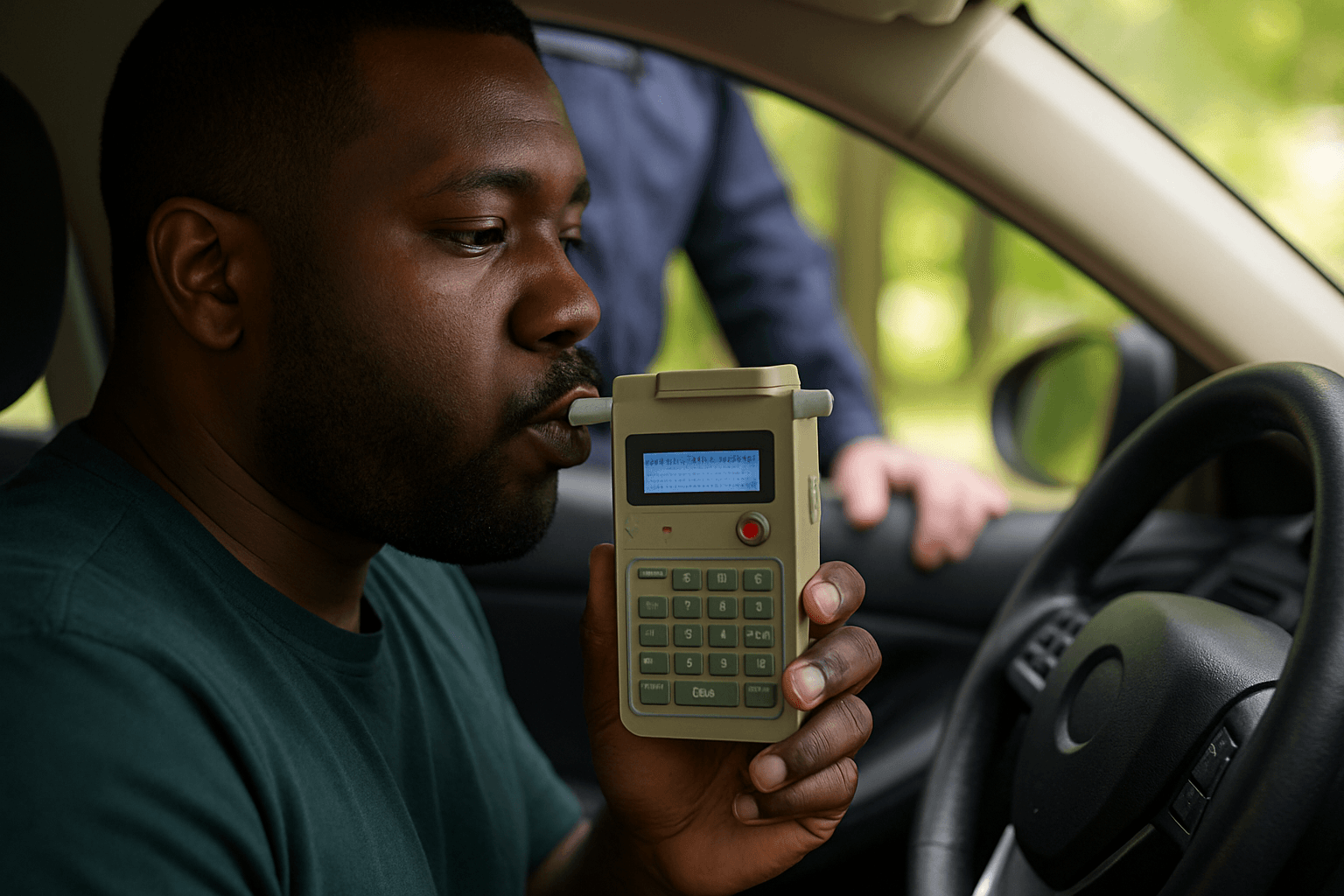
Georgia suspends your license after accumulating 15 points in 24 months or multiple serious violations. A Class D hardship license lets you drive to work, medical appointments, and other critical needs during the suspension period.
Who Qualifies for a Georgia Hardship License After Point or Violation Suspension
Georgia grants Class D hardship licenses to drivers suspended for accumulating 15 points in 24 months, multiple moving violations within 12 months, or specific serious violations like reckless driving or racing. You must prove that losing your license creates employment hardship, and you must complete any required driver improvement courses before applying.
Georgia does not impose a mandatory waiting period before hardship license eligibility for most violation-based suspensions. You can apply as soon as your suspension order arrives. DUI-related suspensions follow different rules with mandatory waiting periods of 120 days for first offense and longer for subsequent offenses.
Approval is not automatic. The Georgia Department of Driver Services reviews your driving record, violation type, employment documentation, and completion of required courses. Drivers with three or more suspensions in five years face stricter scrutiny and may be denied even with documented employment need.
Required Documentation for Your Georgia Hardship License Application
Georgia requires employer verification on company letterhead stating your work schedule, hours, job location, and confirmation that no alternative transportation exists. Self-employed drivers submit business registration, client contracts, or tax documentation showing active income dependence on driving.
You must provide proof of SR-22 insurance filed with the Georgia DDS before the hardship license is issued. Most non-standard carriers (Bristol West, Direct Auto, Dairyland, GAINSCO, The General) file SR-22 electronically within 24-48 hours. Hardship license approval is contingent on active SR-22 on file.
If your suspension resulted from accumulating points, you must complete a defensive driving course approved by Georgia DDS. If suspended for racing or aggressive driving, you complete a more intensive driver improvement clinic. Bring course completion certificates to your DDS appointment along with the $25 hardship license application fee and $210 reinstatement fee.
Compare car insurance rates in your state
Get quotes from licensed carriers — no obligation, no spam, results in minutes.
Get Your Free Quote✓ No Obligation Required✓ Licensed Carriers Only✓ Available Nationwide✓ Free to Compare
Approved Purposes and Route Restrictions Under Georgia's Class D License
Georgia hardship licenses allow driving to and from work, medical appointments for you or immediate family, DUI school or court-ordered programs, education (college or technical school), and grocery shopping or pharmacy visits once weekly. Each purpose requires documentation. Medical appointments need physician letterhead. Education requires enrollment verification.
You must provide a detailed route map from home to each approved location. Georgia DDS reviews distances and confirms routes are direct and necessary. Deviation from approved routes, times, or purposes results in immediate revocation and extends your underlying suspension by the full original duration.
Approved driving hours match your work schedule plus 30-minute windows before and after shifts. If your employer requires you to work overtime or change shifts, you must file an amendment with Georgia DDS within 10 business days. Driving outside approved hours is treated as driving under suspension, a misdemeanor carrying up to 12 months in jail and $1,000 fine.
SR-22 Filing Duration and Cost for Georgia Hardship License Holders
Georgia requires SR-22 filing for three years from the date your full license is reinstated, not from the hardship license issue date. If your hardship license runs 12 months during suspension, your SR-22 clock starts after that 12-month period ends and you regain full driving privileges.
SR-22 insurance for drivers with multiple violations typically costs $140–$220 per month in Georgia, compared to $85–$120 per month for clean-record liability coverage. The SR-22 filing itself adds no fee, but non-standard carriers price policies higher due to violation history and elevated risk classification.
Letting SR-22 coverage lapse by even one day resets your three-year filing requirement to zero and triggers immediate hardship license revocation. Most carriers send lapse notifications to Georgia DDS within 24 hours. You receive no grace period. Reinstatement after SR-22 lapse requires paying the $210 fee again and restarting the hardship application process.
Total Cost and Timeline to Obtain Georgia Hardship License
Expect to spend $1,200–$2,400 in the first 90 days for Georgia hardship license compliance. Breakdown: $210 reinstatement fee, $25 hardship application fee, $50–$120 defensive driving or driver improvement course, $420–$660 for three months of SR-22 insurance premiums, and $200–$600 in attorney fees if you use legal representation for the application.
Timeline from suspension notice to approved hardship license typically runs 14–28 days if you move immediately. Obtain SR-22 insurance first (1–3 days for carrier approval and DDS electronic filing), complete required driver courses (most offer same-week completion), gather employer documentation (allow 3–5 business days for HR processing), then schedule your DDS appointment. Georgia DDS processes hardship applications within 7–10 business days after submission if all documentation is complete.
Delays occur when employer letters lack required detail, SR-22 filing is not reflected in DDS systems yet, or driver improvement certificates are from non-approved providers. Verify your SR-22 is on file by calling Georgia DDS at 678-413-8400 before scheduling your hardship application appointment.
Violation Consequences and Hardship License Revocation Rules
Any traffic violation while holding a Georgia hardship license triggers automatic revocation and extends your underlying suspension by the full original period. A speeding ticket during a 12-month hardship suspension resets your clock to 12 months from the violation date, plus you lose hardship privileges immediately.
Driving outside approved purposes, routes, or hours is prosecuted as driving under suspension. Conviction carries 2 days to 12 months in jail, $500–$1,000 fine, and an additional 6-month license suspension stacked on your existing suspension. Georgia law enforcement can verify hardship restrictions in real time during traffic stops.
If you accumulate any new points during your hardship period, Georgia DDS revokes the hardship license and denies reapplication for 12 months minimum. Most employers terminate drivers who lose hardship privileges after approval. The second suspension following hardship revocation often results in denial of any future limited driving permits.
Finding SR-22 Insurance for Multiple-Violation Hardship Cases in Georgia
Georgia hardship license applicants with multiple violations face a narrow carrier market. Most standard carriers (State Farm, GEICO, Allstate, Progressive) decline to write new policies for drivers with 15+ points or multiple serious violations. Non-standard carriers that specialize in high-risk SR-22 cases include Bristol West, Direct Auto, Dairyland, GAINSCO, The General, Safe Auto, and Acceptance Insurance.
Rate variation among non-standard carriers runs 30–60% for identical coverage and violation history. Direct Auto may quote $160/month while Dairyland quotes $220/month for the same driver. Most non-standard carriers require six months paid in full upfront or monthly payments with 20–30% down. Budget for first-month premium plus two months as deposit.
Non-owner SR-22 policies cost $35–$70 per month in Georgia if you do not own a vehicle but need hardship driving privileges to use an employer's vehicle or a family member's car. Non-owner SR-22 satisfies Georgia's insurance requirement for hardship license but provides no physical damage coverage. If you will drive your own vehicle, you need standard liability SR-22 with collision and comprehensive coverage if the vehicle is financed.