Michigan's occupational license often requires SCRAM or portable breath testing on top of SR-22 filing—and missing a single test can cost you the license and your job within 48 hours.
Michigan's Occupational License Comes With Alcohol Monitoring You Don't Expect
Michigan grants occupational licenses—called restricted licenses in Secretary of State documentation—primarily for DUI-related suspensions, and most approvals include mandatory alcohol monitoring as a condition of driving. You file for SR-22, budget for the premium increase, and show up to your hardship hearing expecting to argue employment hardship. What catches drivers off guard is the Secretary of State hearing officer adding SCRAM continuous alcohol monitoring or portable breath testing (PBT) to the approval order at the hearing itself. The monitoring isn't optional. Miss a single SCRAM reading or PBT submission and your occupational license revokes automatically, often before you receive written notice.
Michigan's Driver Assessment and Appeal Division (DAAD) uses alcohol monitoring to verify sobriety compliance in real time, not after the fact. For first-offense DUI suspensions, the typical occupational license approval includes SR-22 filing plus 90–180 days of twice-daily PBT submission via a state-approved device and smartphone app. For second-offense or high-BAC cases, expect SCRAM ankle bracelet monitoring for 6–12 months minimum. The hearing officer sets the monitoring term based on your BAC at arrest, prior offenses, and substance abuse evaluation results presented at the hearing.
The cost structure is brutal because monitoring runs concurrent with your SR-22 filing, not instead of it. SCRAM monitoring typically costs $12–$18 per day through Michigan-approved providers, billed monthly. A 6-month SCRAM term runs $2,160–$3,240 on top of SR-22 premium increases averaging $1,200–$2,400 annually for DUI drivers. PBT programs cost less—around $3–$5 per day or $90–$150/month—but require you to blow twice daily at random times set by the monitoring company, including weekends. You cannot travel outside cellular range without prior approval, and you cannot miss a test window even if you're working a double shift.
How SCRAM Continuous Monitoring Works With Michigan Occupational Licenses
SCRAM (Secure Continuous Remote Alcohol Monitor) is an ankle bracelet that tests your perspiration for alcohol metabolites every 30 minutes, 24 hours a day. Michigan contracts with SCRAM Systems and a handful of approved third-party providers who install the device, calibrate it, and upload data to the state daily. The bracelet stays on until your monitoring term ends—typically 180 days minimum for second-offense DUI, 365+ days for third offense or refusal cases. Removal without state approval voids your occupational license immediately.
The device detects alcohol consumption within 30 minutes to 2 hours depending on the amount consumed and your metabolism. It also flags tampering: blocking the sensor with lotion, submerging the device in water longer than allowed for showers, or attempting physical removal all trigger violation alerts sent to DAAD within hours. A confirmed alcohol reading or tamper event results in automatic occupational license revocation. You receive a notice of revocation by mail, but the license is void the moment the violation uploads. Employers do not wait. Most drivers in this situation lose their job before they can file an appeal.
Michigan's occupational license order specifies SCRAM as a condition, meaning you must install the device before the Secretary of State issues the actual restricted license. Installation appointments with approved providers often run 7–14 days out. Budget $50–$100 for installation and another $50–$75 for removal at the end of your term, in addition to the daily monitoring fee. SCRAM providers require a credit card on file and bill monthly. Missed payments can result in a compliance violation reported to DAAD, which may revoke your license even if you haven't consumed alcohol.
Compare car insurance rates in your state
Get quotes from licensed carriers — no obligation, no spam, results in minutes.
Get Your Free Quote✓ No Obligation Required✓ Licensed Carriers Only✓ Available Nationwide✓ Free to Compare
Portable Breath Testing: Twice-Daily Compliance on Your Phone
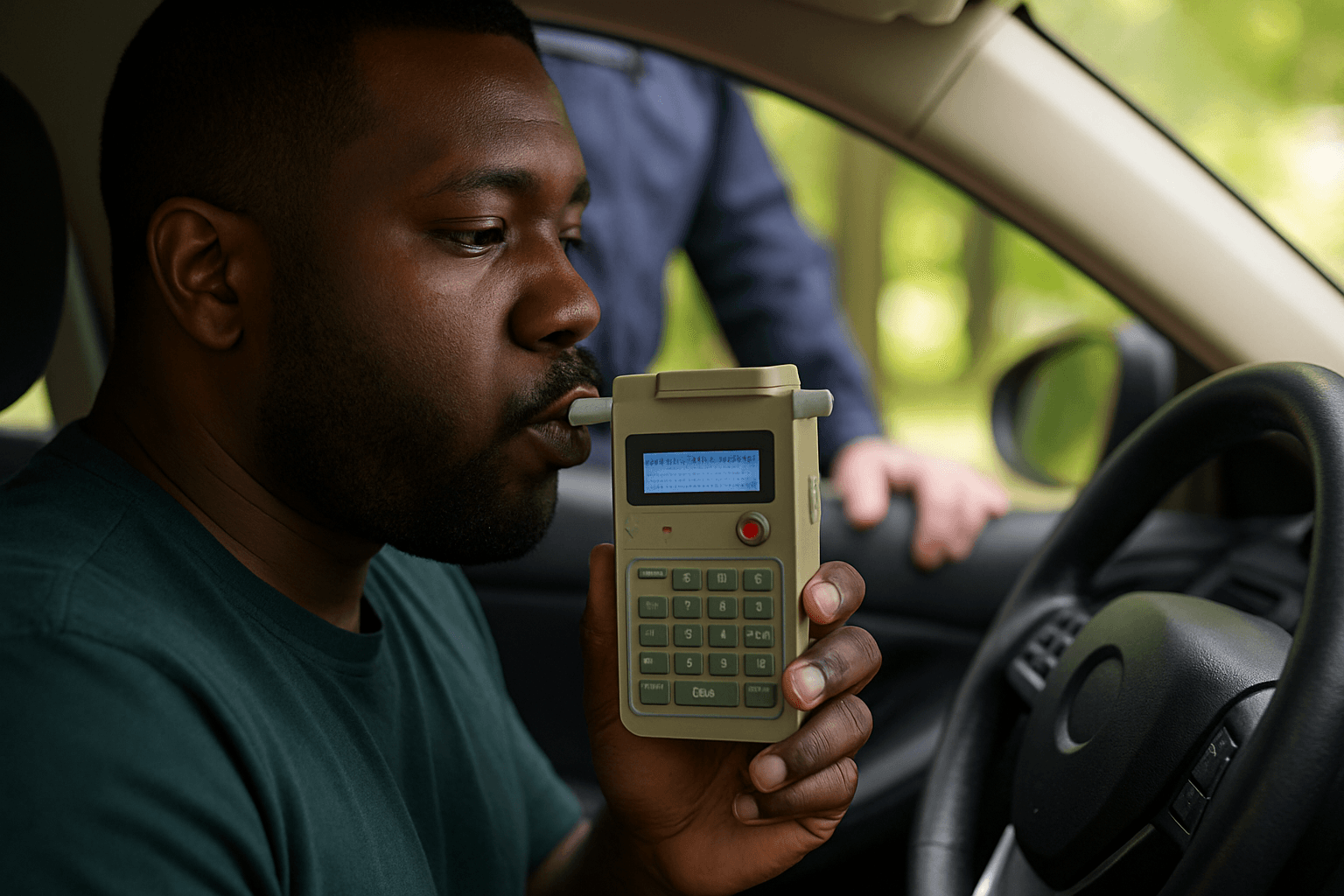
Michigan's PBT programs require you to blow into a handheld breathalyzer connected to a smartphone app at random times twice per day, every day, including holidays. The monitoring company sets test windows—typically a 2-hour span in the morning and another 2-hour span in the evening. You receive a push notification 15–30 minutes before the window opens. Miss the window by even 10 minutes and the missed test uploads as a violation. Three missed tests in 30 days typically triggers automatic revocation under standard Michigan occupational license orders.
The device uses facial recognition and GPS to verify it's you taking the test and that you're taking it from an approved location. You register your home address, workplace, and up to two additional locations (daycare, medical office) during setup. Testing outside these zones without prior approval from your monitoring provider flags a violation. Drivers working multiple job sites or making deliveries often struggle with this restriction because the monitoring company requires 48–72 hours' notice to approve a new location, and not all approve temporary sites.
PBT monitoring runs cheaper than SCRAM—$90–$150/month on average through Michigan-approved providers—but the compliance burden is higher because you must manage the schedule yourself. The device requires charging, the app requires cellular data, and the camera requires adequate lighting. Dead battery, low signal, or poor lighting can all result in a failed test submission that counts as a missed test. Michigan DAAD does not grant grace periods for technical issues. Your occupational license order holds you strictly liable for compliance, regardless of cause.
SR-22 Filing Runs Parallel to Monitoring, Not Instead of It
Michigan requires SR-22 filing for all occupational licenses granted after DUI suspension, and the SR-22 term runs independently of your alcohol monitoring term. Your SR-22 filing must remain active for the full suspension period—1 year for first-offense DUI, 2 years for second offense, 5 years for third offense—even after SCRAM or PBT monitoring ends. Letting your SR-22 lapse by even one day resets your occupational license eligibility to zero and often extends your underlying suspension by the length of the lapse.
The SR-22 filing itself costs $25–$50 as a one-time fee paid to your insurer, but the premium increase is where cost accumulates. Michigan DUI drivers with SR-22 filing see average annual premium increases of 70–130% compared to pre-suspension rates. A driver paying $1,200/year pre-DUI typically jumps to $2,040–$2,760/year with SR-22. This premium runs on top of SCRAM or PBT costs, not instead of them. First-year total compliance costs for a Michigan occupational license often exceed $4,000–$6,000 when combining SR-22 premiums, SCRAM monitoring, reinstatement fees, hearing costs, and substance abuse evaluation fees.
Not all carriers write SR-22 policies for drivers with active SCRAM or PBT monitoring. The non-standard market dominates this space: Bristol West, Dairyland, GAINSCO, The General, Direct Auto, and Acceptance all write Michigan SR-22 for DUI drivers, but approval depends on whether you've completed your monitoring term and whether you've had compliance violations. A missed SCRAM test or PBT violation on your record often disqualifies you from the lowest-tier non-standard carriers, pushing you to assigned-risk pools with premiums 40–60% higher than voluntary market rates.
What Happens When You Violate Monitoring Terms
Michigan's occupational license revocation process for monitoring violations is automatic and nearly immediate. SCRAM and PBT providers upload compliance data to DAAD daily. A confirmed alcohol reading, tamper alert, or pattern of missed tests triggers a revocation notice generated within 24–48 hours. The notice mails to your address of record, but the revocation is effective the date of the violation, not the date you receive the letter. You lose driving privileges immediately, including your occupational license.
Most drivers discover the revocation when they're pulled over for an unrelated traffic stop and the officer runs their license. By that point, you're driving on a revoked license—a criminal misdemeanor in Michigan carrying up to 93 days in jail and a $500 fine for first offense. Employers typically terminate within days of learning you can no longer legally drive. If your job was the basis for your occupational license approval, losing that job eliminates your eligibility to reapply for a hardship license until you secure new employment and start the hearing process over from scratch.
Appealing a monitoring violation revocation requires filing a new DAAD hearing request and proving the violation was caused by equipment malfunction, provider error, or another non-volitional cause. Michigan's burden of proof sits with you, not the monitoring company. SCRAM and PBT data logs are presumed accurate unless you present expert testimony or third-party evidence disproving the reading. Successful appeals are rare—estimated at under 10% of cases—and the appeal process takes 60–90 days minimum, during which you have no driving privileges at all.
Budgeting the Real Cost Stack Before Your Hearing
Michigan occupational license approval is conditional on proving you can afford compliance, not just that you need to drive for work. Hearing officers review your income, monthly expenses, and ability to maintain SR-22 insurance and monitoring simultaneously. Showing up without a realistic budget that accounts for all costs is one of the most common reasons hardship petitions are denied on first hearing.
The total first-year cost for Michigan occupational license compliance after DUI typically includes: $125 driver's license reinstatement fee, $200–$500 substance abuse evaluation, $150–$300 DAAD hearing preparation (if you hire representation), $2,040–$2,760 SR-22 premium increase (first year), $2,160–$3,240 SCRAM monitoring (6–12 months), or $1,080–$1,800 PBT monitoring as an alternative. Total range: $5,755–$8,900 for first year. Drivers often underestimate by $2,000–$3,000 because they budget only for SR-22 and ignore monitoring.
Payment plans exist but are limited. Most SCRAM and PBT providers require a credit card on file and bill monthly, with no option to defer. SR-22 insurers may offer monthly payment plans, but missed payments result in policy cancellation and automatic SR-22 lapse, which revokes your occupational license. Michigan does not offer state-funded monitoring assistance for occupational license holders. If you cannot afford the monitoring term ordered by the hearing officer, your only option is to decline the occupational license and wait out the full suspension on a non-driving basis.
Where to Start If You Need an Occupational License With Monitoring
Michigan's occupational license process begins with a DAAD hearing request filed at least 30 days before your desired hearing date. You must complete a substance abuse evaluation by a state-approved provider before the hearing—the evaluation determines whether the hearing officer orders SCRAM, PBT, or no monitoring. High-risk evaluations nearly always result in monitoring orders, moderate-risk evaluations often do, and low-risk evaluations sometimes do. You cannot appeal the evaluation result, but you can request a second evaluation from a different provider if the first comes back higher risk than you believe is accurate.
Before your hearing, secure SR-22 insurance and bring proof of filing to the hearing. Michigan hearing officers want to see that you've already arranged coverage and understand the cost, not that you plan to get it if approved. Comparing quotes from non-standard carriers before the hearing gives you a realistic monthly figure to include in your hardship budget. Carriers that write Michigan SR-22 for DUI drivers include Bristol West, Dairyland, GAINSCO, The General, and Direct Auto. Expect quotes 70–130% higher than your pre-suspension rate.
Once your occupational license is approved and monitoring terms are set, contact a Michigan-approved SCRAM or PBT provider immediately to schedule installation. The state does not issue your physical restricted license until you provide proof of monitoring enrollment. Delays in scheduling installation extend the time between your hearing approval and your ability to actually drive legally. Budget 10–14 days from hearing approval to active monitoring and licensed driving.