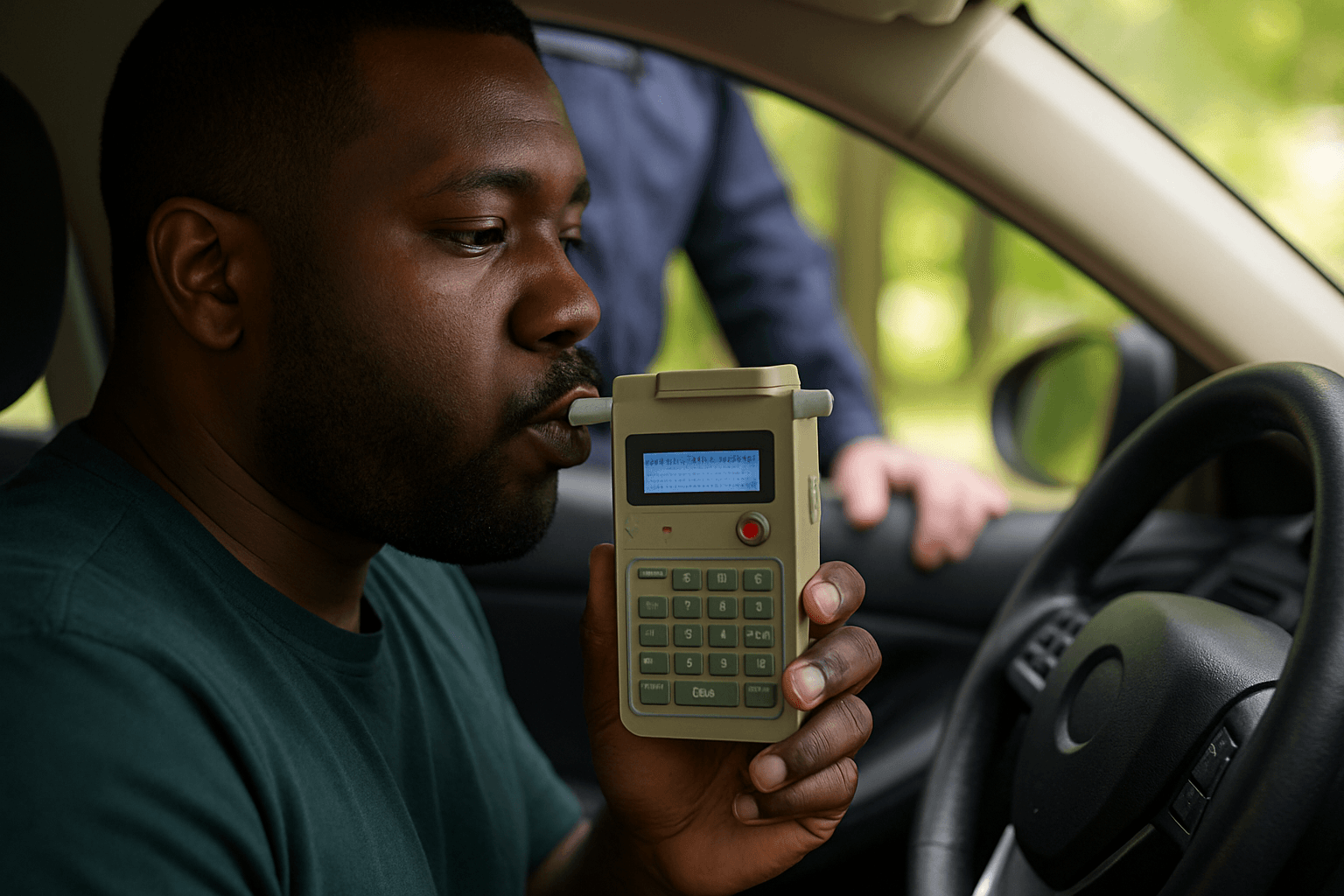
Wisconsin's occupational license doesn't replace your monitoring requirement — you'll run SCRAM or twice-daily breath tests while proving SR-22 coverage and sticking to court-approved routes. Here's how the systems stack.
Wisconsin occupational licenses don't waive alcohol monitoring — they run alongside it
Wisconsin grants occupational licenses while your regular license is revoked for OWI, but the license approval doesn't satisfy your alcohol monitoring requirement. If the court ordered SCRAM continuous alcohol monitoring or twice-daily preliminary breath testing through sobriety court, that order stands whether or not you have an occupational license. You're managing two separate compliance tracks: restricted driving privileges through the DMV and alcohol abstinence verification through the court or county program.
SCRAM ankle monitors sample your sweat every 30 minutes and transmit results daily. The device costs $10–$15 per day, paid to the monitoring company, and any detected alcohol triggers an immediate court notification. Sobriety court breath testing requires you to call a hotline twice daily at random times and blow into a portable device within 15 minutes — miss a test or blow above 0.00% and you're reported the same day.
Your occupational license lists approved hours and routes for work, medical appointments, and sometimes childcare or education. Driving outside those parameters is operating after revocation, a criminal charge that terminates your occupational privilege and adds 6–12 months to your underlying revocation. The monitoring requirement doesn't care where you're driving — it cares whether you're drinking, period.
SR-22 filing is required for the occupational license and stays active through your full revocation period
Wisconsin requires SR-22 proof of insurance before the DMV issues an occupational license. Your carrier files the SR-22 electronically the day your policy binds, and the DMV won't approve your application until that filing appears in their system. The SR-22 must stay active for the entire revocation period plus three years after reinstatement — typically 4–6 years total for a first OWI, 7–10 years for repeat offenses.
If your SR-22 lapses for any reason — missed payment, carrier cancellation, policy termination — the DMV receives electronic notice within 24 hours and revokes your occupational license immediately. You won't get a grace period or warning letter. The revocation is automatic, and you're driving illegally the moment the SR-22 drops. Reinstatement after a lapse requires a new SR-22 filing, a $200 reinstatement fee, and often restarts your required filing period from zero.
Monthly SR-22 premiums for post-OWI drivers in Wisconsin run $120–$280 depending on county, age, and violation count. Non-standard carriers like Bristol West, Dairyland, and GAINSCO write most occupational license policies. The premium includes liability coverage at Wisconsin's 25/50/10 minimums, but you'll pay 2–3 times the clean-record rate for the same limits.
Compare car insurance rates in your state
Get quotes from licensed carriers — no obligation, no spam, results in minutes.
Get Your Free Quote✓ No Obligation Required✓ Licensed Carriers Only✓ Available Nationwide✓ Free to Compare
SCRAM violations revoke your occupational license even if you weren't driving
Wisconsin courts treat SCRAM violations as immediate probation violations regardless of whether the detected alcohol involved a vehicle. If your monitor flags a drinking event — even at home, on a weekend, while your car sat parked — the probation officer files a violation report and the court schedules a revocation hearing within 10 days. Your occupational license is suspended pending that hearing, and most judges revoke it permanently on a confirmed positive test.
SCRAM detects alcohol absorption through skin, which means environmental exposure can trigger false positives. Hand sanitizer, mouthwash, cleaning products, and certain personal care items all register. The monitoring company distinguishes between environmental contact and metabolized alcohol, but the initial alert still goes to your supervising officer. You'll submit an explanation, and the company reviews the absorption curve — but you're defending yourself after the alert, not before.
Twice-daily PBT programs through sobriety court carry the same risk. Miss a scheduled test — oversleep, phone dies, you're in a dead zone — and the system logs a failure. Blow anything above 0.00% and you're reported within the hour. The occupational license termination follows the probation violation, and reinstatement isn't guaranteed even after you complete the underlying sentence.
Your approved occupational routes don't expand to cover monitoring appointments or equipment issues
Wisconsin occupational licenses approve specific routes: home to work, home to medical appointments, home to the monitoring office for equipment checks. If your SCRAM device malfunctions or loses charge, you're required to report to the monitoring company's office for replacement within 2 hours. That office might not be on your approved route, and driving there without a court order amending your license is operating after revocation.
The same restriction applies to sobriety court testing sites. If you're ordered to test at a county facility that's not on your occupational license as an approved destination, you'll need a standing court order authorizing travel to that location. Without it, you're choosing between a missed test (probation violation) or an unapproved route (criminal driving charge). Some counties issue blanket authorizations for monitoring-related travel; others require individual motions for every non-listed destination.
Monitoring companies don't coordinate with the DMV. Your SCRAM provider won't check whether their office is an approved stop on your occupational license, and they won't petition the court for you. That's your responsibility, and it needs to happen before you need the service — not after your ankle monitor starts beeping with a low battery warning while you're at work.
Cost stacking: SR-22 premiums, monitoring fees, and occupational license applications hit simultaneously
Wisconsin occupational license applications cost $50 at filing. SR-22 insurance runs $120–$280/month. SCRAM monitoring costs $10–$15/day, or $300–$450/month. Twice-daily PBT programs through sobriety court run $60–$120/month depending on county. Add a $200 reinstatement fee when your underlying revocation ends, and the all-in compliance cost for the first year runs $3,200–$6,800 before counting attorney fees or IID costs if required.
Most non-standard carriers require 2–3 months paid up front to issue an SR-22 policy for post-OWI drivers. That's $240–$840 due before the DMV approves your occupational application. SCRAM installation adds a $50–$100 setup fee on day one. If you're also required to install an ignition interlock device under Wisconsin's OWI laws, add another $70–$120/month for IID lease and calibration.
Employers don't wait months while you save for compliance costs. If you can't drive within 30–60 days of revocation, most jobs move on. Payment plans exist for monitoring and SR-22 premiums, but they're structured to keep you current, not to defer the burden. Miss a SCRAM payment and the device comes off — and that removal is logged as noncompliance even if it's the monitoring company's billing decision, not yours.
IID requirements add a fourth layer if your OWI involved a BAC above 0.15%
Wisconsin requires ignition interlock devices for all OWI convictions with BAC at or above 0.15%, and for all second or subsequent offenses regardless of BAC. The IID must be installed in every vehicle you operate, including vehicles driven under an occupational license. That means your work truck, your spouse's car if you're listed as an occasional driver, and any fleet vehicle you use on approved routes.
The IID logs every startup attempt, every rolling retest, and every failed breath sample. Those logs upload to the monitoring authority monthly, and any failed test or circumvention attempt is a probation violation and grounds for occupational license revocation. Unlike SCRAM, which monitors whether you drink, the IID monitors whether you're sober while driving — but a failed IID test still counts as a probation breach even if the vehicle never left park.
IID installation costs $70–$150, monthly lease and calibration runs $70–$120, and removal at the end of your required period costs another $50–$100. The device must stay installed for 12 months minimum on a first OWI with high BAC, 12–24 months on a second offense, and 24–36 months on a third. That clock runs separately from your SR-22 filing period, so you'll finish IID monitoring years before your SR-22 obligation ends.
What happens when one compliance system fails while the others are current
Wisconsin's layered compliance systems don't fail gracefully. If your SCRAM monitor flags alcohol but your SR-22 is current and you haven't violated your occupational routes, the court still revokes your driving privilege — the SR-22 filing stays active because your insurance didn't lapse, but the license terminates because probation was violated. You'll keep paying SR-22 premiums on a policy you can't legally use until your revocation period ends.
If your SR-22 lapses but you're clean on monitoring and routes, the DMV revokes your occupational license automatically and your insurance company cancels your policy for non-filed SR-22. You're without coverage and without a license, but you're still required to maintain SCRAM monitoring and report for PBT tests. The monitoring bill doesn't pause because you're not driving.
Most drivers don't realize these systems are enforced independently until one fails. The probation officer doesn't get alerts about SR-22 lapses. The DMV doesn't track SCRAM violations. Your insurance carrier has no visibility into whether you're violating occupational routes. You're the only connection point between all four agencies, and each one assumes you're managing the others.