South Dakota bars CDL holders from operating commercial vehicles during restricted driving privilege periods—but most don't realize your personal vehicle work permit won't transfer to your trucking job even when approved destinations overlap.
Why Your CDL Job Disappears the Moment DUI Charges Are Filed
South Dakota revokes commercial driving privileges immediately upon DUI arrest, before any conviction or administrative hearing. Your personal driver's license enters a separate suspension timeline, but your CDL privilege terminates the day charges are filed. This means you lose your trucking job before you can apply for a work permit.
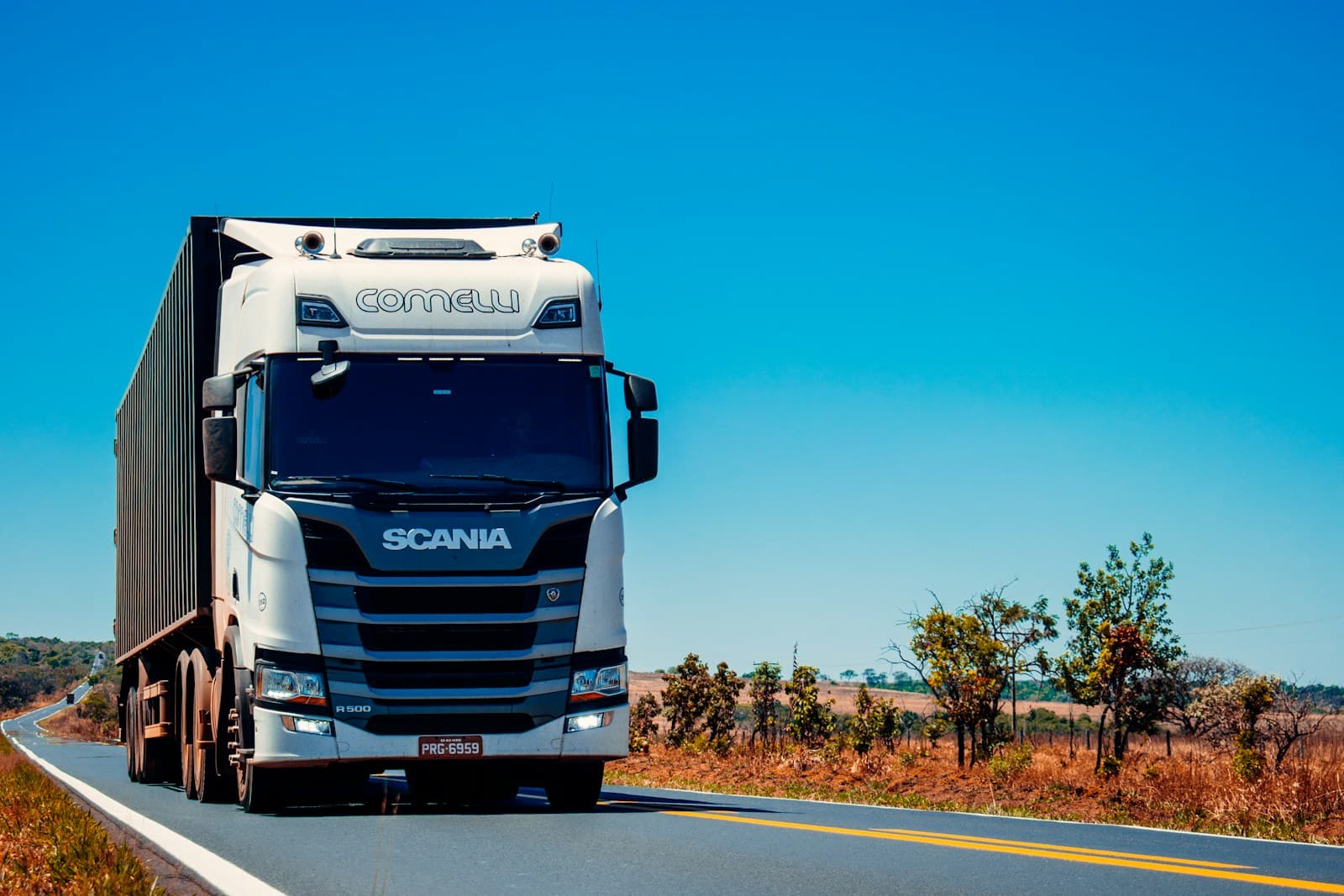
The work permit program—South Dakota calls it a restricted minor's permit when issued to adults post-suspension—only authorizes operation of personal vehicles to approved destinations. No statutory provision extends restricted privileges to commercial vehicle operation. Your employer verification letter and approved route to the grain elevator or distribution center mean nothing if the job requires a Class A or Class B vehicle.
Most CDL holders discover this gap when they file for the work permit, submit employer documentation showing specific delivery routes, and receive approval—only to learn from their employer's insurance carrier that the restriction prohibits commercial vehicle operation entirely. The state issues the permit. Your employer's liability insurer denies coverage. You're approved to drive but unemployable in the only job the permit was supposed to protect.
What South Dakota's Work Permit Actually Authorizes for CDL Holders
The restricted permit allows travel in a personal passenger vehicle to and from work, medical appointments, DUI treatment programs, and court-ordered obligations. You can drive to your employer's terminal. You cannot operate the commercial vehicle once you arrive.
Approved purposes cover:
- Travel to and from place of employment (terminal, dispatch office, warehouse)
- Medical appointments for yourself or immediate family members
- DUI evaluation and treatment sessions (24/7 Sobriety Program testing, counseling)
- Court hearings, probation check-ins, ignition interlock device service appointments
- Grocery shopping and essential errands within county of residence
The permit does not authorize:
- Operation of any vehicle requiring a CDL
- Passenger transport for hire
- Hazmat or oversized load driving
- Interstate commerce operation
- Any driving outside the specific hour blocks and destination addresses listed on your court order
South Dakota DPS processes work permit applications through the Driver Licensing Program office in Pierre. Approval comes with a printed addendum listing every approved destination by street address. Driving to an unapproved address during approved hours still violates the restriction, even if the trip serves work purposes.
Compare car insurance rates in your state
Get quotes from licensed carriers — no obligation, no spam, results in minutes.
Get Your Free Quote✓ No Obligation Required✓ Licensed Carriers Only✓ Available Nationwide✓ Free to Compare
How Federal CDL Disqualification Rules Override State Work Permits
Federal Motor Carrier Safety Regulations disqualify CDL holders from operating commercial vehicles for one year minimum after a first DUI conviction, regardless of state-level restricted driving privileges. South Dakota cannot override federal disqualification periods. Even if the state granted work permits for commercial operation—which it does not—FMCSA rules would prohibit carriers from employing you.
The disqualification applies to:
- Any DUI conviction in a commercial vehicle (automatic one-year disqualification)
- Any DUI conviction in a personal vehicle if your BAC was 0.04% or higher (one-year disqualification)
- Any DUI conviction in a personal vehicle with BAC under 0.04% if state law suspends your personal license (CDL privilege suspended for same duration)
South Dakota's 0.08% BAC threshold for personal-vehicle DUI means most convictions trigger the one-year federal disqualification. Your work permit lets you drive your personal truck to the job site. Federal law prevents you from hooking up the trailer or crossing state lines.
Carriers who employ CDL holders during disqualification periods face $15,552 per-violation civil penalties from FMCSA. No legitimate employer will risk it. The work permit protects your ability to reach non-CDL employment. It does nothing for your commercial driving career until the federal disqualification expires.
The Non-CDL Job Search: What Your Work Permit Can Actually Protect
The work permit exists to prevent total unemployment, not to preserve your previous job. CDL holders approved for restricted privileges typically transition to:
- Terminal dispatch, logistics coordination, or freight brokering roles at their current employer (if the company has desk positions)
- Warehouse work, forklift operation, loading dock management (no CDL required)
- Agricultural equipment operation on private land (farm machinery exemptions)
- Delivery driving under 26,001 lbs GVWR with no air brakes and no placarded hazmat (non-CDL box trucks, cargo vans)
Your work permit application must list the new job's address, not your previous CDL employer's terminal. If you're applying before securing non-CDL employment, list multiple prospective employer addresses and explain the job search in your hardship petition. South Dakota courts grant broader destination lists when you demonstrate active job-seeking.
Delivery driver positions—Amazon DSP routes, FedEx Ground contract drivers, local parts delivery—are the most common CDL-holder fallback because the work uses familiar skills without requiring a commercial license. Expect a pay cut of 40-60%. Most CDL holders earning $55,000-$75,000 annually drop to $32,000-$45,000 in non-CDL delivery roles. Budget accordingly when calculating whether the work permit justifies the cost.
Application Process and Cost Stack for South Dakota CDL Holders
South Dakota requires a court petition for work permits, not an administrative DMV application. You file in the county where the DUI charge originated. There is no mandatory waiting period—you can petition immediately after suspension begins.
The application requires:
- Completed Petition for Restricted Minor's Permit (form available from circuit court clerk)
- Employer verification letter on company letterhead stating job address, work hours, and supervisor contact
- Proof of SR-22 insurance filing (must be active before court hearing)
- DUI evaluation completion certificate (required before petition is granted)
- Ignition interlock device installation certificate (required before permit issuance)
- $50 petition filing fee (paid to circuit court)
Hearing dates are typically set 14-21 days after filing. Approval is not automatic. Sioux Falls and Rapid City courts approve approximately 70-75% of first-time petitions; denial usually stems from incomplete employer documentation or missing DUI evaluation.
Total upfront cost:
- $50 court filing fee
- $75-$125 DUI evaluation
- $150 SR-22 six-month premium (non-standard carrier average)
- $95-$150 ignition interlock installation
- $75-$90 monthly IID monitoring fee
- $200 reinstatement fee (paid to DPS after restriction period ends)
First-month cost: $570-$620. Monthly carrying cost during restriction period: $175-$240 (SR-22 premium + IID monitoring). Budget $1,800-$2,500 total for a six-month restriction period.
Route Compliance and the Violation Revocation Process
South Dakota monitors work permit compliance through law enforcement traffic stops and monthly IID violation reports. Any deviation from approved destinations or hours triggers immediate revocation, no warning.
Violation scenarios that revoke your permit:
- Driving to an address not listed on your court order, even during approved hours
- Driving during approved hours on an unapproved day (most permits restrict weekends unless employer verifies seven-day schedules)
- IID failed start attempt or rolling retest failure (registers as violation even if vehicle doesn't move)
- Traffic citation during restriction period (even non-alcohol violations like speeding trigger review)
- Missing a 24/7 Sobriety Program test (if court-ordered alongside work permit)
Revocation extends your underlying suspension by the amount of time the work permit was active. If you held the permit for 90 days before violating, your original suspension clock resets and you serve the full suspension from day one—without work permit eligibility the second time.
The IID violation report goes directly to the court and DPS simultaneously. Most CDL holders discover revocation when law enforcement pulls them over for an unrelated reason and the officer runs the license. There is no grace period. You are driving on a revoked permit the moment the violation registers, even if you haven't received written notice.
Insurance Mechanics: SR-22 Requirements for CDL Holders on Work Permits
South Dakota requires SR-22 filing before the court issues the work permit and continuously throughout the restriction period. The SR-22 must cover the personal vehicle you'll operate under the permit—your own car, not your employer's commercial unit.
If you don't currently own a vehicle, you need non-owner SR-22 insurance, which provides liability coverage when you drive borrowed or rented vehicles. Most CDL holders in this situation borrow a family member's vehicle for work permit travel or purchase an older personal vehicle outright to avoid monthly payments during the restriction period.
Carriers who write SR-22 policies for CDL holders post-DUI:
- Dairyland (most common in Sioux Falls and Rapid City)
- Direct Auto
- The General
- GAINSCO
- Bristol West (owned by Farmers, non-standard division)
Your current personal auto carrier—even if it's the same company that insured your household vehicles for years—will not add SR-22 endorsement to an existing policy after a DUI. You're moved to the non-standard market regardless of prior history. Expect your six-month premium to run $450-$750 compared to $180-$280 pre-suspension.
The SR-22 filing itself costs nothing—it's a certificate your insurer electronically files with DPS. The premium increase reflects your new risk classification. Cancellation or lapse of the SR-22 policy triggers automatic work permit revocation and reinstatement fee forfeiture. Continuous coverage is non-negotiable.