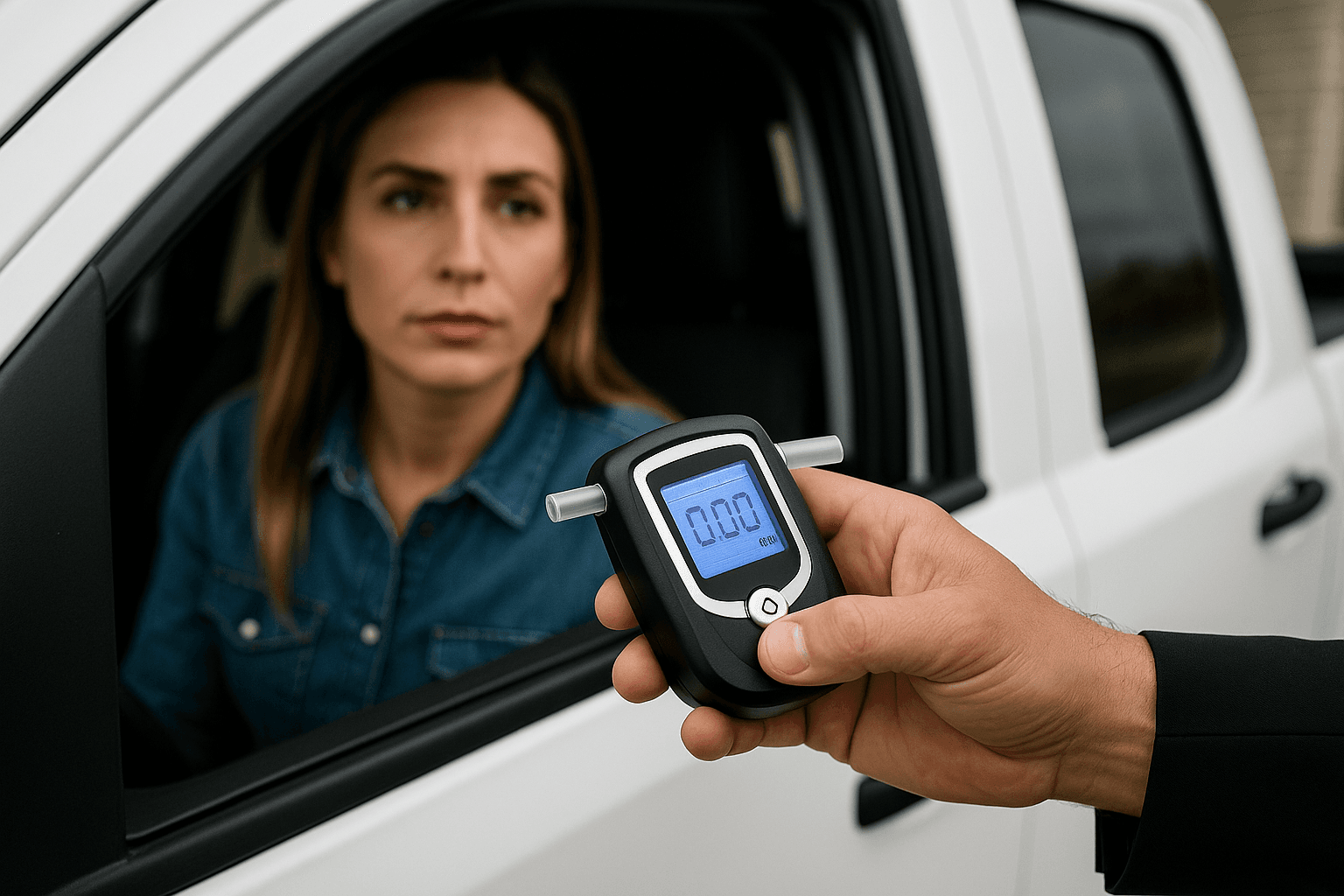
Nevada's zero-tolerance law means any BAC above .02% triggers a DUI for drivers under 21. Here's what you need to know about restricted license eligibility, SR-22 filing requirements, and keeping your job after a minor DUI charge.
What Nevada's Zero-Tolerance Law Means for Drivers Under 21
Nevada Revised Statutes 483.461 sets a .02% BAC threshold for drivers under 21 — roughly one drink for most people. Any measurable alcohol triggers a DUI charge, even if you're not impaired. The consequence is immediate: 90-day license revocation for a first offense, one-year revocation for a second.
This isn't a traffic ticket. It's a criminal DUI charge with the same SR-22 filing requirement, court costs, and insurance consequences as an adult .08% case. The only difference is the threshold.
Nevada DMV processes the revocation within 5 business days of arrest. Your physical license is confiscated at the stop. You receive a temporary 7-day permit, then nothing until you petition for a restricted license or complete the full revocation period.
Can You Get a Restricted License After a Zero-Tolerance DUI?
Yes, but not immediately. Nevada allows restricted license applications for minors after 45 days of the 90-day revocation for a first offense. You must complete a court-ordered alcohol awareness program, pay the $150 DMV reinstatement fee, and file SR-22 proof of insurance before DMV will review your application.
The restricted license allows driving to and from work, school, medical appointments, and court-ordered programs only. No recreational driving. No passengers under 18 unless they're immediate family. Violation of any restriction triggers full revocation of the restricted privilege and extends your underlying suspension.
Drivers under 18 face additional hurdles. Nevada requires a parent or legal guardian to co-sign the hardship application and assume liability. If you're emancipated or living independently, you'll need court documentation proving emancipation status. DMV will not process the application without it.
Compare car insurance rates in your state
Get quotes from licensed carriers — no obligation, no spam, results in minutes.
Get Your Free Quote✓ No Obligation Required✓ Licensed Carriers Only✓ Available Nationwide✓ Free to Compare
SR-22 Filing Requirements for Under-21 DUI in Nevada
Nevada mandates SR-22 filing for 3 years after a zero-tolerance DUI conviction, measured from the date DMV processes your restricted license or full reinstatement — not the arrest date. The filing proves you carry minimum liability coverage: $25,000 bodily injury per person, $50,000 per accident, $20,000 property damage.
Your carrier files the SR-22 certificate electronically with Nevada DMV. The filing itself costs $15–$25 as a one-time processing fee. The real cost is your premium: minors with a DUI conviction pay 80–150% more than a clean-record minor driver, and clean-record minor rates already run $300–$500/month in Nevada.
Not every carrier writes SR-22 policies for drivers under 21. Standard carriers like State Farm and Allstate typically cancel coverage after a minor DUI. You'll need a non-standard carrier: Bristol West, Direct Auto, Dairyland, or The General. These carriers specialize in high-risk drivers but price accordingly. Budget $400–$700/month for SR-22 coverage as an under-21 driver in Nevada.
If your SR-22 filing lapses even one day — because you cancel your policy, miss a payment, or switch carriers without filing a new SR-22 first — Nevada DMV resets your 3-year clock to zero. You start over.
Timing the Restricted License Application to Keep Your Job
You can apply for a restricted license 45 days into your 90-day revocation. That leaves a 45-day gap where you cannot legally drive at all. If you need to work, you need a plan for those 45 days: family transportation, rideshare, employer flexibility, or temporary remote work.
The hardship application process takes 10–21 days after submission if you submit a complete packet. Incomplete applications get rejected and returned, adding another 2–3 weeks. You need: proof of employment or school enrollment, completion certificate from a state-approved alcohol awareness program, SR-22 certificate on file with DMV, $150 reinstatement fee paid, and the hardship petition form signed by a parent or guardian if you're under 18.
Most applicants underestimate the alcohol awareness program timeline. Nevada-approved programs run 8–12 hours and cost $100–$200. Some offer weekend formats; most require 2–4 weeknight sessions. You cannot apply for the restricted license until you complete the program and receive the certificate. Start the program immediately after arrest — don't wait for your court date.
Employers rarely wait 60+ days for a driver to regain legal driving privileges. If your job requires driving, notify your employer immediately and propose alternatives: temporary reassignment, remote work, carpool arrangements, or unpaid leave during the gap. The longer you wait to disclose the situation, the fewer options you'll have.
What Happens If You Violate Restricted License Terms
Nevada DMV revokes your restricted license immediately if you're caught driving outside approved hours, carrying unauthorized passengers, or driving for unapproved purposes. The revocation is automatic — no hearing, no warning. You forfeit the remaining restricted period and serve the full original suspension from the violation date.
A second DUI while on a restricted license — even at .02% BAC — triggers a mandatory one-year revocation with no hardship eligibility for the first 6 months. Your SR-22 requirement extends to 5 years, and you'll likely face jail time under Nevada's zero-tolerance escalation statute.
Installing a vehicle ignition interlock device (IID) is not required for a first minor DUI in Nevada unless your BAC was .08% or higher. If the court orders IID as a condition of your restricted license, expect $75–$125/month in monitoring and calibration costs on top of your SR-22 premium.
Cost Breakdown for Restricted License Compliance
Total first-year compliance costs for a minor DUI restricted license in Nevada typically run $6,500–$10,000. Here's the stack: $150 DMV reinstatement fee, $100–$200 alcohol awareness program, $15–$25 SR-22 filing fee, $4,800–$8,400 annual SR-22 insurance premium ($400–$700/month), $500–$1,500 court fines and fees, and $1,000–$2,500 attorney fees if you contest the charge or petition for hardship.
If the court orders IID installation, add $900–$1,500/year in device costs. If you need to complete a DUI school beyond the basic awareness program, add $300–$600.
This cost burden doesn't include lost wages during the 45-day no-drive period or increased premiums for the following two years. Nevada allows SR-22 requirement removal after 3 consecutive years of filing, but your DUI conviction remains on your driving record for 7 years and affects your insurance rates the entire time.
How Long the Zero-Tolerance DUI Affects Your Record
A zero-tolerance DUI conviction stays on your Nevada driving record for 7 years. Insurance carriers price your risk based on your record: expect elevated premiums for at least 5 years post-conviction, even after your SR-22 requirement ends at year 3.
Nevada does not allow DUI convictions to be sealed or expunged for drivers under 21. The conviction is permanent on your criminal record. It will appear on background checks for employment, college applications, and professional licensing.
Once you turn 21, your zero-tolerance DUI does not convert to an adult DUI or disappear. It remains a DUI conviction with the same 7-year driving record retention and permanent criminal record status.