Utah's limited driver license for students post-reckless-driving conviction restricts you to school and work routes only—campus activities, study groups, and internship sites are usually excluded unless documented as mandatory.
What Counts as an Approved Destination for College Students
Utah's limited driver license covers direct routes between your residence, classes, and paid employment—not the broader campus life most students need. The Driver License Division approves classroom buildings and work addresses you list on Form DLD 332, but study groups, campus organizations, library sessions, and unpaid internships are excluded unless your degree program requires documented attendance.
You must submit a class schedule with building names and addresses at application. The DLD verifies these against your college's registrar records. If you're enrolled in clinical rotations, student teaching, or lab sessions at off-campus locations, you need separate documentation from your department chair confirming mandatory attendance—syllabi alone won't clear this.
Most students assume their student ID and class schedule cover all campus movement. They don't. A DUI checkpoint stop while driving to a campus job fair or intramural practice outside your approved route schedule is treated as unlicensed driving, even if it's during approved hours. The restriction is destination-specific, not just time-based.
How Work Routes Are Documented for Part-Time Student Jobs
Your employer must submit a signed statement on company letterhead verifying your work address, shift schedule, and job title. The DLD requires this before they'll approve work as an eligible purpose. If you work multiple part-time jobs—common for students—you need separate documentation for each site, and each address goes on your restricted-route list.
Shift changes trigger a resubmission requirement. If your manager changes your Tuesday 4-6pm shift to Thursday 5-8pm, you're required to file an updated schedule with the DLD within 10 days. Most students don't, and the violation creates a Class B misdemeanor if stopped during the new shift window.
Unpaid internships and volunteer positions are excluded unless they're required for degree completion and documented by your academic advisor. The DLD does not treat career-building volunteer work as eligible employment, even if it's in your major field. Paid work only, or academically mandatory placements with formal documentation.
Compare car insurance rates in your state
Get quotes from licensed carriers — no obligation, no spam, results in minutes.
Get Your Free Quote✓ No Obligation Required✓ Licensed Carriers Only✓ Available Nationwide✓ Free to Compare
The Court Hearing Requirement and Timing for Reckless Driving Cases
Utah requires a court hearing to obtain a limited license after reckless driving conviction. You file a petition with the court that handled your case—not with the DLD—requesting restricted driving privileges. The hearing is scheduled 2-4 weeks after filing, and the judge has full discretion to approve, deny, or modify the terms you request.
You must prove undue hardship. For students, this means documenting that loss of driving privilege prevents degree completion or job retention. Bring your class schedule, employment verification, lease or housing documentation showing distance from campus, and public transit route maps demonstrating inadequate service. The judge will ask why rideshare, carpooling, or campus housing aren't viable alternatives—prepare specific answers.
If approved, the court issues an order specifying your approved destinations, approved hours, and restriction duration. You take this order to the DLD, pay the $50 limited license fee, and they issue the physical card. The entire process from petition filing to license issuance takes 3-5 weeks if you have all documentation ready at the hearing. Missing documents push this to 6-8 weeks because you'll need a second hearing.
SR-22 Insurance Requirement and College Student Rate Reality
Utah requires SR-22 filing for reckless driving convictions. Your insurance carrier files Form SR-22 electronically with the DLD, certifying you carry at least $25,000/$65,000/$15,000 liability coverage. The SR-22 stays active for 3 years from your conviction date, and any lapse triggers automatic license suspension.
Most college students are still on their parents' policies. Adding SR-22 to a family policy often costs less than switching to your own non-standard policy, but it depends on the carrier. State Farm, Allstate, and Farmers will add SR-22 to existing family policies, typically raising the six-month premium by $400-$900 depending on the student's age and violation history. Progressive and GEICO sometimes non-renew the entire family policy when a household member requires SR-22, forcing the student onto a separate non-standard policy.
Non-standard carriers specializing in post-violation coverage—Bristol West, Dairyland, Direct Auto, The General—quote college students with reckless driving SR-22 at $180-$320/month for minimum liability. Estimates based on available industry data; individual rates vary by age, gender, county, and whether you own a vehicle. If you don't own a car but need SR-22 to maintain your limited license, a non-owner SR-22 policy runs $50-$90/month and satisfies the filing requirement.
What Happens If You Deviate From Approved Routes
Driving outside your approved destinations or hours is prosecuted as a Class B misdemeanor in Utah, carrying up to 6 months in jail and a $1,000 fine. The court also revokes your limited license immediately, and you're barred from reapplying for the remainder of your original suspension period.
Most violations occur during approved hours but at non-approved locations. A student with a limited license approved for Monday/Wednesday/Friday 8am-6pm drives to campus on Wednesday at 2pm—legal so far—but stops at a friend's apartment two miles off the direct route. A traffic stop for expired registration reveals the deviation. The time window was correct; the destination was not. The violation stands.
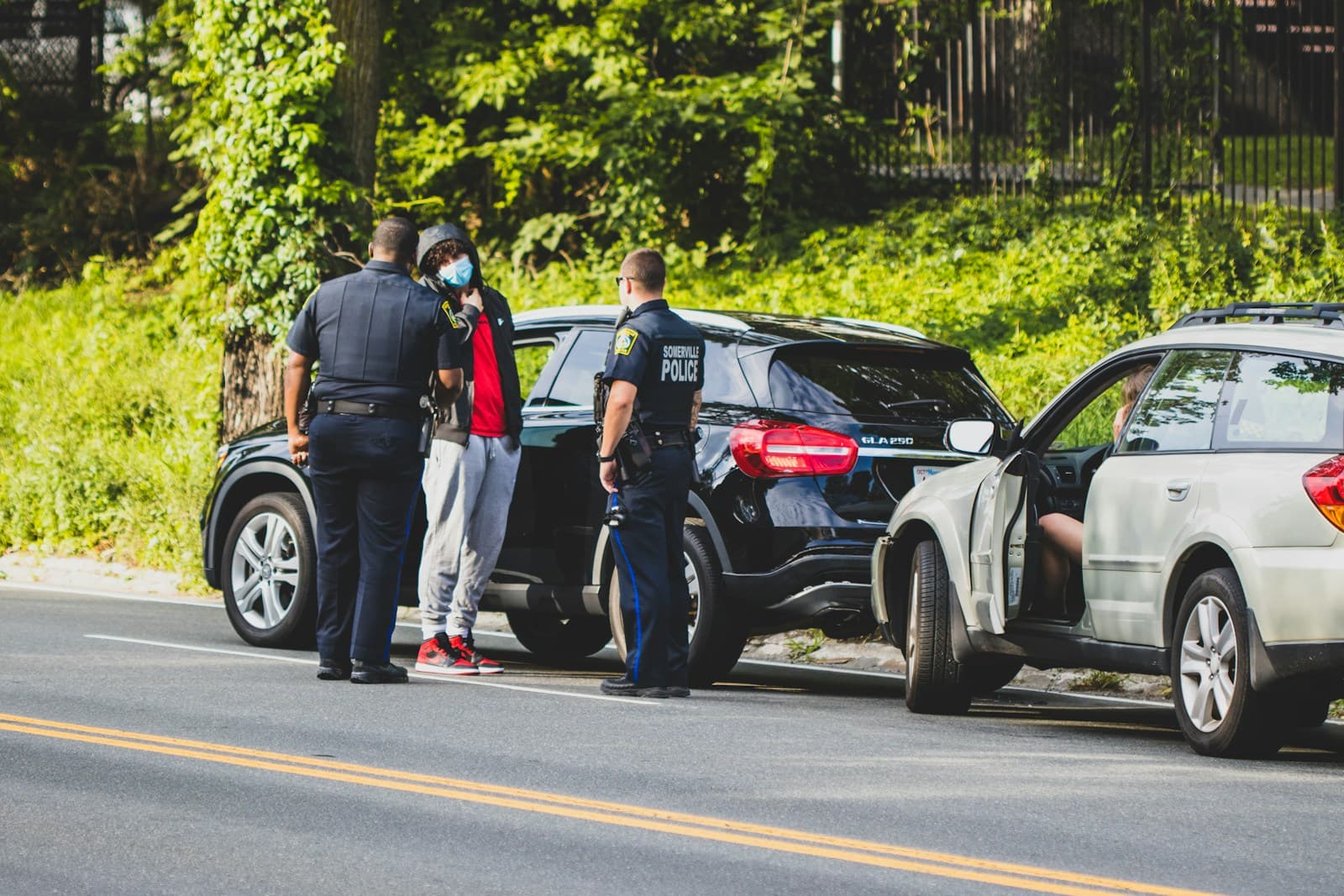
Utah Highway Patrol and campus police cross-reference your physical limited license against the court order on file. If the address where you're stopped isn't on your approved list, the stop itself proves the violation. You don't need to be cited for a separate traffic offense—deviation alone is the crime. This is why students who add weekend shifts or change apartments mid-restriction must file amendments immediately.
How to Add or Change Approved Destinations Mid-Restriction
File a motion to modify your limited license order with the same court that approved the original petition. You'll need documentation for the new destination—updated class schedule, new employment verification, lease showing a new address—and a hearing will be scheduled within 2-3 weeks.
The $35 motion filing fee is separate from the original petition fee. If the judge approves the modification, you take the amended order to the DLD and pay another $25 for the updated license card. Total cost for a single mid-restriction modification: $60 plus any attorney fees if you're represented.
Some judges deny modifications if they believe the original hardship claim was overstated or if you're requesting too many destination additions. A student who initially claimed hardship based on one part-time job, then requests three additional work sites within four months, signals to the court that the restriction isn't actually preventing livelihood loss. Judges have discretion here, and denials are common when modification requests appear to stretch the original hardship justification.
How Long the Limited License Lasts and What Comes After
The court sets the duration of your limited license, typically matching the underlying suspension period. Reckless driving suspensions in Utah run 90 days for a first offense, 1 year for a second offense within 3 years. Your limited license runs concurrently with the suspension—it doesn't extend the total restricted period.
When your suspension period ends, you must pay a $55 reinstatement fee to the DLD, provide proof your SR-22 is still active, and pass a written knowledge test if your suspension exceeded 6 months. Only then does your full driving privilege restore. The limited license does not automatically convert to a full license—you take affirmative steps to reinstate.
Your SR-22 requirement continues for 3 years from conviction, even after your suspension ends and your full license is restored. If you cancel your SR-22 policy or let it lapse at any point during those 3 years, the DLD suspends your license again until you refile. Set a calendar reminder for your SR-22 end date and confirm with your carrier before canceling coverage.