Utah's work permit lets you drive to work, medical appointments, and court-ordered obligations—but only if you follow the exact route and hour restrictions. Here's what's allowed and what triggers a violation.
What Utah Legally Defines as an Approved Trip on a Work-Restricted License
Utah Code §53-3-220.5 permits restricted driving for employment, medical care, court-ordered obligations, and ignition interlock device servicing. The statute uses "employment" without defining commute scope, so your approved route runs from your home address to your employer's physical location as listed on your DPS Form TC-546R. If your employer has multiple locations, the permit covers only the single address on the approved form.
Medical appointments qualify only if scheduled in advance and documented with appointment confirmation—urgent care visits do not automatically qualify unless you can show written proof of the appointment within 48 hours. Court-ordered obligations include probation check-ins, DUI education classes listed in your court order, and ignition interlock calibration appointments at your registered service center.
Childcare drop-off is not a statutory category in Utah. If your work shift requires dropping your child at daycare, the drive from home to daycare to work counts as a detour from the approved route. Some judges approve a three-point route (home-daycare-work) at the hardship hearing if you submit employer shift documentation and daycare enrollment proof, but DPS does not grant this administratively.
How Utah Interprets Route Restrictions and What Counts as a Deviation
Utah's work permit restricts you to the most direct route between approved locations during approved hours. The permit does not specify street names—it approves origin and destination pairs. Law enforcement and DPS consider "most direct route" to mean the shortest time or distance route under normal traffic conditions, not the route you personally prefer.
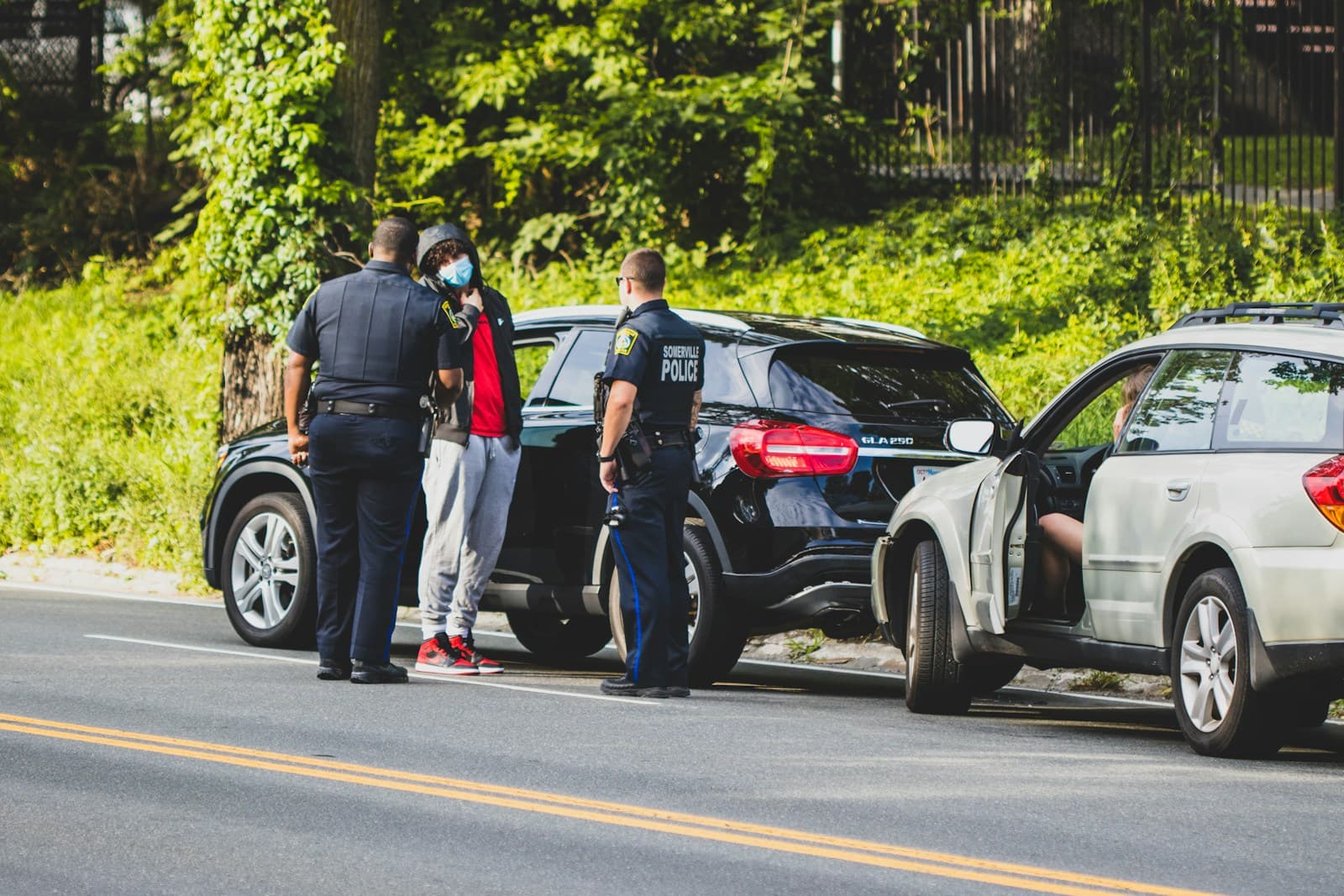
A detour to a gas station, grocery store, or to pick up a passenger violates the restriction even if the stop occurs during approved driving hours. The permit allows driving to approved destinations only, not driving during approved hours to any destination. The distinction matters because a traffic stop at 7:15 AM on your commute route is legal, but a stop at 7:15 AM two miles off-route at a convenience store triggers a violation.
Utah law allows deviation from the approved route only for immediate emergency conditions—a road closure, accident blocking your normal path, or sudden medical emergency requiring the nearest urgent care. You must document the emergency with physical proof (police report, hospital intake record, traffic alert screenshot) within 48 hours of the deviation. Verbal explanation at a traffic stop does not satisfy the documentation requirement.
Compare car insurance rates in your state
Get quotes from licensed carriers — no obligation, no spam, results in minutes.
Get Your Free Quote✓ No Obligation Required✓ Licensed Carriers Only✓ Available Nationwide✓ Free to Compare
Approved Hours and What Happens If You're Outside the Window
Your restricted license lists specific hours for each approved destination category. Employment hours typically cover your shift start time minus 30-60 minutes for commute and shift end time plus the same buffer. If your shift starts at 8:00 AM and takes 25 minutes to reach, your approved window likely runs 7:00 AM to 5:30 PM for an eight-hour shift.
Driving outside approved hours for any reason violates the permit, even if you are on the approved route to an approved destination. If your employer asks you to work late and your shift runs past your approved end time, you cannot legally drive home unless you carry written employer documentation of the schedule change and notify DPS before the extended drive. Most DPS offices require 24-hour advance notice for temporary hour extensions, which makes last-minute overtime shifts a compliance problem.
Weekend and holiday driving is prohibited unless your approved employment hours explicitly cover those days. A Monday-Friday work permit does not allow Saturday driving to your workplace even during approved hours. If your employer changes your schedule to include weekend shifts, you must file an amended TC-546R with updated employment verification before driving on the new schedule.
What SR-22 and Ignition Interlock Requirements Apply to the Permit
Utah requires SR-22 filing for the entire duration of your restricted license period, typically running from the suspension start date through full license reinstatement. The SR-22 clock does not pause during your restricted period—if your underlying suspension requires three years of SR-22 and you hold a restricted license for 18 months, you still owe 18 additional months of SR-22 after full reinstatement.
If your suspension resulted from a DUI conviction with BAC at or above 0.16, or a second DUI offense within ten years, Utah mandates ignition interlock installation for the restricted license period plus 18-24 months post-reinstatement. The IID requirement runs concurrently with SR-22 but extends beyond it. Monthly IID costs run $70-$100 for monitoring and calibration, separate from your SR-22 premium.
Your SR-22 policy must cover the vehicle you drive on the restricted license. If you drive a vehicle owned by someone else, the SR-22 must either list that vehicle or you must carry a non-owner SR-22 policy if you don't own a vehicle yourself. Driving any vehicle not covered by your active SR-22 filing violates both the insurance requirement and the restricted license terms, triggering immediate permit revocation.
How a Single Violation Revokes the Permit and Extends Your Suspension
Utah DPS revokes your work-restricted license immediately upon any violation: driving outside approved hours, deviating from approved routes without documented emergency justification, or operating without valid SR-22 coverage. Revocation is administrative and does not require a separate hearing—the traffic stop or insurance lapse notice triggers automatic cancellation.
Revocation adds a mandatory six-month extension to your underlying suspension period, measured from the revocation date. If you had eight months remaining on your original suspension and the permit is revoked, you now face 14 months before reinstatement eligibility. The extension applies even if the violation was technical (five minutes past approved hours) rather than substantive.
You cannot reapply for a restricted license after revocation. Utah limits drivers to one work permit per suspension period. If the permit is revoked, you serve the remaining suspension plus the six-month extension without driving privileges. The only exceptions are suspensions lasting longer than three years for multiple DUI convictions, where a second hardship application may be considered after 18 months of full compliance, but approval is rare and requires new court testimony.
What the Application Process Requires and How Long It Takes
Utah grants restricted licenses through a two-step process: court hardship hearing followed by DPS administrative approval. You cannot apply directly to DPS without a court order approving the hardship petition. The court hearing typically occurs 30-45 days after you file the hardship petition in the district court that handled your underlying case.
You must submit employer verification on company letterhead stating your job title, work address, shift hours, and a statement that losing driving privileges will result in job loss. Medical documentation requires a physician's letter confirming ongoing treatment necessity and appointment frequency. DUI education class schedules must match your court order exactly. The court reviews all documentation at the hearing and either grants or denies the petition the same day.
If the court grants your petition, you take the signed order to any Utah DPS office with proof of SR-22 filing, IID installation certificate if required, and a $55 restricted license fee. DPS issues the physical license card the same day if all documentation is complete. Total timeline from petition filing to approved license runs 45-60 days assuming no hearing delays. You cannot drive on the petition alone—only the physical restricted license card authorizes driving.
What Happens When You're Ready to Reinstate Your Full License
Reinstatement eligibility begins the day your full suspension period ends, including any extensions from permit violations. Utah requires you to maintain SR-22 filing continuously through reinstatement and for the full three-year period following your original violation. If your SR-22 lapses even one day before the three-year mark, the filing clock resets to zero.
You must pay a $55 reinstatement fee, provide proof of current SR-22 coverage, and submit IID removal certification if an interlock was required. DPS does not send reinstatement reminders—you must track your eligibility date independently and initiate the process. If you miss your reinstatement date and continue driving on the expired restricted license, you face a new charge for driving on a suspended license.
Once reinstated, your full license is issued immediately if you pass a vision test and have no outstanding citations or fees. The SR-22 requirement continues for the remainder of the three-year period from your original conviction date, but you regain unrestricted driving hours and routes. Most high-risk carriers keep SR-22 rates elevated for 12-18 months post-reinstatement before offering standard policy conversions.