Utah restricted driving privileges allow work-only travel during DMV-approved hours. Clock-in/clock-out windows are strict, and a single deviation revokes the privilege and extends your suspension.
What travel hours does Utah's restricted driving privilege actually allow?
Utah restricted driving privileges approve travel during specific clock hours tied to your work schedule, medical appointments, or court-ordered obligations. Most approvals grant a 2-hour window before your shift starts and 2 hours after it ends, not just the exact minutes you're clocked in. If you work 9 AM to 5 PM, your typical approval runs 7 AM to 7 PM for work-related travel only.
The privilege does not allow errands, detours, or stops between home and work. Direct route only. Utah DLD (Driver License Division) cross-references your employer verification letter against your approved hours, and patrol officers can request both documents during any traffic stop. A deviation outside approved hours — even 10 minutes — is treated as driving on a suspended license, which triggers immediate revocation of the restricted privilege and adds 90 days to your underlying suspension.
Weekend allowances exist only if your employer documents weekend shifts in the verification letter. No employer documentation means no weekend driving, even for the same job. The restriction is hour-specific and purpose-specific simultaneously.
How do you request the widest defensible work-hour window on your Utah application?
Request a 2-hour buffer on both sides of your shift in Section 4 of Form DLD-336 (Application for Limited Driving Privilege). If your shift is 8 AM to 4 PM, request approval for 6 AM to 6 PM. Utah DLD grants buffer requests as long as the employer letter confirms shift start and end times without specifying that you must arrive exactly at clock-in.
The buffer accounts for traffic variability, required pre-shift tasks like safety briefings, and post-shift responsibilities like equipment check-out. Officers understand that a 9 AM shift often requires an 8:45 AM arrival. The 2-hour window is the administrative standard, not a legal maximum, but requests beyond 2 hours require written employer justification.
Do not request vague windows like "as needed for work" or "flexible hours." DLD denies imprecise requests and requires resubmission with exact clock times. If your schedule varies weekly, submit a separate employer letter documenting each unique shift pattern and request approval for all documented windows. DLD approves multiple weekly schedules if employer documentation supports it.
Compare car insurance rates in your state
Get quotes from licensed carriers — no obligation, no spam, results in minutes.
Get Your Free Quote✓ No Obligation Required✓ Licensed Carriers Only✓ Available Nationwide✓ Free to Compare
What counts as work-related travel under Utah's restricted privilege rules?
Work-related travel under Utah Code 53-3-220 includes direct travel from home to your primary workplace, workplace to home, and between multiple job sites if your employer letter documents multi-site responsibilities. It does not include lunch breaks off-site, personal errands on the way home, or driving to a second job not listed on your original DLD application.
If you add a second job after your restricted privilege is granted, you must file an amended application with DLD and submit verification from the new employer. The amended approval process takes 7-10 business days. Driving to the second job before the amendment is approved counts as operating outside your restriction.
Medical appointments require separate documentation. If your restriction includes medical travel, the approval lists specific appointment windows, not blanket permission. DLD requires appointment confirmation from the provider showing date and time. Childcare or school travel follows the same rule: approved only if listed in your original application with supporting documentation from the childcare provider or school.
Can you drive on weekends or holidays under a Utah restricted license?
Weekend and holiday driving is allowed only if your employer verification letter explicitly documents weekend or holiday shifts. If your letter states you work Monday-Friday 8 AM to 5 PM, your restricted privilege does not authorize any weekend travel, even for the same job. Utah DLD does not grant implied weekend permissions.
If your work schedule includes rotating weekend shifts, the employer letter must specify which weekends you work and the exact hours. "Occasional weekend work" is not sufficient. DLD requires a documented pattern: every other Saturday, first and third Sunday, etc. For variable schedules, submit a 30-day shift calendar signed by your employer.
Holidays follow the same documentation rule. If your employer requires you to work Thanksgiving, Christmas, or New Year's Day, those dates and hours must appear in the verification letter. Officers do not assume holiday work is covered under a general weekday approval, and a holiday traffic stop outside standard approved hours results in immediate citation for driving on suspension.
What happens if you're stopped outside your approved hours in Utah?
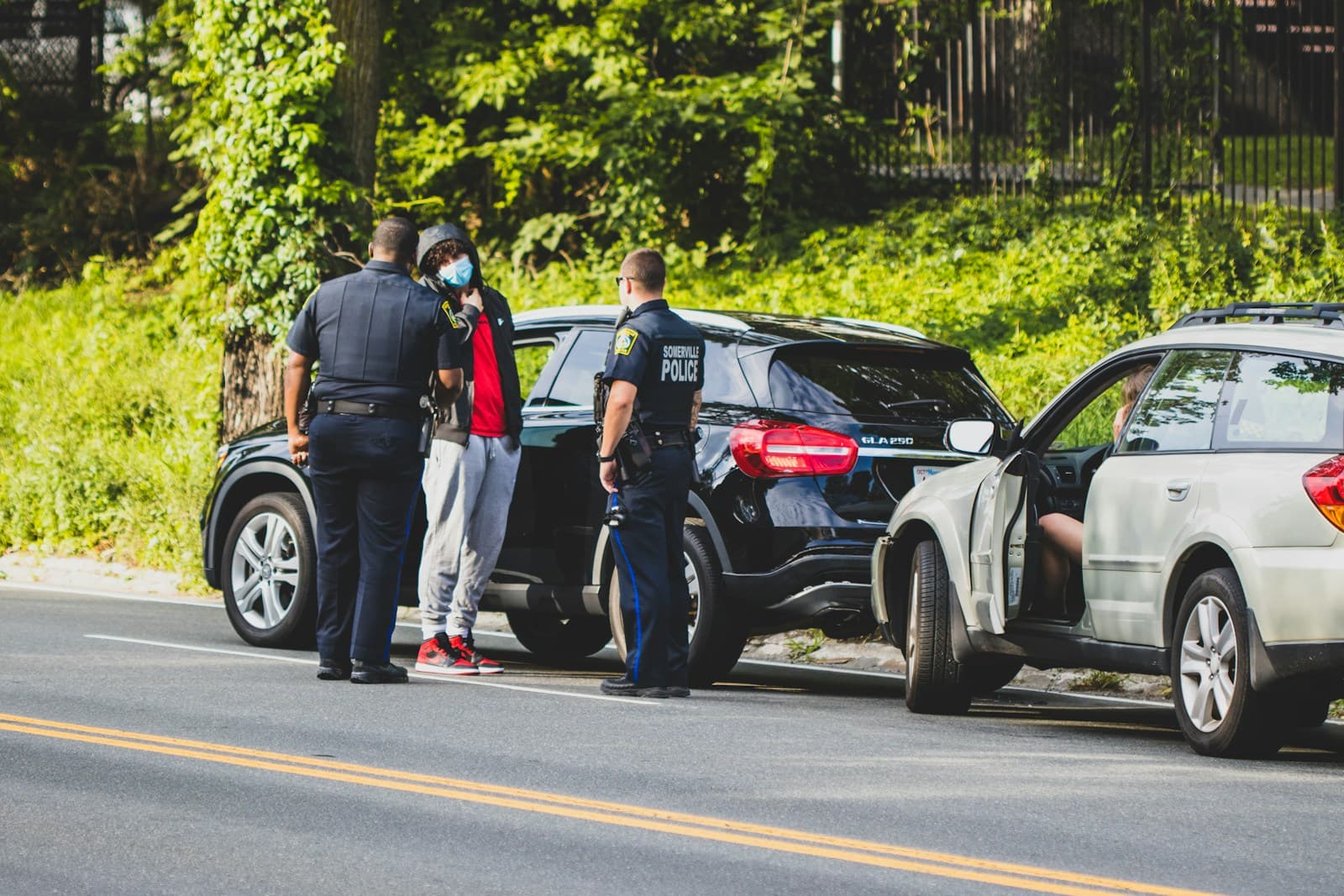
A traffic stop outside approved hours is prosecuted as driving on a denied, suspended, or revoked license under Utah Code 53-3-227, a class B misdemeanor carrying up to 6 months in jail and a $1,000 fine. More immediately, your restricted driving privilege is revoked on the spot, and the underlying suspension is extended by a mandatory 90 days from the revocation date.
Utah does not offer grace periods or warnings. If your approval window is 7 AM to 7 PM and you're stopped at 7:15 PM, the violation is processed identically to a driver with no restricted privilege at all. The officer will confiscate your restricted license document, and you will receive a court summons for both the original traffic violation (if any) and the suspension violation.
Revocation is immediate but you can request a DLD hearing within 10 days to contest the officer's findings. The hearing officer reviews your approved hours, the stop time, and any documentation you provide. Successful appeals are rare and require proof of officer error on time or location, not hardship arguments. If the stop time is accurate, the revocation stands and your only path back is to complete the extended suspension period and reapply from the beginning, including new SR-22 filing and new employer documentation.
How does SR-22 insurance interact with Utah's restricted driving privilege?
Utah requires SR-22 filing before DLD will issue a restricted driving privilege. The SR-22 must be active and on file with DLD at the time you submit Form DLD-336. If your SR-22 lapses for even one day while the restricted privilege is in effect, DLD automatically revokes the privilege and re-suspends your license for the full original suspension period plus 90 days.
SR-22 filing for a restricted privilege costs the same as standard post-suspension SR-22: typically $25-$50 filing fee plus the premium increase. Most drivers with DUI or multiple-violation suspensions see 80-150% rate increases. Non-standard carriers like Bristol West, Dairyland, and The General write most restricted-privilege SR-22 policies in Utah. Standard carriers like State Farm and Allstate rarely write new policies for drivers under active suspension, even with a restricted privilege.
The SR-22 must remain active for the entire suspension period, not just the restricted-privilege period. If your underlying suspension is 120 days and you hold a restricted privilege for 90 of those days, your SR-22 requirement continues for the full 120 days plus any extension triggered by violations. Most Utah DUI suspensions carry 3-year SR-22 requirements measured from reinstatement, not from the suspension start date.