New York's conditional license program can require continuous alcohol monitoring via SCRAM bracelet or handheld breath test — often for 6-12 months before full privilege restoration. Here's how monitoring, driving privileges, and SR-22 filing work simultaneously.
What New York's Conditional License Program Requires Post-DWI
New York issues conditional licenses through DMV administrative hearings for drivers whose full privilege is suspended due to DWI, chemical test refusal, or repeat alcohol-related violations. The conditional license authorizes driving only during approved hours and routes — typically work commute, medical appointments, and court-mandated treatment — while the underlying suspension remains active. The program requires SR-22 insurance filing for the suspension duration (typically 1-3 years depending on offense) and, increasingly, mandates continuous alcohol monitoring via SCRAM ankle bracelet or portable breath testing device.
The DMV assigns monitoring requirements case-by-case based on BAC at arrest, prior alcohol violations, and whether the offense involved an accident or child passenger. First-offense DWI with BAC under 0.15% may avoid monitoring; BAC over 0.18% or second offense within 10 years almost always triggers monitoring for 6-12 months minimum. The conditional license remains valid only while all three compliance streams — approved driving, monitoring data submission, and SR-22 active filing — remain unbroken.
Missing a single SCRAM check-in, submitting a failed breath test, or allowing SR-22 to lapse triggers automatic conditional license revocation. You receive no grace period. The underlying suspension clock does not pause during revocation, meaning delays in fixing compliance errors extend your total time without full driving privilege.
How SCRAM Continuous Alcohol Monitoring Works on a Conditional License
SCRAM (Secure Continuous Remote Alcohol Monitor) is an ankle bracelet that samples your perspiration every 30 minutes to detect alcohol consumption. The device transmits data daily via modem to a monitoring agency contracted by the court or DMV. Any confirmed alcohol event — defined as transdermal alcohol concentration over 0.02% — generates an immediate violation report sent to DMV and the court that ordered monitoring.
You pay monitoring costs directly: installation fee typically $50-$100, monthly monitoring fee $300-$450, removal fee $50-$100. Total cost for 6 months runs $2,000-$2,800. The monitoring agency bills monthly; missed payments trigger equipment lockout and violation notice. Insurance does not cover SCRAM costs.
The bracelet must remain on 24/7. Tampering — defined as blocking the sensor, submerging the unit, or breaking the strap — triggers immediate tamper alert. Environmental alcohol exposure (hand sanitizer, cleaning products applied directly to skin near the bracelet) can cause false positives; the monitoring agency reviews all alerts for confirmation before reporting violations, but you carry the burden of explaining any event. Most monitoring contracts require you to document any environmental exposure within 24 hours of the alert.
Compare car insurance rates in your state
Get quotes from licensed carriers — no obligation, no spam, results in minutes.
Get Your Free Quote✓ No Obligation Required✓ Licensed Carriers Only✓ Available Nationwide✓ Free to Compare
Portable Breath Testing as an Alternative to SCRAM
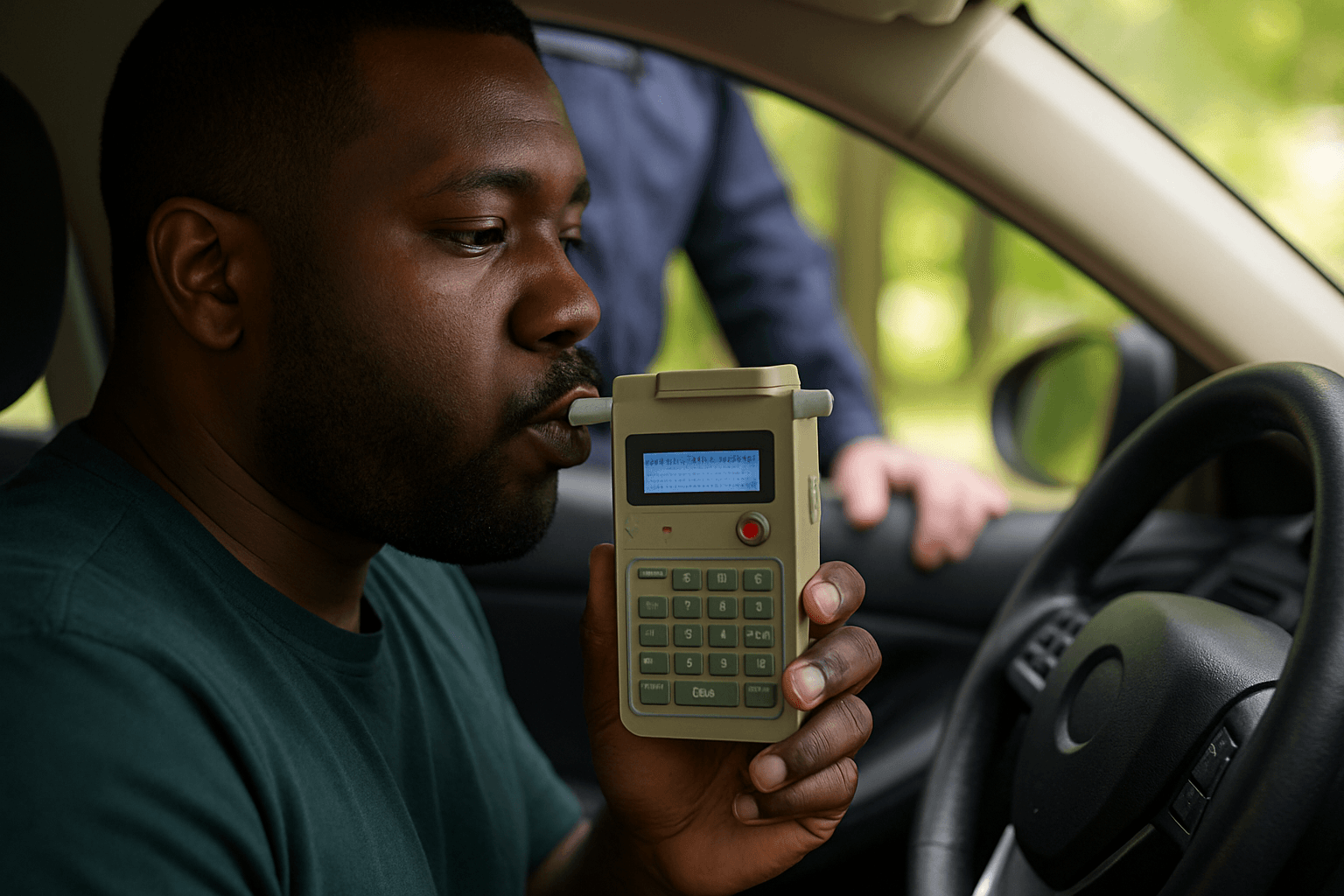
Some New York conditional license orders specify portable breath testing instead of SCRAM. The device requires you to submit breath samples 4-6 times daily at random intervals set by the monitoring agency. You receive a text or call instructing you to test within 15 minutes; the device photographs your face during the test to confirm identity and timestamps the result.
Portable breath testing costs less than SCRAM: $150-$250/month including equipment rental and monitoring service. The device connects via cellular data; you're responsible for keeping it charged and accessible during all waking hours. Missing a test window — even by minutes — counts as a failed test and generates a violation report.
The random schedule makes employment compliance harder than SCRAM. If you're called to test while driving during an approved conditional license window, you must pull over, complete the test, and photograph submission before continuing. Employers are not required to accommodate testing schedules; many drivers on portable breath monitoring lose jobs due to mid-shift test requirements they cannot meet without leaving the work site.
How SR-22 Filing Works Alongside Conditional License and Monitoring
New York requires SR-22 certificate of financial responsibility from all conditional license holders. The SR-22 proves you carry minimum liability coverage ($25,000 bodily injury per person, $50,000 per accident, $10,000 property damage) and obligates your carrier to notify DMV immediately if your policy cancels or lapses. SR-22 filing costs $25-$50 with most carriers; the bigger expense is the underlying non-standard policy premium.
Carriers writing conditional license SR-22 policies in New York include Bristol West, Dairyland, Direct Auto, GAINSCO, Kemper, Progressive, and The General. Monthly premiums for minimum liability with SR-22 endorsement typically run $180-$320/month for a first DWI, higher for repeat offenses or additional violations on record. The SR-22 must remain active for the full suspension period — usually 6 months minimum for first offense, 1 year for aggravated DWI, 3 years for second offense within 10 years.
If your policy lapses even one day, the carrier files SR-26 cancellation notice with DMV. Your conditional license is automatically revoked within 48 hours. Reinstatement requires paying a new application fee ($50), re-filing SR-22 with proof of continuous coverage backdated to the lapse date, and waiting 30-60 days for a new hearing. The underlying suspension clock does not pause, so a 7-day lapse can add 2 months to your total restricted driving period.
What Happens If You Violate Monitoring or SR-22 Requirements
Conditional license revocation is automatic and immediate upon three failure modes: confirmed alcohol detection via SCRAM or breath test, missed test submission, or SR-22 lapse notification. DMV does not conduct a hearing before revocation. You receive a revocation letter in the mail; your conditional privilege ends the date printed on that letter, typically 5-10 days after the violation event.
You can request a post-revocation hearing to challenge the violation finding, but you may not drive on the conditional license while the challenge is pending. The hearing typically occurs 30-45 days after your request. If you prove the violation was erroneous — for example, environmental alcohol exposure documented with third-party confirmation or monitoring agency technical failure — DMV may reinstate the conditional license and credit the revoked period toward your underlying suspension. Successful challenges are rare; DMV sides with monitoring agency records in roughly 80% of disputed cases.
If the violation is sustained, you serve the remainder of the underlying suspension without conditional privilege. For a first DWI with 6-month suspension, losing conditional license at month 3 means 3 more months without any legal driving authority. The SR-22 requirement continues; you must maintain insurance and active filing even while you cannot drive, or face additional suspension time added when you apply for full license restoration.
Cost and Timeline for Conditional License with Full Compliance
Total compliance cost for a New York conditional license with SCRAM monitoring, SR-22 filing, and non-standard insurance for 6 months runs $4,500-$6,200. Breakdown: DMV conditional license application fee $50, SCRAM installation $75, SCRAM monitoring $2,100-$2,700 (6 months), SR-22 filing $25-$50, non-standard liability insurance $1,080-$1,920 (6 months at $180-$320/month), and SCRAM removal $75. Portable breath testing reduces monitoring costs to $900-$1,500 for 6 months but increases employment risk.
The conditional license application process takes 4-6 weeks from suspension effective date. You submit application, proof of enrollment in New York DMV-approved Drinking Driver Program (DDP), employer verification letter on company letterhead stating work address and required commute hours, and SR-22 certificate. DMV schedules a hearing; you attend in person or via phone. If approved, the conditional license is mailed within 10 days and remains valid until the suspension end date, provided monitoring and SR-22 compliance continue unbroken.
After the suspension period ends, you apply for full license restoration. Requirements: completion certificate from DDP (7-week program, $225 tuition), proof of SCRAM or breath test monitoring completion with zero violations, SR-22 still active, payment of $50 restoration fee, and vision test at DMV. Processing takes 2-3 weeks. The SR-22 filing requirement typically continues 1-3 years beyond the suspension end date depending on offense severity; your carrier will notify you when DMV releases the SR-22 obligation.