Indiana's occupational license grants you work-driving privileges, but alcohol monitoring compliance—SCRAM continuous, PBT breath testing, or both—runs parallel to your driving restriction, not inside it. Miss one monitoring event and your license revokes independent of your driving record.
Why Indiana Splits Alcohol Monitoring and Driving Compliance Into Two Separate Systems
Indiana issues occupational licenses through county circuit courts for employment, education, or medical purposes. Alcohol monitoring—whether continuous ankle monitoring (SCRAM) or portable breath testing (PBT)—comes from the court's sentencing order or probation department, not the Bureau of Motor Vehicles. The BMV tracks your driving privilege. The court or probation office tracks your sobriety. A violation in one system triggers consequences in both.
Most states fold monitoring compliance into license conditions. Indiana separates them. Your occupational license restricts where and when you can drive. Your monitoring order restricts when you must test, what substances trigger violations, and what happens if you miss an event. The two obligations overlap in time but operate on independent enforcement calendars.
This split creates a blind spot. Drivers focus on route compliance—approved destinations, approved hours—and assume monitoring is automatic. It is not. SCRAM devices require daily charging, proximity to base stations, and skin contact without obstruction. PBT devices require tests at randomized times you receive by phone or app. Miss one test window or let your SCRAM battery die overnight, and probation files a violation. The court can revoke your occupational license even if you never drove outside approved hours.
How SCRAM Continuous Monitoring Works Alongside Your Occupational License
SCRAM Continuous Alcohol Monitoring straps an ankle bracelet to your lower leg. The device samples your perspiration every 30 minutes to detect alcohol consumption. You wear it 24 hours a day for the duration ordered by the court—typically 90 days to 12 months for OWI-related occupational licenses in Indiana. The device transmits data to a base station you install in your home, which uploads readings to the monitoring company and your probation officer.
You pay for SCRAM. Installation runs $50–$100. Daily monitoring fees average $10–$15 per day, billed weekly or monthly. For a 6-month SCRAM order, total cost is approximately $1,800–$2,700. Some counties allow payment plans; others require upfront deposits. The monitoring company, not the court, sets the fee structure.
Compliance failures that revoke your occupational license include: detected alcohol consumption (even trace amounts from mouthwash or hand sanitizer absorbed through skin), tamper alerts (removing or obstructing the bracelet), proximity violations (spending extended time away from your base station without prior travel authorization), or low-battery events (forgetting to charge the device daily). Each incident generates an alert. Your probation officer decides whether to file a violation petition. If filed, the court schedules a violation hearing. Pending that hearing, your occupational license remains active unless the court issues an interim suspension.
Compare car insurance rates in your state
Get quotes from licensed carriers — no obligation, no spam, results in minutes.
Get Your Free Quote✓ No Obligation Required✓ Licensed Carriers Only✓ Available Nationwide✓ Free to Compare
Portable Breath Testing Schedules and How They Conflict With Work Driving
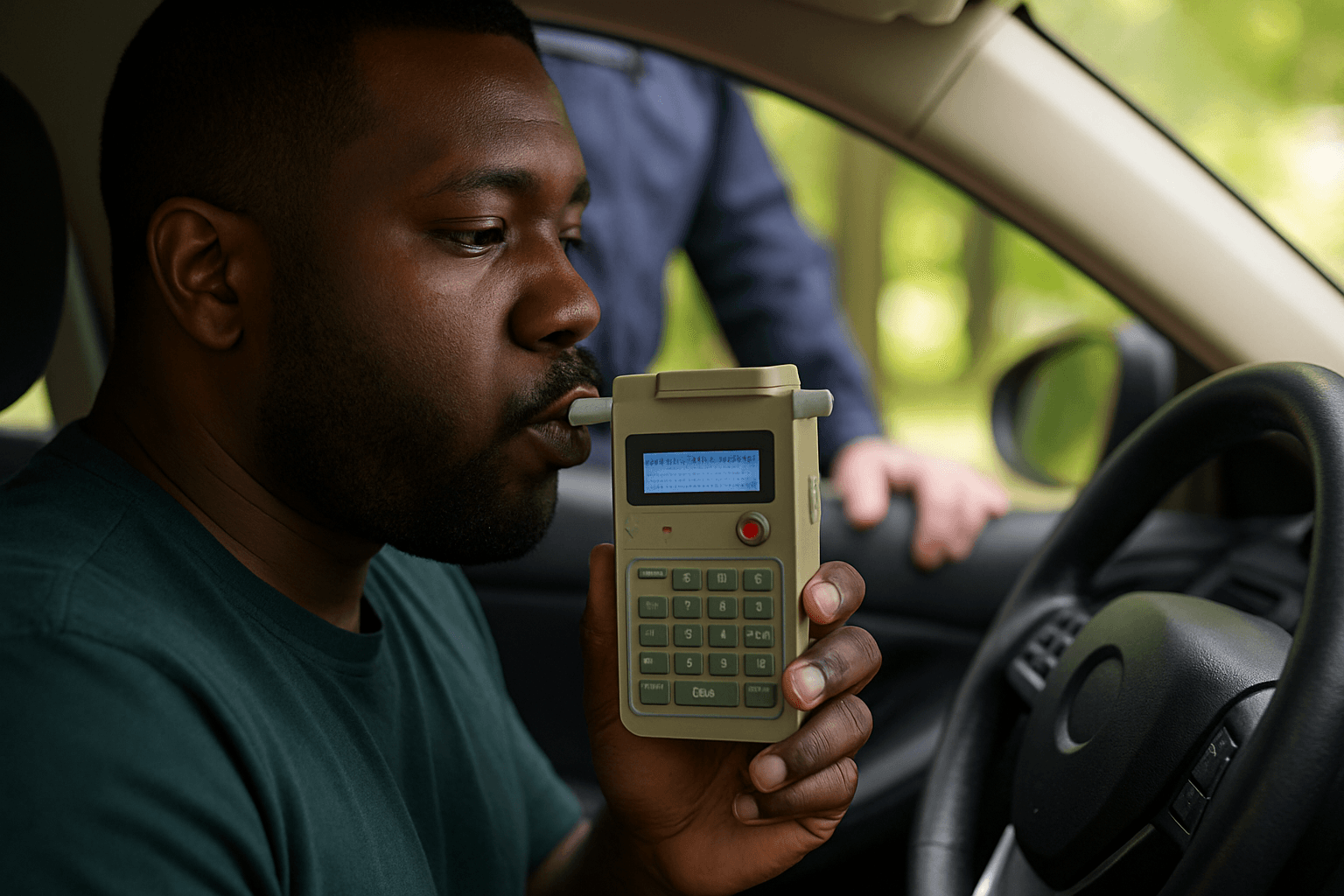
Portable Breath Testing (PBT) requires you to carry a handheld breathalyzer and submit breath samples when notified by phone call, text message, or app alert. Indiana probation departments use PBT for drivers whose work schedules make SCRAM impractical or as a step-down from continuous monitoring. Test windows are randomized—you might receive a test prompt at 6:15 a.m. or 9:45 p.m.—and you must complete the test within 15–30 minutes of notification.
The conflict: your occupational license restricts you to approved routes and approved hours. A 7:00 p.m. test notification while you are driving home from work creates a compliance decision. You cannot pull over on the highway shoulder to test—unsafe and often illegal. You cannot delay the test until you reach home if your window closes in 20 minutes and you have 30 minutes of drive time remaining. Missing the test window triggers a violation. Some probation offices treat missed tests identically to failed tests.
Best practice: notify your probation officer of your approved driving schedule and work shift start/end times when PBT monitoring begins. Request test blackout windows during your commute or ask for extended test windows (45–60 minutes) to accommodate drive time. Not all probation departments grant these requests, but documenting the conflict creates a record if a violation hearing occurs. Some drivers keep the PBT device in their vehicle and test in a parking lot immediately after receiving the alert, before continuing their drive. This avoids the missed-test violation but adds 5–10 minutes to your commute.
What Happens When Monitoring Violations Trigger Occupational License Revocation
Indiana courts revoke occupational licenses for probation violations through a separate hearing process, not through the BMV. Your probation officer files a violation petition with the court. The court schedules a hearing, typically within 14–30 days. You receive notice of the allegations—detected alcohol, missed test, tamper alert—and can appear with or without an attorney. The court decides whether the violation occurred and whether it justifies revoking your restricted driving privilege.
The standard of proof is lower than criminal trial. Preponderance of evidence—more likely than not—is sufficient for revocation in most Indiana counties. If the court revokes your occupational license, you lose work-driving privileges immediately. Your underlying suspension period does not shorten. You serve the remainder of your suspension without the occupational license, and you must wait until the full suspension ends to apply for reinstatement.
Some courts allow a second occupational license application after a violation revocation, but approval is rare. Judges view monitoring violations as evidence you cannot comply with restrictions. Filing for a second occupational license requires showing a material change in circumstances—new employment, completion of additional treatment, extended clean monitoring history—and even then, approval rates drop below 20 percent.
The BMV does not track monitoring violations directly. The court notifies the BMV of the revocation, and the BMV updates your driving record. This means you can drive legally under your occupational license today and have that privilege revoked tomorrow based on a SCRAM alert from three weeks ago. No advance warning. The revocation is effective the date the court signs the order.
How SR-22 Filing Interacts With Monitoring Compliance
Indiana requires SR-22 filing for OWI convictions and for drivers granted occupational licenses during suspension. The SR-22 is proof your insurance carrier filed a financial responsibility certificate with the BMV. Your monitoring obligations—SCRAM or PBT—do not appear on your SR-22 filing. The carrier knows only that you need SR-22 coverage, not what monitoring devices you wear or what testing schedules you follow.
SR-22 premiums average $125–$220 per month for liability-only coverage during an occupational license period in Indiana. Carriers underwrite based on your OWI conviction and suspension status, not your monitoring compliance. A monitoring violation that revokes your occupational license does not automatically cancel your SR-22 policy, but it eliminates your legal driving privilege. You must continue paying for SR-22 coverage to avoid a BMV suspension for failure to maintain proof of financial responsibility, even though you cannot legally drive.
If your occupational license revokes and you stop driving, consider switching to non-owner SR-22 insurance. Non-owner policies cost $60–$110 per month and maintain your SR-22 filing without requiring you to insure a vehicle you are not legally permitted to drive. This keeps your BMV record clean and avoids stacking a failure-to-maintain suspension on top of your underlying OWI suspension.
Cost Breakdown: Monitoring, License Fees, and Insurance Combined
Indiana's occupational license application fee is $150, paid to the circuit court clerk when you file your petition. Reinstatement fee to the BMV after your full suspension ends is $250. If you hire an attorney to file the occupational license petition, expect $800–$1,500 in legal fees. Some counties approve pro se (self-filed) petitions; others have approval rates below 30 percent without attorney representation.
SCRAM monitoring for 6 months: $1,800–$2,700. PBT monitoring for 6 months: $900–$1,350 (approximately $5–$7.50 per day). SR-22 insurance for 6 months: $750–$1,320. Total cost for a 6-month occupational license period with SCRAM and SR-22: $3,700–$5,670. With PBT instead of SCRAM: $2,800–$4,320.
These costs run concurrently. Monitoring fees are billed weekly or monthly. SR-22 premiums are billed monthly. Court fees are due upfront. Budget for the monthly cash flow: $300–$450 per month depending on your monitoring type and insurance carrier. Missing a monitoring payment can trigger a probation violation, which revokes your occupational license. Missing an SR-22 premium payment cancels your policy, and the carrier notifies the BMV within 10 days, which suspends your license again.
What to Do If You Are Already Under Occupational License and Monitoring Simultaneously
Document every test, every charge cycle, every base station upload. SCRAM and PBT devices generate logs your probation officer reviews. Request copies of your monitoring reports monthly. If an alert appears—tamper, missed test, proximity violation—you have a narrow window to provide explanation before your probation officer files a violation petition. Delayed uploads due to base station malfunction, false positives from environmental alcohol exposure, or device battery failure are defensible if you document the circumstances immediately.
If you receive a probation violation notice, consult an attorney before the hearing. Violations that revoke your occupational license also appear on your probation record and can extend your probation term or trigger jail time for the underlying conviction. The stakes are higher than just losing work-driving privileges.
If your work schedule conflicts with PBT testing windows, request a schedule modification in writing. Email or письмо to your probation officer creates a record. If denied, document every missed test caused by the conflict and the reason. This evidence matters at a violation hearing.
If you cannot afford SCRAM or PBT fees, ask the court for a payment plan or alternative monitoring at your initial occupational license hearing. Some Indiana counties allow urinalysis testing or ignition interlock device monitoring as substitutes. These are not automatic—you must request them, and judges deny most requests—but the alternative exists.